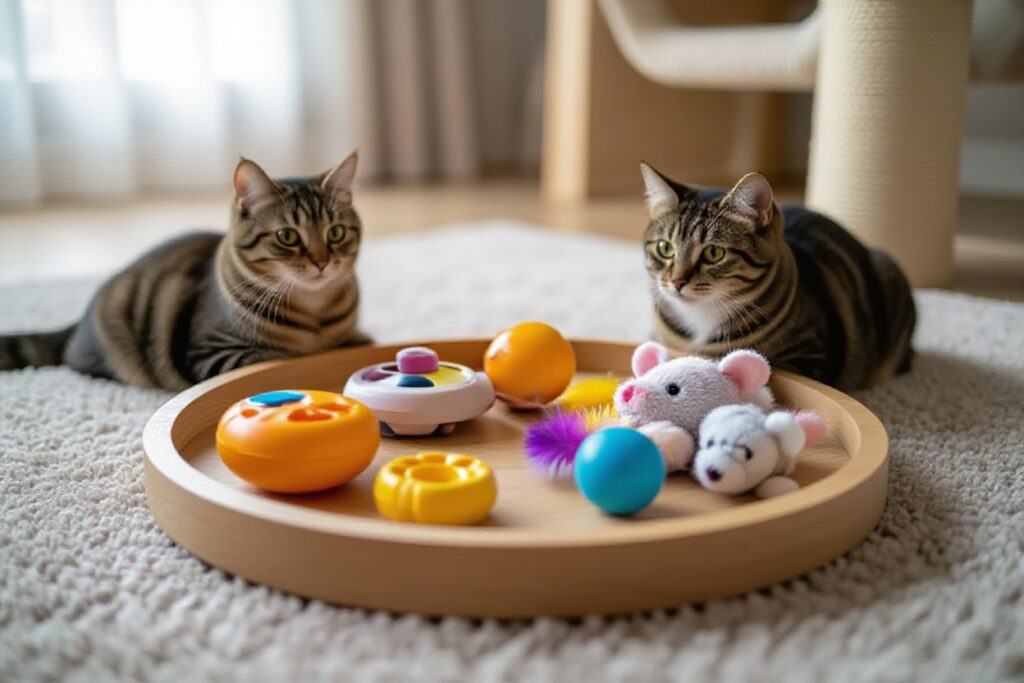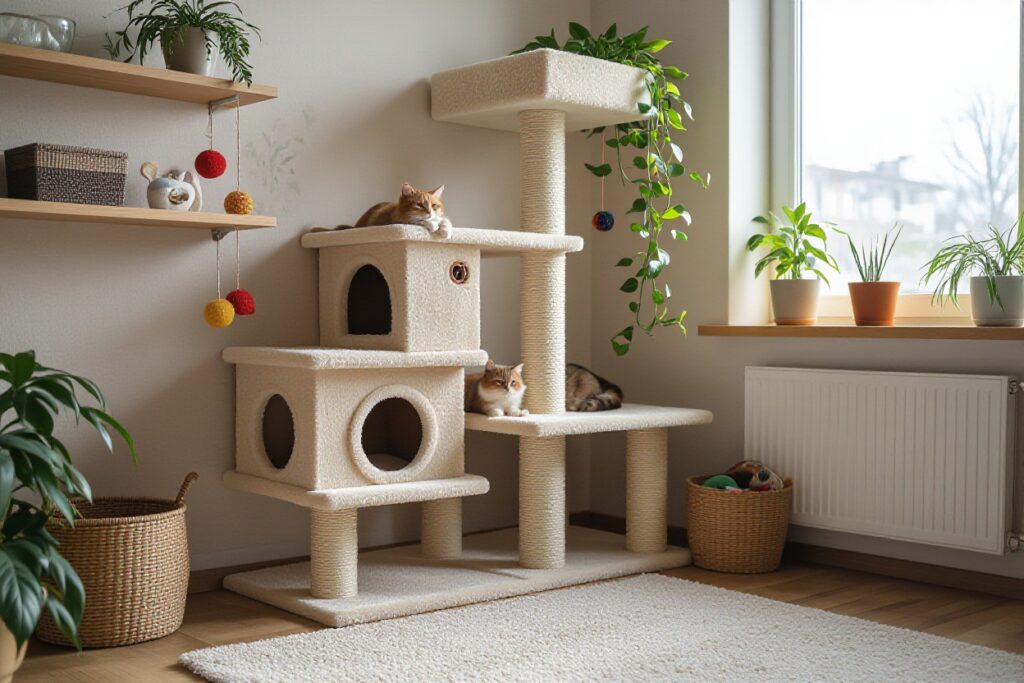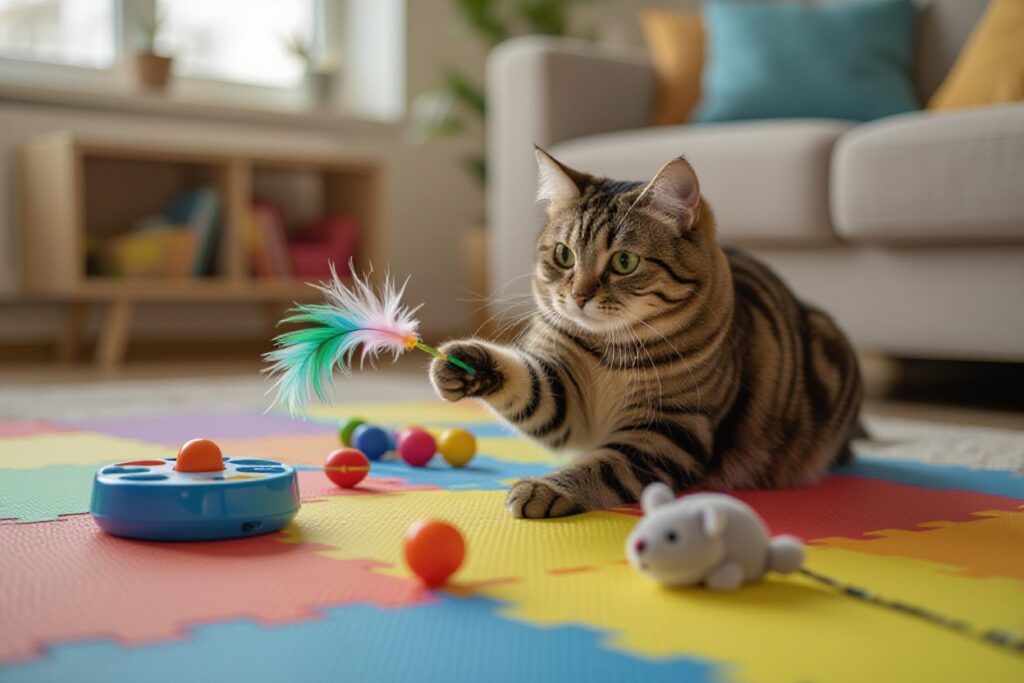
Toys that engage your indoor cat provide mental and physical stimulation, reduce boredom, and prevent behavior problems; you’ll find categories from interactive feeders and wand toys to electronic and DIY options, with non-toxic materials and age-appropriate picks highlighted, plus a focus on supervised play to avoid choking hazards and other dangerous risks while using toy rotation to maximize interest.
Key Takeaways:
- For the best cat toys for indoor cats, combine interactive play (wand toys, laser pointers used safely) with independent enrichment (puzzle feeders, electronic motion toys, ball tracks) to meet both physical and mental stimulation needs.
- Choose age-appropriate categories and examples—wand and kitten-safe plushs for kittens; slower-moving puzzle feeders, soft toys, and low-impact wand play for seniors; include catnip, scratchers, tunnels, and premium automated options to suit individual preferences.
- Prioritize safety and variety: inspect toys for loose parts, avoid ingestible strings unsupervised, rotate sets every few days to prevent boredom, and balance budget picks (DIY toys, basic balls) with a few durable premium pieces for long-term engagement.
Understanding the Importance of Play for Indoor Cats
Benefits of Physical Activity
Regular play keeps your cat lean and muscular, lowering the risk of obesity and orthopedic decline; aim for 10–15 minutes twice daily using wand toys, ball tracks, or short chase sessions. Active play also supports digestion and cardiovascular health, and you’ll see improved coat condition and agility when your cat gets consistent movement rather than long sedentary stretches.
Importance of Mental Stimulation
Mental enrichment prevents boredom-driven behaviors by engaging hunting instincts—puzzle feeders, scent trails, and electronic prey toys reproduce foraging challenges and extend mealtime activity. You should pair cognitive toys with physical play so your cat uses both body and brain, boosting overall wellbeing and making the best cat toys for indoor cats genuinely effective.
Go beyond single toys: alternate hidden food puzzles (e.g., treat mazes), intermittent electronic toys that simulate unpredictable prey, and scent-based enrichment like catnip or silvervine; together they increase exploration and reduce idle time. Veterinary behaviorists commonly advise rotating 8–12 items and combining at least one puzzle feeder per feeding to lengthen foraging to minutes rather than seconds, and many owners see calmer behavior within 2–4 weeks. Highlight safe, non-toxic materials and avoid loose strings or small detachable parts that pose choking hazards.
The Role of Play in Reducing Behavior Problems
Targeted play sessions redirect predatory drives and cut down on night bursts, inappropriate scratching, and obsessive overgrooming by providing structured outlets; scheduling short, vigorous sessions before your cat’s mealtime often reduces begging and nocturnal activity. Use interactive toys like wand toys for direct engagement and puzzle feeders to occupy them independently.
Start with predictable routines—two interactive sessions around 7–10 minutes before breakfast and dinner—and you’ll often notice fewer destructive episodes within weeks. For scratching, supplement play with vertical and horizontal scratchers placed near problem spots so your cat has an acceptable alternative; for attention-seeking behaviors, increase play intensity rather than giving passive rewards. Always prioritize toy safety (no small parts, replace frayed items) to prevent ingestion or injury while addressing behavior.
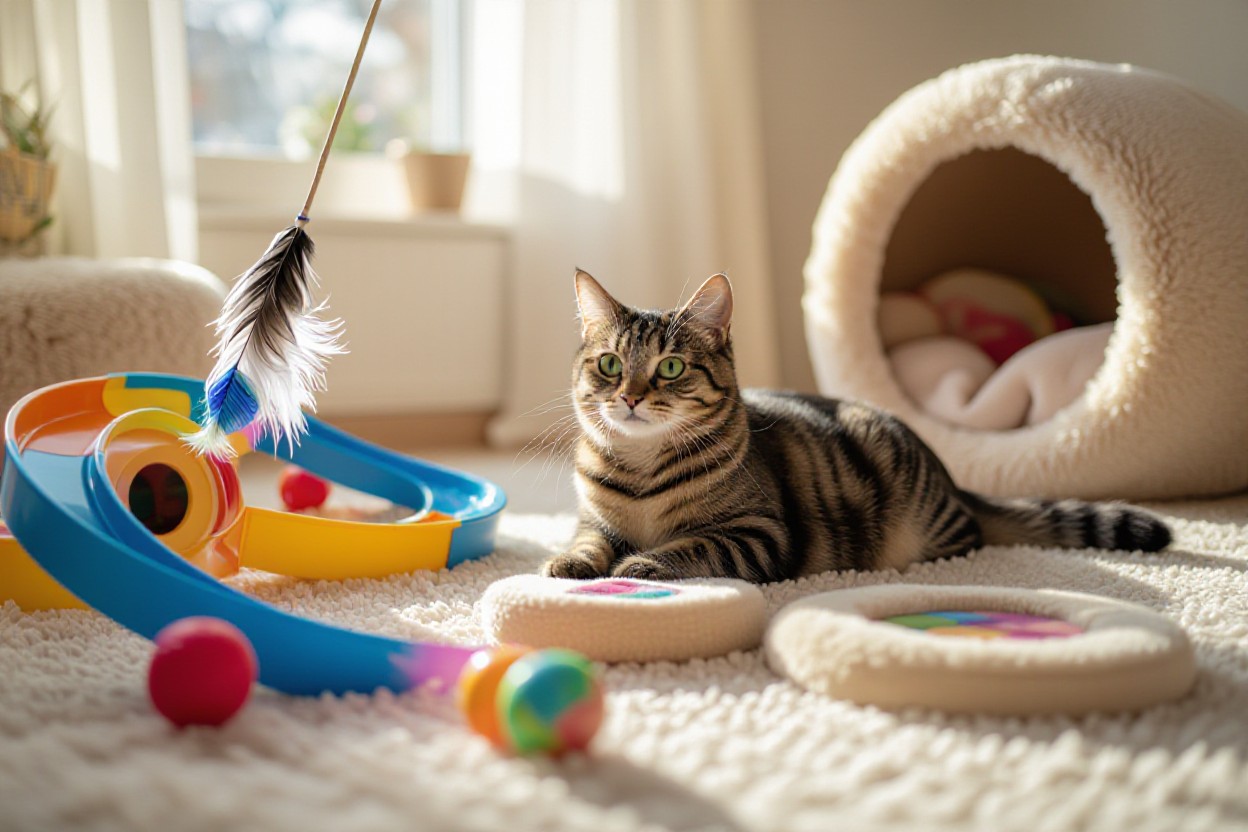
Top 5 Interactive Toys for Indoor Cats
Feather Wands
Feather wands are among the best cat toys for indoor cats for mimicking airborne prey; you can choose 2–4 foot rods with detachable feathers to vary reach and intensity. Use them for 5–15 minute sessions, 2–3 times daily, to build burst-style exercise and coordination. Supervise every session and store wands when not in use to prevent your cat from swallowing loose feathers or string.
Puzzle Feeders
Puzzle feeders like Nina Ottosson and Trixie models force your cat to work for kibble, slowing eating and providing 10–20 minute mental challenges; select level 1–3 puzzles based on your cat’s experience. You can split up to 25% of daily kibble into puzzles to increase engagement and help with weight management without extra calories.
For deeper use, rotate puzzle styles weekly—sliding trays, spinning towers, and hidden-cup layouts—so your cat doesn’t plateau. Choose dishwasher-safe, BPA-free plastic or silicone, and avoid tiny removable pieces that can be chewed off. Start with easy puzzles and increase difficulty over 1–2 weeks; if your cat fails repeatedly, lower the challenge to prevent frustration. Use dry kibble or small treats only; wet food can clog mechanisms.
Treat Balls
Treat balls and activity rollers (Bob-A-Lot, PetSafe Treat Ball) convert batting into food rewards, building physical play and slow feeding; pick adjustable openings for different kibble sizes and fill them with a quarter of a meal to encourage short chases. Position them on low-traffic floors so your cat can nudge them safely without trapping paws.
When adding treat balls, watch how your cat bats: lightweight designs spin easily for kittens, while weighted models suit vigorous adults. Clean balls weekly to prevent residue buildup and mold. For training, preload with high-value treats for the first sessions then switch to regular kibble. If the ball sits unused after a few days, change the scent or location, or try a different texture to re-engage your cat.
Laser Pointers
Laser pointers deliver instant, high-intensity chases that you can run for 2–5 minute bursts; avoid prolonged sessions and never shine the beam in your cat’s eyes. Always end laser play by letting your cat capture a real toy or treat so your cat gets the satisfaction of a “catch” and avoids behavioral frustration or obsessive chasing.
Use automatic or handheld lasers like FroliCat or inexpensive pointers, but limit total daily laser-only play to under 10 minutes and combine with tangible toys afterwards. Monitor for stalking or fixation—if your cat becomes overly preoccupied, replace laser sessions with wand or fetch play. For safety, choose lasers rated Class II and store devices where curious paws can’t access batteries and small parts.
Electronic Mice
Battery-powered electronic mice (Hexbug Nano-style devices, FroliCat RoloRat) simulate small prey with erratic motion and sudden stops, triggering instinctive pounces; you should supervise initial interactions and swap in new units every few months if your cat chews them. Pick models with soft exteriors and sealed batteries to reduce choking or ingestion risks.
Electronic mice work best as short solo enrichment when you can’t play live; aim for 5–10 minute sessions and observe how your cat reacts—some cats prefer unpredictable darting, others ignore motorized toys. Check that batteries are housed behind screw-secured compartments and inspect toys weekly for bite marks. For longevity, alternate electronic mice with wand or puzzle play to maintain novelty and avoid habituation.
Best Electronic/Automated Toys
Automatic Laser Toys
Models like the FroliCat Bolt use randomized patterns to mimic prey and keep your cat guessing; you can run sessions of 2–5 minutes, 2–3 times daily to burn energy without triggering obsession. You should always end the session with a tangible toy or treat so your cat gets a successful “capture.” Avoid shining beams at eyes and stop play if your cat becomes fixated or anxious; these are among the most popular entries on lists of the best cat toys for indoor cats for high-energy felines.
Interactive Ball Launchers
Automatic launchers such as PetSafe’s and compact iFetch-style units can give fetch-oriented cats sustained exercise; set them to short distances and use lightweight, soft balls to suit your room. Many owners report 5–10 minute sessions keep cats engaged without overstimulation, and you should supervise initial use and avoid small balls that could be swallowed.
When introducing a launcher, start on the lowest distance and place it against a wall so balls don’t ricochet into fragile items; gradually increase session length to 5–10 minutes once your cat is comfortable. Choose models with quiet motors and simple jam-release mechanisms, and swap to plush or foam balls if your cat prefers softer prey. Be mindful of space—shorter launches (roughly 6–12 feet) work best indoors—and check the unit frequently for wear: stop using if the launcher overheats or parts loosen.
Motion-Activated Toys
Products like the SmartyKat Hot Pursuit and Hexbug Nano offer unpredictable, intermittent movement that taps your cat’s hunting instinct without constant hands-on play. Place them along baseboards or under furniture gaps for ambush-style interaction, and run multiple short activations throughout the day for best results. Inspect toys regularly and discard anything with broken or detachable small parts to prevent ingestion.
To maximize benefit, rotate motion-activated items into your toy schedule and pair them with food puzzles or a brief wand session to vary stimuli; aim for 3–5 short activations per day rather than one long session. Lower-speed or gentler-motion models suit seniors and kittens; higher-speed or erratic movers fit active adults. Watch for signs of stress—if your cat avoids the toy or becomes overstimulated, remove it and try a calmer alternative. Batteries should be checked every 1–2 weeks in frequent-use toys to avoid sudden stops during play.
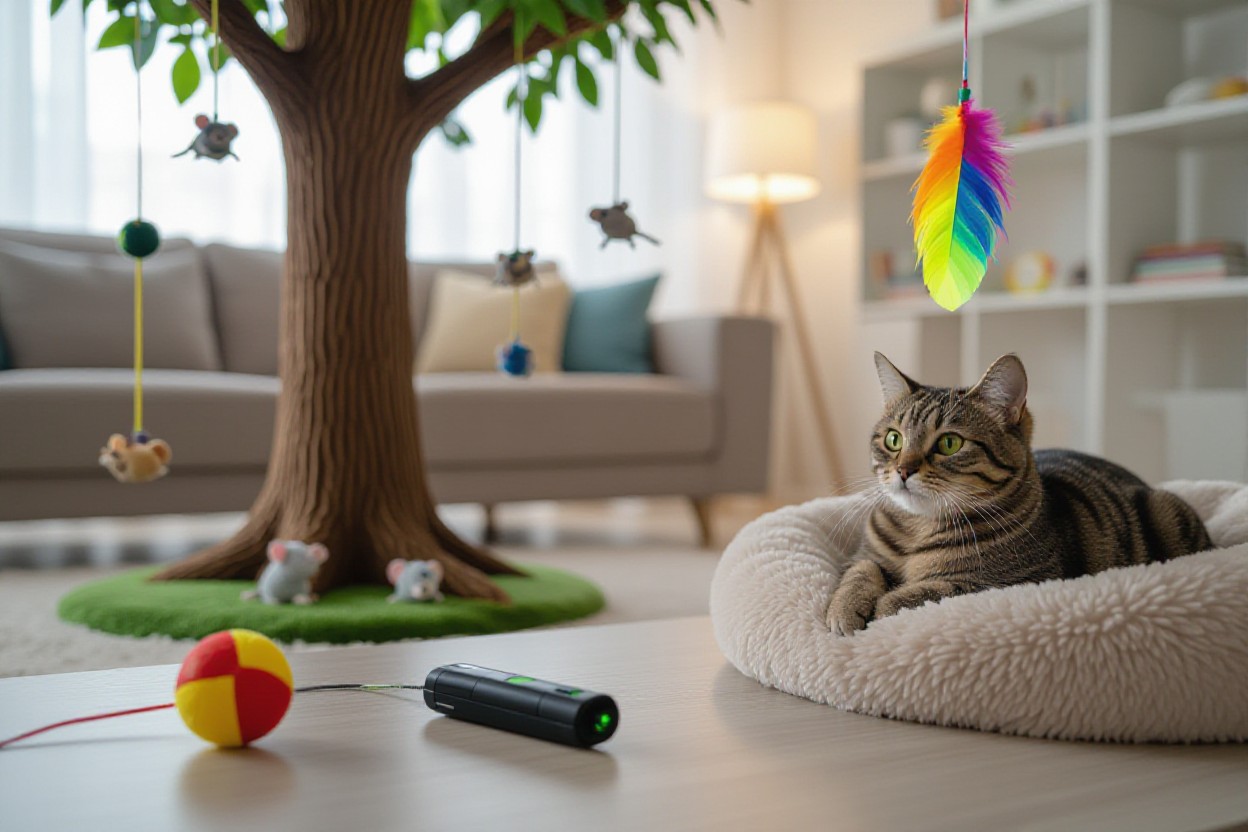
Classic Favorites: Timeless Toys for Cats
Balls
Light, noisy balls—ping-pong (40 mm) or foam 1–1.5″ varieties—are staples for solo chase sessions and work well in hallways for sprint bursts; examples include jingle balls and spring-loaded pet balls. You can tuck a small ball into a track or pair it with a laser session to satisfy stalking instincts. Positive: inexpensive, durable, and great for daily exercise; danger: discard any ball with cracks or loose bells to avoid choking.
Mice and Stuffed Animals
Small plush mice (about 2–3″ long), felt toys, and catnip-filled critters mimic prey for batting, pouncing, and carrying; brands like Yeowww! and Petstages make dense, catnip-packed mice that hold interest longer. You should swap between plain and catnip versions to keep novelty high.
Use these toys to encourage the full predatory sequence—you can toss for a chase, hide for ambush, or leave one for your cat to carry. Inspect seams and remove toys with loose stuffing or dangling threads, rotate every 7–10 days, and consider small battery-operated “squeak” mice for enrichment during your absence.
Cat Tunnels
Collapsible tunnels (typically 3–6 ft long) give your cat hiding spots, ambush routes, and sprint corridors; look for crinkle-lined nylon with reinforced rings and multiple openings to boost play options. You can combine tunnels with ball tracks or wand toys to create interactive obstacle courses. Positive: reduces stress and stimulates play; danger: supervise if tunnels have exposed wires, zippers, or loose mesh.
Choose tunnels with mesh windows for ventilation and visibility, and wash or wipe surfaces per manufacturer instructions to control odors and allergens. You can interconnect two tunnels or add a fold-out tent to create varied environments, which studies show increases engagement in multi-cat households.
Mental Stimulation Toys: Engaging Your Cat’s Mind
Puzzle Feeders and Treat Dispensers
You can use puzzle feeders like the Nina Ottosson Cat Puzzle, Catit Senses slow feeder, or simple DIY bottle dispensers to extend meal time and boost foraging instincts; typical puzzles make cats work 3–10 minutes per session and help reduce gulping and boredom. Feed measured portions to avoid overfeeding, and inspect for small parts or cracked plastic that pose choking hazards.
Brain Games
Start with simple shell games, scent trails, or clicker training to teach your cat 2–4 new cues over 2–3 weeks; short, consistent sessions of 5–10 minutes daily build focus and reduce unwanted behaviors. Use kibble-sized rewards and increase difficulty gradually so your cat stays engaged without frustration.
Dive deeper by structuring progress: week one teach a nose-target, week two add a retrieval cue, and week three introduce two-choice problems using boxes or cups. Track success by frequency of correct responses—aim for a 60–80% success rate before raising difficulty—and avoid long sessions that cause stress. Clicker training combined with food puzzles often yields faster learning than treats alone, and you should always account for calories by reducing meal portions when using food-based games.
Interactive Boards
Interactive peg-and-slot boards like Trixie Activity or wall-mounted magnetic panels give your cat 4–8 compartments to probe, paw, and slide open; they occupy vertical space and stimulate hunting instincts while fitting small apartments. Check that pegs and tiles are securely attached to prevent ingestion risks.
For setup, mount boards at your cat’s shoulder height and alternate board types weekly—one with sliding covers, one with removable pegs, one with hidden tunnels—to maintain novelty. Use kibble or freeze-dried treats, limit sessions to 5–15 minutes, and swap boards every 2–4 weeks; choose boards finished with non-toxic paint and replace worn pieces to keep play safe and effective.
DIY Toy Ideas for Creative Cat Owners
Homemade Feather Toys
Tie natural feathers (3–5 in / 8–13 cm) to a 30–45 cm wand using strong thread, a short length of elastic tubing, or a metal crimp; that fluttering motion replicates prey and makes these some of the best cat toys for indoor cats for active play. Supervise sessions, check knots regularly, and discard if feathers or ties fray to avoid ingestion hazards.
Sock and Ball Toys
Use a clean cotton sock filled with crumpled paper, fleece scraps, or 1–2 tsp of dried catnip, then knot or sew the end for a soft batting toy; a rolled sock yields a ball about 5–7 cm diameter that cats love to bat and carry. If you add a bell, encase it in fabric so small parts aren’t exposed.
You can increase durability by hand-sewing a 2–3 cm seam with a backstitch and double-knotting the tail; a men’s size 10 sock stuffed lightly creates a toy that’s machine-washable on gentle. Try variations—add a short ribbon (cut to less than 5 cm) or a removable catnip sachet for rotation—and replace immediately if seams open or stuffing escapes to prevent choking.
Cardboard Box Creations
Transform boxes into instant forts: use shoe boxes for kittens and appliance boxes (40–60 cm) for adults, cut 6–10 cm peek-holes, and stack or connect multiple boxes for an exploration course. Remove staples and tape edges, pad the floor with a towel, and note that loose staples or plastic ties are dangerous if chewed or swallowed.
Build a multi-box maze with 3–5 linked boxes, cutting connecting holes 8–12 cm wide so cats can move easily; add dangling toys through holes and a low ramp covered in non-slip fabric to reach higher boxes. Choose double-wall corrugated cardboard for greater longevity, rotate the configuration weekly to sustain interest, and replace boxes when soiled or weakened to maintain safety and hygiene.
Choosing Toys Based on Cat’s Age
Kitten Toys
Kittens thrive with quick, lightweight prey-style toys: wand toys, crinkle balls, soft plush mice and small rolling balls encourage pouncing and coordination. You should play 3–5 short sessions of 5–10 minutes daily to build hunting skills and socialization. Note that most kittens under 4–6 months don’t respond to catnip, and you must avoid toys with small detachable parts, elastic bands or long loose strings that can be swallowed.
Adult Cat Toys
For adult cats aim for variety: puzzle feeders (e.g., PetSafe SlimCat), ball tracks (Bergan Turbo), motorized prey toys and timed electronic toys keep activity levels up; target about 20–30 minutes of play per day split into sessions. When picking the best cat toys for indoor cats, include at least one interactive wand and one food-dispensing puzzle, and never shine a laser pointer into your cat’s eyes—finish laser games with a tangible catch to avoid frustration.
Rotate 4–6 toys weekly so novelty lasts, and schedule automated toys for brief bursts (5–10 minutes) to mimic natural hunt-rest cycles; for feeding enrichment, use puzzle feeders for one meal daily to slow eating and reduce boredom. Check batteries monthly and inspect for wear—replace toys with exposed wiring, torn stuffing, or loose parts immediately to prevent ingestion or choking.
Senior Cat Considerations
Senior cats (generally 7+ years) need low-impact, easily graspable toys: soft plush mice, oversized balls that don’t require chasing up stairs, gentle wand play and low-height tunnels to encourage movement without joint stress. You should favor toys that promote gentle stretching and mental engagement while avoiding toys that force high jumps or rapid twisting; hard chew toys and unstable elevated platforms can cause injury.
Adapt difficulty on puzzle feeders so treats release with a light nudge and offer multiple short sessions (5–10 minutes, 2–4 times daily) to maintain mobility. Monitor for stiffness or limping after play and stop activity if pain appears; discard toys with loose stitching or sharp edges and consider heated beds near play zones to soothe arthritic joints—consult your vet before starting new exercise if your cat has known mobility issues.
Safety Guidelines for Cat Toys
Materials to Avoid
When choosing the best cat toys for indoor cats, avoid items with button batteries, small magnets, rough brittle plastic, or loose glass beads; these can cause choking, internal injury or chemical burns (button batteries can injure tissue in as little as two hours). Also steer clear of tinsel, elastic bands, dental floss and long unattended ribbons — they’re common causes of intestinal blockages and strangulation. Choose toys labeled non-toxic and made from durable, pet-safe materials.
Inspection and Maintenance
Inspect toys at least once a week and after vigorous sessions: check seams, exposed stuffing, loose parts and battery compartments; if you find torn fabric, broken plastic, or frayed strings, discard or repair immediately to prevent ingestion or choking. Test electronic toys for abnormal heat or smell before giving them back to your cat.
After each play, glance for loose pieces and wash soft toys monthly (machine gentle or hand wash per label) to remove saliva and allergens. Replace batteries on a schedule—check monthly for leakage and change cells when performance drops; for battery-powered items, keep spare cells locked away. Mend minor seam splits with heavy-duty thread, but if stuffing or inner mechanisms are exposed, replace the toy. Keep a simple log: inspect weekly, launder monthly, replace heavily used plush every 6–12 months.
Supervision during Play
Supervise interactive sessions with strings, wands and laser pointers and never leave such toys out unsupervised; use wand lengths of about 30–45 cm to keep your hands safely distant and limit laser-only play—end each session by letting your cat catch a tangible prize to avoid frustration.
Schedule structured activity—aim for 2–3 sessions daily of about 5–15 minutes each—to reduce boredom and risky scavenging. Store string-like toys, feathers and small parts out of reach between sessions. Watch for signs of ingestion (vomiting, drooling, lethargy) and if you suspect swallowing of a button battery or magnet, seek veterinary care immediately; those items require emergency attention. Supervise kittens and seniors more closely, as they’re more likely to chew or swallow unsafe parts.
Recognizing When Your Cat is Bored
Signs of Boredom
Watch for changes like increased vocalizing, destructive chewing or scratching of furniture, >sleeping more than usual, or loss of interest in toys; overgrooming and sudden weight gain are common red flags. You should note reduced play frequency or suddenly targeting walls and curtains — these behaviors often mean your cat needs more stimulation. Aim for about 20–30 minutes of active play daily to prevent boredom and related behavior problems.
Adjusting Toy Selection
When choosing the best cat toys for indoor cats, match toys to your cat’s age, prey drive, and mobility: kittens often prefer wand toys and soft balls, adults like fast-moving motorized teasers, and seniors benefit from gentle rollers and puzzle feeders. Rotate a set of 5–7 toys and swap every 2–3 days to keep novelty high; avoid toys with small detachable parts that pose a choking hazard.
Practical examples help: try a wand (Da Bird or a similar long-feather teaser) for predatory bursts, a puzzle feeder (Trixie or Catit Senses) for mental work, and a ball track for solo chase sessions. You should size toys to your cat’s mouth and replace frayed strings or torn plushes immediately. For multi-cat households, provide duplicate toys to reduce competition and resource guarding.
Mixing Play Styles
Combine interactive, solitary, and food-motivated play to engage different instincts: schedule 2–3 short sessions (5–10 minutes each) throughout the day—one chase/wand session, one puzzle or feeder session, and one free-play or ball-track session. Always finish a chase with a tangible, catchable toy to avoid frustration and to reinforce success.
In practice, start mornings with a 5–7 minute wand session to trigger hunting behavior, offer a 10-minute puzzle feeder at midday for foraging, and use a motorized teaser or ball track in the evening for bursts of activity. You must use lasers safely — never shine a laser in eyes and end with a physical catch — because improper use can cause anxiety rather than enrichment. Mixing styles helps reduce destructive behaviors and supports healthy weight and mental health.
Toy Rotation Schedule: Keeping Play Fresh
Importance of Rotation
You should rotate toys to keep your cat engaged with the best cat toys for indoor cats; rotating a set of about 8–12 toys prevents habituation and increases active play. Many owners see daily playtime rise from ~5–10 minutes to 20–30 minutes after consistent rotation. Inspect toys weekly and remove any with loose parts or frayed strings, since damaged toys pose a choking or ingestion hazard.
Suggested Rotation Timeline
Try rotating small groups every 2–3 days, swapping half the collection weekly, and doing a full refresh every 3–4 weeks. Keep one or two favorites accessible and cycle the rest; this balance sustains novelty while giving your cat reliable options.
For example, split 10 toys into three packs: Pack A (wand, laser-safe session, crinkle ball), Pack B (puzzle feeder, plush mouse, tunnel), Pack C (ball track, catnip toy, electronic teaser). Run Pack A on Mon–Wed, Pack B Thu–Sat, and offer Pack C Sun for novelty, then reintroduce a previously stored item after ~2–3 weeks. Always sanitize food-contact puzzles between uses and supervise play with stringed toys to avoid entanglement.
Observing Your Cat’s Preferences
Watch which toys your cat picks first, the average engagement time, and play style—stalker, chaser, ambusher, or manipulator—to tailor rotations. If your cat spends >50% of a session with wand toys, prioritize more active chase items; if sessions are under 5 minutes, swap in high-value catnip or treat-based puzzles.
Keep a simple two-week log noting toy, session length, and enthusiasm (scale 1–5). You’ll spot patterns: kittens often prefer rapid, lightweight prey toys; seniors may favor slow puzzle feeders and plush comfort toys. When a toy scores consistently low, replace it with a different category—this data-driven approach helps you maximize enrichment while avoiding toys with small parts for aggressive chewers, which are dangerous.
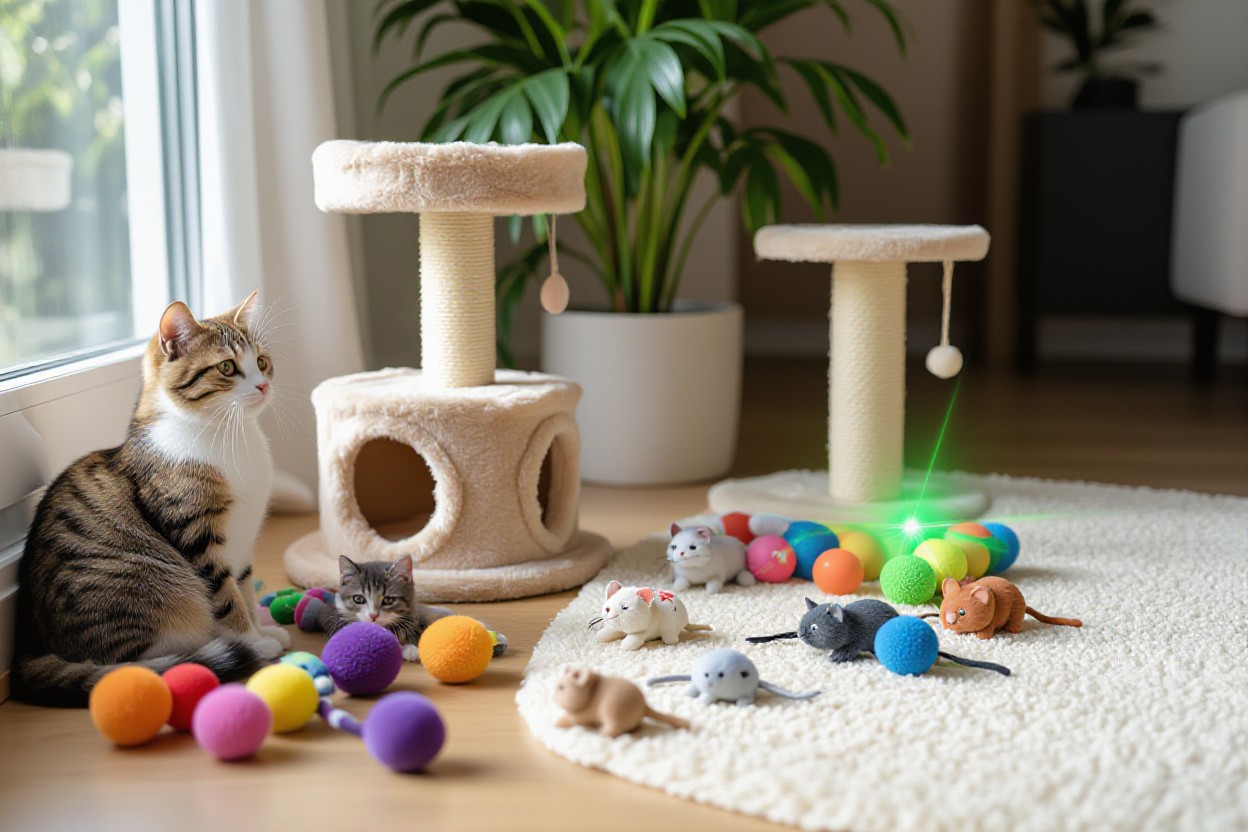
How to Introduce New Toys to Your Cat
Gradual Introduction Techniques
Set the stage by keeping the new toy out but visible for 24–48 hours so your cat can sniff it; then run supervised play sessions of 5–10 minutes once or twice a day. Rotate with a set of 3–5 familiar toys, storing the rest out of sight for 3–7 days. Use bedding or your hand to transfer familiar scents, and always supervise the first few sessions to check for choking hazards or loose parts.
Encouraging Engagement
Use motion and reward: wave a wand, set an electronic teaser to short bursts, or hide 3–5 kibbles inside a puzzle feeder to build curiosity. Aim for two focused sessions of 10–15 minutes for adults, shorter for kittens. Combine tactile variety—feather, crinkle, rubber—and finish each play period with a treat or a tangible catch to reinforce hunting success.
Target specific toys to your cat’s play style: if your cat chases, prioritize wand toys (Da Bird-style) and ball tracks; if they’re puzzle-driven, try a Nina Ottosson treat puzzle or rolling treat balls. Use the laser pointer sparingly and always end by letting your cat catch a physical toy or treat so they get closure. For string-based play, never leave strings unsupervised and store them safely after sessions.
Observing Reactions and Adjusting
Watch posture and behaviour: forward ears, slow-blink interest, stalking and pouncing mean success; flattened ears, hissing, repeated swatting, or hiding signal stress. If you see negative signs, shorten sessions, swap to a gentler toy, or reintroduce after 48–72 hours. Stop immediately if the toy causes persistent fear or aggressive biting, and inspect toys for loose parts after each use.
Track responses over 7–10 play sessions to identify patterns—note which textures, speeds, and play lengths your cat prefers. If a toy gets chewed to pieces or small parts detach, discard it and replace it with a safer alternative (solid rubber balls, sturdy plush without plastic eyes). As a rule, retire a toy if your cat shows no interest after roughly 10 attempts over two weeks, then reintroduce different categories to keep enrichment fresh.
Seasonal Considerations for Cat Toys
Winter Toys for Indoor Play
You can boost winter activity with warm, tactile toys and slow-paced puzzles: try a heated cat mat near a window, plush mice filled with strong catnip like Yeowww! or a motorized mouse such as the SmartyKat Hot Pursuit to stimulate stalking instincts. Rotate puzzle feeders (Catit Senses 2.0 or Nina Ottosson) every 7–10 days to prevent boredom, and avoid toys with fragile batteries or loose parts that could break in colder, brittle conditions.
Summer Activity Ideas
During hot months, schedule short, frequent sessions—aim for 2–3 five-minute play bursts in cooler times (dawn/dusk) using wand toys, feather teasers, or slow-moving ball tracks; keep laser sessions under 1–2 minutes and always end with a tangible catch like a stuffed toy to satisfy hunting drives. Offer a chilled, cat-safe cooling mat and plenty of fresh water while playing.
You should prioritize indoor, low-heat enrichment: make DIY frozen puzzle treats by freezing wet food in shallow trays for brief supervised licking, and place activity centers near air-conditioned rooms to maintain comfort. Use electronic toys like the PetSafe Bolt or moving ball tracks for hands-off enrichment when you need to limit strenuous activity, and monitor for signs of overheating—panting or lethargy—stopping play immediately if they appear.
Holiday-Themed Toy Options
You’ll find many seasonal toys—plush pumpkins, reindeer catnip mice, and crinkle ornaments—but keep safety first: avoid tinsel, ribbon, and small detachable parts that can cause choking or intestinal blockages. Choose robust, machine-washable holiday toys and supervise novelty items like battery-operated crinkle presents.
For longer-term holiday enrichment, rotate 3–5 themed toys into your regular lineup and store fragile decorations out of reach. You can DIY felt ornaments stuffed with catnip (use reinforced stitching), or buy durable options like KONG holiday-themed toys and Yeowww! catnip shapes. Always inspect seasonal toys weekly for wear, and immediately discard anything with exposed stuffing, loose batteries, or torn fabric to prevent ingestion.
The Role of Human Interaction in Play
Bonding Through Play
You can strengthen your bond by scheduling short, focused sessions—aim for 10–15 minutes, twice daily—using wand toys and interactive feeders; these sessions build trust, reduce boredom, and make the best cat toys for indoor cats more engaging. Use varied speeds and reward successful pounces with a treat or gentle praise, and never use your hands as toys to avoid teaching biting or scratching.
Understanding Your Cat’s Play Style
Observe whether your cat is a stalker (slow, low-to-ground stalking), chaser (high-speed pursuit), ambusher (hides and attacks), or forager (prefers hunting puzzles); kittens under 6 months usually need high-intensity play, while seniors often prefer slow, tactile toys. Note tail flicks, chirps, and body posture to match toys to style and energy level.
Track 5–10 brief sessions over a week to spot patterns: if your cat abandons a toy after two minutes, swap to a wand or moving toy; if they obsess over small prey, offer puzzle feeders and secure, non-toxic catnip toys. Match examples—wand toys for stalkers (e.g., long-feather wands), ball tracks for chasers, tunnel hides for ambushers, and treat-dispensing puzzles for foragers—while checking seams and loose parts before each session.
Incorporating Training into Play
You can turn play into training by adding simple cues and rewards: use a clicker or short verbal cue during a successful pounce, reward with a small treat, and keep sessions to 3–7 minutes with 3–5 repetitions to avoid fatigue. Focus on one behavior per session and use play as the reward rather than punishment.
Start with high-value, low-calorie treats and pair a consistent cue (clicker or word) with the desired action—targeting a mat, coming when called, or accepting a harness. For example, lure your cat onto a mat with a feather, click at the first paw placed, reward, and repeat 6–8 times; then phase out the lure. Use tools like a clicker, target stick, and treat pouch, and avoid overfeeding by adjusting meal portions when using food rewards.
Conclusion
With this in mind, you can choose the best cat toys for indoor cats that balance physical exercise and mental enrichment by mixing interactive toys, puzzle feeders, wand toys, and age-appropriate options; prioritize safety, rotate selections regularly to prevent boredom, and include both budget-friendly and premium picks so your cat stays engaged, active, and content while you manage their indoor lifestyle.
FAQ
Q: What are the best cat toys for indoor cats and which specific products or categories should I consider to provide both physical and mental stimulation?
A: The best cat toys for indoor cats mix movement, hunting simulation, puzzle-solving and safe solo play. Below are 12 categories with specific product examples and short notes on what each category supplies for enrichment. Use a mix so sessions target chase, pounce, batting, stalking, foraging and chewing behaviors.
1) Interactive wand and teaser toys (high physical play, great for bonding)
– GoCat Da Bird Feather Wand: long-reach feathers and erratic movement mimic birds.
– Cat Dancer: simple, springy ribbon that triggers pouncing and biting.
– KONG Cat Teaser Wand: durable handle and varied attachments for switchable play.
2) Puzzle feeders and food-dispensing toys (mental challenge + slow feeding)
– Catit Senses 2.0 Food Maze: adjustable difficulty and slow-feed function.
– PetSafe SlimCat or PetSafe Eatwell 3-Meal Toddler: timed, portioned dispense for puzzle-feeding practice.
– KONG Active Cat Wobbler: wobble-and-dispense for kibble or treats.
3) Wand-toy hybrids and motorized chasers (interactive but hands-off options)
– FroliCat Bolt or FroliCat Pounce laser/automatic chaser: randomized movement to entice stalking.
– HEXBUG Nano Robotic Toy: erratic miniature robot that mimics prey.
4) Ball tracks and chase tracks (solo chase, repetitive motion)
– Bergan Turbo Scratcher Track: circular track with rolling ball inside to bat and chase.
– Catit Play Circuit: modular tracks with rolling balls for multi-cat interaction.
5) Electronic/automatic toys (longer solo sessions; supervise initial use)
– SmartyKat Hot Pursuit: concealed moving prey under a cover for stalking.
– PetSafe FroliCat RoloMouse: motorized mouse that runs in short bursts.
6) Laser pointers (high-intensity chase; use safely — see safe-use item below)
– PetSafe Bolt Laser: focused dot for interactive chase sessions.
– Remote laser toys like Petcube Play (with caution and supervision).
7) Catnip and silvervine toys (scent-driven fun)
– Yeowww! Yellow Banana or KONG Catnip toys: strong-stuff catnip pouches for rolling and biting.
– VET-recommended silvervine chew toys for cats unresponsive to catnip.
8) Scratchers and combined-scratch/play stations (claw maintenance + play)
– Bergan Turbo Scratcher with attached ball track.
– PetFusion Ultimate Lounge Cat Scratcher or cardboard scratch pads like SmartCat Scratcher; scratching surfaces integrated with toys.
9) Tunnels and hide boxes (stalking, ambush, safe retreat)
– SmartyKat Super 3-Way Tunnel: collapsible tunnels for running and hiding.
– Outward Hound Fun Tunnel alternatives: stable tunnels with crinkle texture.
10) Plush and kicking toys (strong bite and hold targets)
– KONG Kickeroo: longer plush for cats to grip and kick.
– Petstages Catnip Mice and plush rodents for wrestling practice.
11) DIY and low-cost options (budget-friendly, customizable)
– Crumpled paper balls, toilet-paper roll puzzles, treat-in-a-box puzzles, water-bottle-shaker toys.
– Homemade wands: a dowel, string and feather or fabric strips (avoid loose parts that shed).
12) Premium smart toys and camera feeders (higher investment, versatile)
– Petcube Bites/Play (camera + treat dispense + laser): monitor and play remotely.
– Litter- and activity-monitor ecosystems that integrate toys for data-driven enrichment.
Age-appropriate recommendations:
– Kittens (high-energy, teething): soft plush kick toys (KONG Kickeroo), wand play multiple short sessions, small balls, paper toys, puzzle feeders with low difficulty.
– Adult indoor cats (varied activity): combination of wand sessions, puzzle feeders (Catit Senses), automated chasers (HEXBUG), scratchers and tunnels.
– Seniors (lower impact, cognitive support): slower-moving puzzle feeders (KONG Wobbler with less force), soft plush for comfort, gentle batting toys, elevated perches to reduce strain.
Budget picks vs premium choices:
– Budget: crumpled paper, sock/wand DIY, cardboard scratchers, basic ball tracks like Bergan Turbo Track (affordable).
– Premium: Petcube Play or PetSafe automated feeders, PetFusion scratchers, durable KONG/Yeowww! lines with longer lifespan and replaceable parts.
Combine categories so at any given day your cat can practice stalking (wands, laser), chasing (balls, tracks), foraging (puzzle feeders), scratching (scratchers), and comforting (plush/catnip). The phrase best cat toys for indoor cats applies to a balanced set across these categories rather than a single item.
Q: How do I choose safe toys, introduce electronic or laser toys responsibly, and implement a toy rotation strategy to keep indoor cats engaged long-term?
A: Safety-first selection, careful introduction of electronic/laser toys, and a planned rotation routine extend interest and reduce risk. Follow these guidelines and specific steps for safe use and rotation.
Safety and material selection:
– Size and durability: Choose toys without small detachable parts or weak seams that can be swallowed. Avoid beads, tiny bells, or glued-on eyes on toys for unsupervised play.
– Strings and cords: Wands and strings are excellent interactive tools but are strangulation and ingestion hazards if left out. Keep these strictly supervised and store safely after play.
– Non-toxic materials: Look for toys made with non-toxic dyes, BPA-free plastics and natural fibers when possible. Chew-resistant silicone or well-stitched fabric is safer for bite-focused cats.
– Batteries and electronics: Ensure battery compartments are screw-closed and inaccessible. Regularly check for corrosion, exposed wiring or loose parts.
– Washability: Toys that can be washed reduce saliva and dust build-up. Plush toys with catnip should be machine-washable or hand-washable.
– Inspect frequently: Discard toys with stuffing coming out, ripped fabric, frayed strings or split rubber.
Laser pointer safe-use checklist:
– Never shine a laser into a cat’s eyes or the eyes of people or pets.
– Use laser as a targeting stimulus for 1–3 minute bursts to avoid frustration and obsessive behavior.
– Always end a laser session by pointing the dot onto a tangible toy or a treat reward so the cat can make a physical catch (prey capture closure).
– Prefer automated lasers that oscillate randomly but still follow the same capture rule; supervise initial use to ensure your cat stays calm.
– If a cat shows stress, obsessive chasing or excessive frustration, stop laser use and swap in a toy that provides physical capture.
Introducing electronic and automatic toys:
– Supervised sessions: Start with short supervised sessions so your cat can learn the device’s movement and not be startled.
– Associate positive cues: Use treats or praise when the cat interacts appropriately with the device to create positive associations.
– Battery and placement safety: Place motors on flat stable surfaces away from water and secure cords. Turn off and store when not in use.
Toy rotation strategy (practical 4–6 week schedule):
– Week structure: Use 6–15 toys in a rotation bin. Each day, offer 2–3 active toys: one interactive (wand), one solo moving toy (ball track), one food-based puzzle. Swap them after 2–4 days.
– Randomize and reintroduce: Cycle toys out for 2–4 weeks before reintroducing — the absence increases novelty and interest.
– Mix new with familiar: When introducing a new toy, pair it with a known favorite to reduce suspicion.
– Short sessions: For active toys (wands, laser), do 2–3 sessions of 5–10 minutes daily for most adult cats. Kittens can have more frequent shorter sessions.
– Monitor engagement metrics: If your cat loses interest within 30 seconds consistently, retire that item from rotation and consider a new category or different texture.
– Replacement cadence: Replace heavily chewed plush or ragged toys every 2–6 months depending on damage and hygiene. Electronic toys may last longer but require periodic inspection.
Multi-cat household adjustments:
– Offer multiple copies of high-value toys to reduce resource guarding.
– Use multiple puzzle feeders staged in different locations to prevent food anxiety.
– Schedule simultaneous interactive play to burn excess energy collectively.
Cleaning and hygiene:
– Wash fabric toys weekly if used heavily or on rotating schedule; disinfect plastic tracks and feeders per manufacturer instructions.
– Remove and discard toys that cannot be cleaned and show signs of bodily fluids or significant wear.
Special safety notes for kittens and seniors:
– Kittens: Avoid dense foam or small objects that fit in the mouth; supervise chewing; choose washable toys for teething drool.
– Seniors: Avoid toys requiring sudden starts or high leaps; use lower-velocity motorized toys and accessible treats; watch joint-limited movement and adapt play surface height.
Combining safety with stimulation gives the best outcome: choose durable, supervised toys, rotate frequently, ensure closure of prey-drive with tangible rewards and adjust play based on age and personality.
Q: How can I build a daily and weekly enrichment plan using these toy categories to improve my indoor cat’s physical health and mental stimulation, and what are signs a toy or strategy needs changing?
A: A structured routine with varied toy types prevents boredom, helps weight control, reduces behavioral problems and supports cognitive health. Below is a practical daily and weekly plan, plus indicators that it’s time to swap tactics.
Sample daily schedule (for a typical adult indoor cat):
– Morning (7–15 minutes): Short interactive wand session upon waking to simulate an early-morning hunt. Use high-motion wand or feather toy (GoCat Da Bird, Cat Dancer).
– Mid-morning (hands-off 10–30 minutes): Stationary puzzle feeder (Catit Senses 2.0 Food Maze or KONG Wobbler) filled with breakfast kibble to encourage foraging.
– Afternoon low-energy play (5–10 minutes): Gentle batting with ball track (Bergan Turbo Track) or rolling a crumpled ball for interest.
– Evening (10–20 minutes): Peak interactive session with wand + occasional laser dot for stalking, ending with a tangible toy or treat as capture.
– Night/alone hours (overnight safe toys): Door-closed safe plush with sewn-in catnip (Yeowww! or tightly stitched toy) or a securely enclosed electronic toy with screw-locked battery compartment. Remove strings and unsecured small items.
Weekly rotation example:
– Day 1 & 2: Wand + ball track + food puzzle
– Day 3 & 4: Motorized chaser + tunnel + scratching session with a reward (catnip)
– Day 5: Longer puzzle feeder session + plush kicking toy
– Day 6: New or rotated toy introduction day (reintroduced after 2–4 week rest), low-light laser session with capture toy
– Day 7: Low-activity recovery day—lots of soft toys, cuddles, and grooming sessions
Progressive challenge strategy:
– Increase puzzle difficulty slowly: tighten openings, add removable barriers, or switch to a timed feeder.
– For athletic cats, add higher vertical movement (wand swings at higher perches, tunnels between platforms).
Signs your toy or strategy needs changing:
– Immediate loss of interest: The toy does not engage beyond a few taps of curiosity — try different textures or motion types.
– Increased destructive chewing or ripping: Substitute chew-safe toys and remove the current toy.
– Stress signals: Pacing, obsessive circling around a laser point, over-grooming after play — stop the triggering toy and opt for calmer enrichment like puzzle feeders or gentle petting.
– Aggression toward other cats after toy use: Provide duplicate toys and separate play sessions to reduce possessiveness.
– Weight gain or lethargy despite playtime: Increase active chase sessions; add more vertical routes, wand sessions and timed puzzle feeders to boost daily activity.
Customization by personality:
– Predatory “chasers”: Emphasize wands, motorized mice, laser with physical capture, ball tracks.
– Puzzle-minded cats: Rotate progressive-feeding puzzles (Catit Senses, Trixie Puzzle Board), hide small treats in boxes, use foraging mats and LickiMats.
– Comfort-seekers: Use plush toys with mild catnip or warmed toys, combine with scratching posts and soft tunnels.
Replacement and lifecycle:
– Track toy lifespan in a simple log: date placed into rotation and date retired.
– Swap out categories seasonally (spring: extra active outdoor-mimic toys; winter: indoor scent-based games).
– Invest in at least one high-quality arm-replacement toy (durable wand) and one reliable puzzle feeder as staples.
Final performance metrics (how to tell you’re succeeding):
– Active engagement: Cat initiates play with toys at least once daily.
– Weight stability or gradual improvement if dieting.
– Reduction in undesirable behaviors (scratching furniture replaced by scratchers, less nighttime yowling).
– Evidence of cognitive engagement: solving puzzles, anticipation for food-dispensing toys.
Combine product-focused selection and consistent scheduling to shape natural behaviors into healthy routines. The best cat toys for indoor cats are those that are safe, varied, rotated and integrated into daily life with short interactive sessions and reliable opportunities for independent foraging and play.