Overall, when you design a play area for your cat you provide enrichment, reduce stress and channel hunting instincts into positive activity. Start by choosing a safe, accessible spot that gives your cat room to jump, climb and hide without blocking daily traffic.
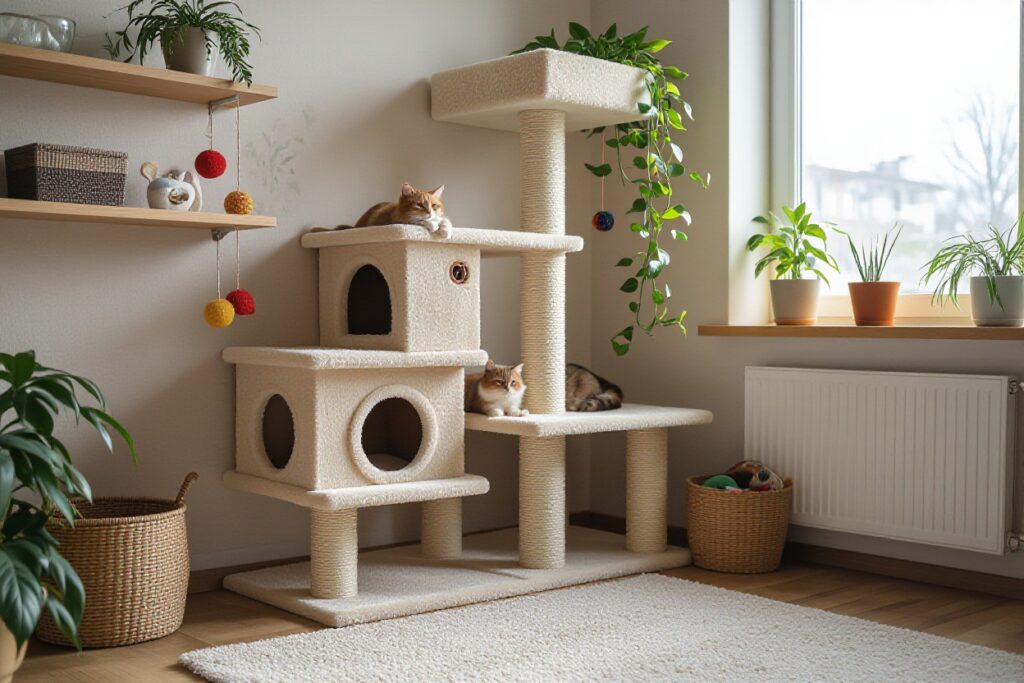
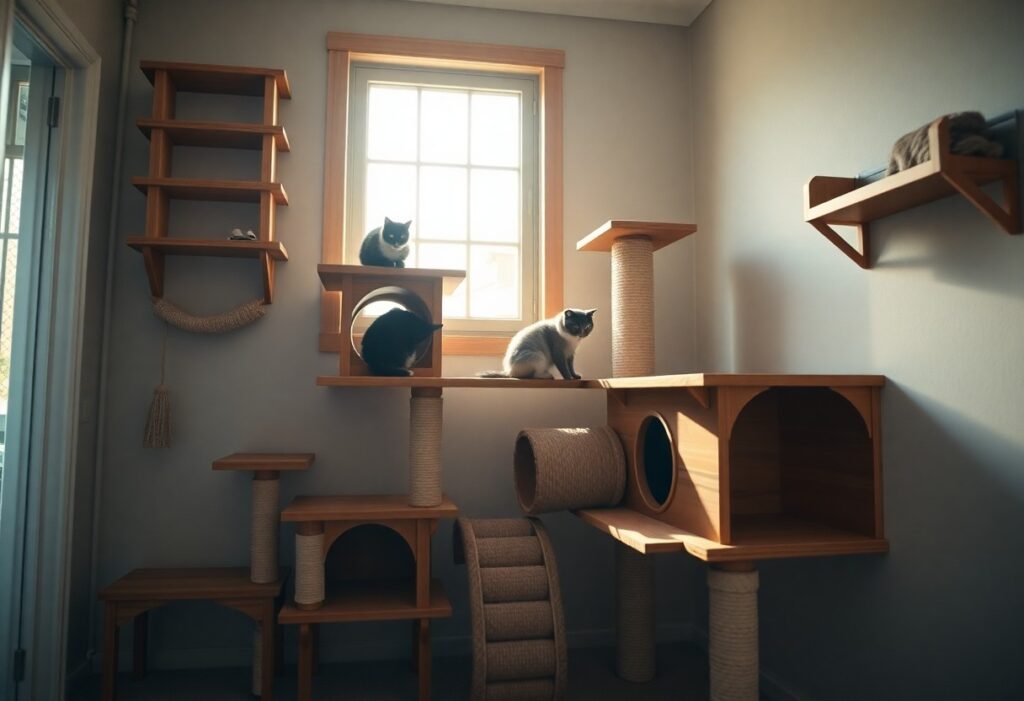
Plan around vertical space as much as floor area: your cat values elevation. Install wall-mounted shelves, perches and a stable cat tree to create tiers. Ensure each level is sturdy and anchored so jumps and landings are secure.
Provide a mix of structures: a tall scratching post with sisal, an enclosed hideaway, and open lounging stations that catch windows or sunlight. Add low platforms for older or less agile cats so they access higher areas gradually.
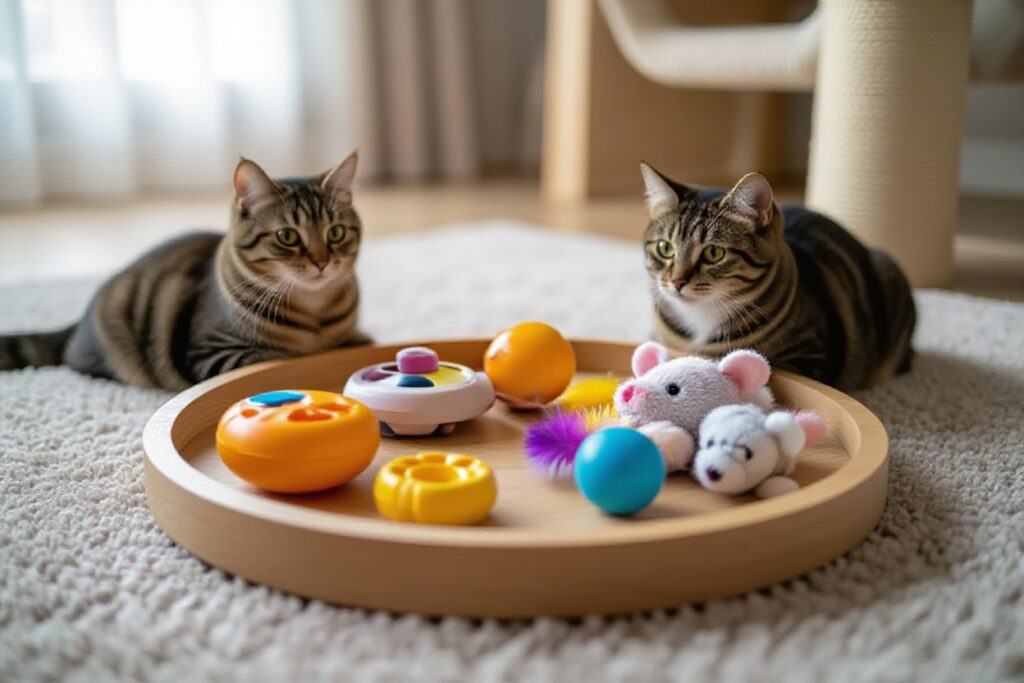
Stock the area with varied toys to engage hunting and problem-solving instincts: wand toys for interactive play, puzzle feeders to slow eating and stimulate foraging, and small rolling toys for solo chasing. Rotate toys weekly to maintain novelty and prevent boredom.
Choose easy-to-clean surfaces and washable fabrics for cushions and tunnels. Place rugs or mats under active zones to protect floors and provide traction. Inspect and replace worn ropes or torn fabric to maintain safety.
Incorporate sensory elements: a catnip corner, a window perch for bird watching, and varied textures like cardboard, sisal and soft fleece. Schedule short interactive sessions each day for bonding, and allow independent exploration the rest of the time.
Observe your cat‘s preferences and adjust layout: some cats prefer high vantage points, others seek enclosed spaces. With thoughtful planning, proper play equipment and ongoing rotation, your indoor play area will keep your cat mentally and physically fit while enhancing your home environment.