With creative planning, you can keep your pet active and mentally stimulated at home using games, puzzle feeders, and short training sessions; prioritize supervised high-intensity play, remove small choking hazards, monitor for signs of overheating or joint strain, and enjoy the improved fitness, behavior, and bonding that follow.
Benefits of Indoor Exercise for Pets
Indoor sessions help you manage weight, joint health and behavior without relying on weather or daylight; for dogs aim for 30-60 minutes daily and for cats target 10-15 minute play blocks, 2-3 times a day. Regular indoor activity cuts risk of obesity and arthritis progression, lowers stress-driven destruction, and lets you supervise hazards like stairs or toxic plants to keep your pet safe.
Physical Health
When you structure indoor workouts, your pet builds muscle, preserves mobility and burns calories-30 minutes of vigorous play can expend roughly 150-300 kcal in a medium dog, while brisk cat play increases agility and core strength. Use low-impact options for seniors-ramped fetch or balance pads-and monitor for overexertion, panting or limping so you can stop and consult your vet if needed.
Mental Stimulation
You can convert physical activity into cognitive work with puzzle feeders, scent games and short training drills that boost problem-solving and reduce boredom; studies show brief, frequent sessions cut destructive behaviors significantly. Rotate activities and use food-dispensing toys to make meals into enrichment, which helps lower anxiety and channel your pet’s energy into positive outlets.
For more depth, combine modalities: hide kibble in a snuffle mat, run a 5-10 minute clicker training routine, then follow with a 10-minute indoor fetch or stair session. Aim to rotate 4-6 toys weekly, introduce new scent challenges, and stagger food puzzles so a single meal becomes 10-20 minutes of mental work-this mix prevents habituation and keeps your pet engaged.
Creative Playtime Ideas
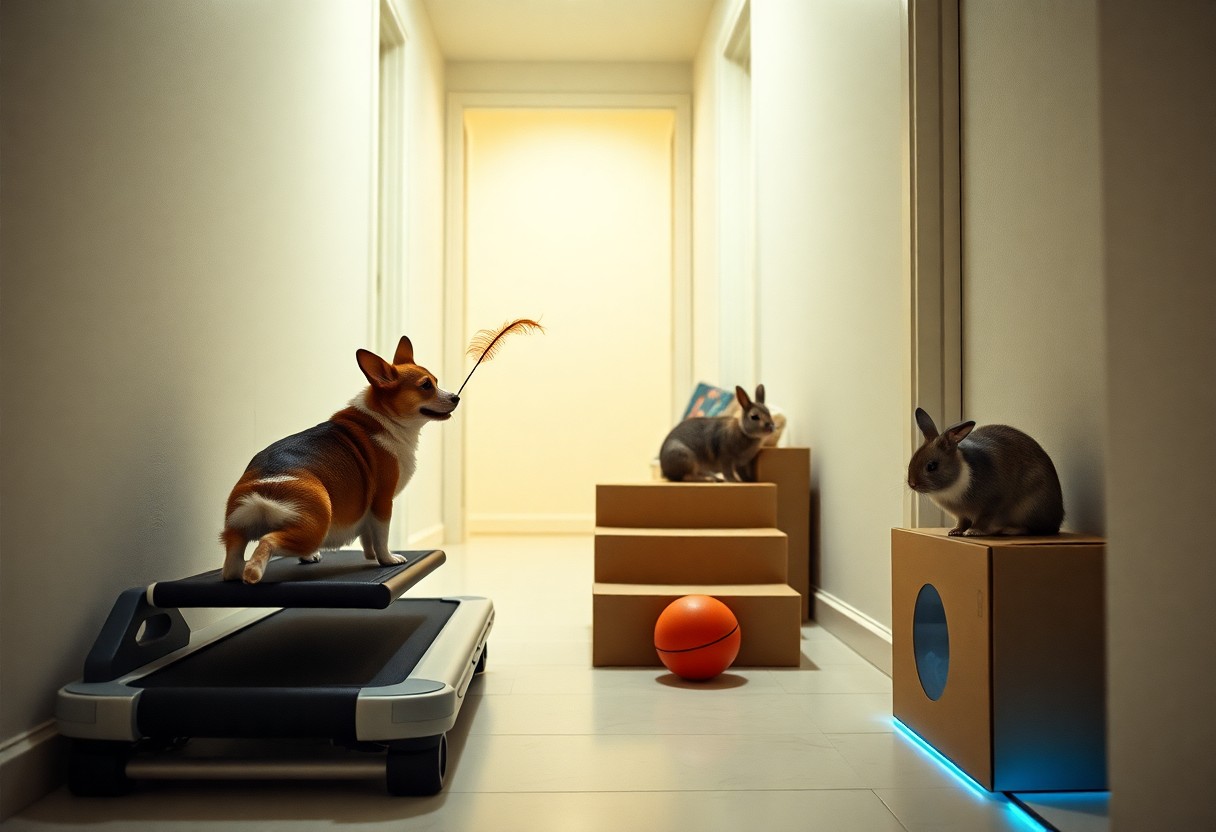
You can mix high-energy games with brain challenges to keep your pet engaged: try 10-15 minute scent trails, 5-10 minute tug or fetch bursts, and 15-minute puzzle sessions back-to-back. Rotate activities every 2-3 days to prevent boredom, and aim for at least 30-45 total active minutes daily for most active dogs and cats. These combos boost mental stimulation and burn excess energy.
Interactive Toys
Start with durable puzzle feeders, treat-dispensing balls, and snuffle mats; electronic moving toys work well for cats. Swap toys every 3-4 days and limit play bouts to 10-20 minutes to maintain novelty. If a toy has small parts or batteries, supervise closely because those parts are dangerous if swallowed. Many studies show puzzle toys can reduce destructive behavior by 40-60% when used consistently.
DIY Agility Courses
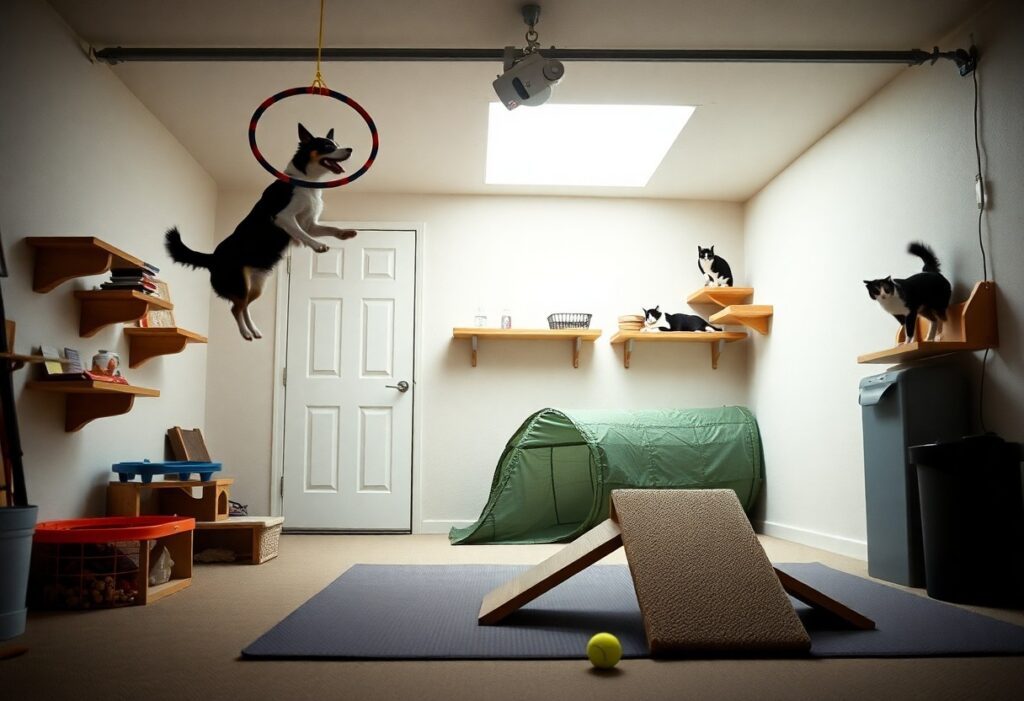
Use 1″ PVC for poles, cones for weave entries, and a low broomstick for jumps set at 6-12″ for small, 18-24″ for medium, 30″+ for large breeds; assemble 3-7 obstacles in a 10-30 foot circuit. Place non-slip mats and keep sessions short-5-10 minutes with 3-5 repeats. Secure anchors and stable surfaces are vital to prevent slips and injuries, while the course improves coordination and focus.
For setup, space weave poles 24-36″ apart, use a 3-6 ft collapsible tunnel, and keep ramp inclines under 20°. Begin with very low jumps and increase height gradually; train in 1-3 minute drills with 30-60 second rests and use treats or a clicker for clear cues. Adjust complexity per age-avoid high-impact obstacles for puppies under 9 months or seniors with joint issues.
Indoor Fetch and Retrieval Games
Use a hallway or cleared living room to run shorter sprints-20 to 30 feet suits most medium breeds. Keep sessions to 10-20 minutes with 10-15 reps, alternating throws and short rests to prevent overheating. Choose soft balls or plush dummies that won’t dent walls, toss low for seniors to limit impact, and remove breakables; positive: soft toys cut chatter and damage, while dangerous: slippery floors and glass decor raise injury risk.
Variations on Classic Fetch
Roll instead of throw to keep low-stature dogs and cats engaged, or hide a ball under cushions so your pet uses scent and problem-solving; mix in a 3-5 minute tug bout mid-session to spike intensity. Use a soft mini-frisbee for 10-20 foot indoor arcs or a lightweight launcher set to short distances, and always favor soft, nonabrasive toys while avoiding glass or breakables nearby.
Safe Spaces for Play
Designate a 6×8 to 8×12 foot zone free of furniture and cords; you can size it to fit your pet’s sprint distance (about 20-30 feet for larger dogs). Lay down non-slip mats or area rugs, secure baby gates, and remove houseplants or ornaments. Supervise new games for the first 10-15 minutes to watch for chewing or hazards; positive: soft flooring reduces joint stress, dangerous: exposed wires, glass items.
When setting the area, place baby gates at both ends or use furniture to limit escapes and position non-slip yoga mats or interlocking foam tiles along running lanes. Pick toys at least 1.5× your pet’s mouth width to reduce choking, wash plush toys weekly, and rotate toys every 7-10 days to keep interest high. Supervise the first several 10-20 minute sessions and remove any toy that shows tears-dangerous: small, shredded pieces.
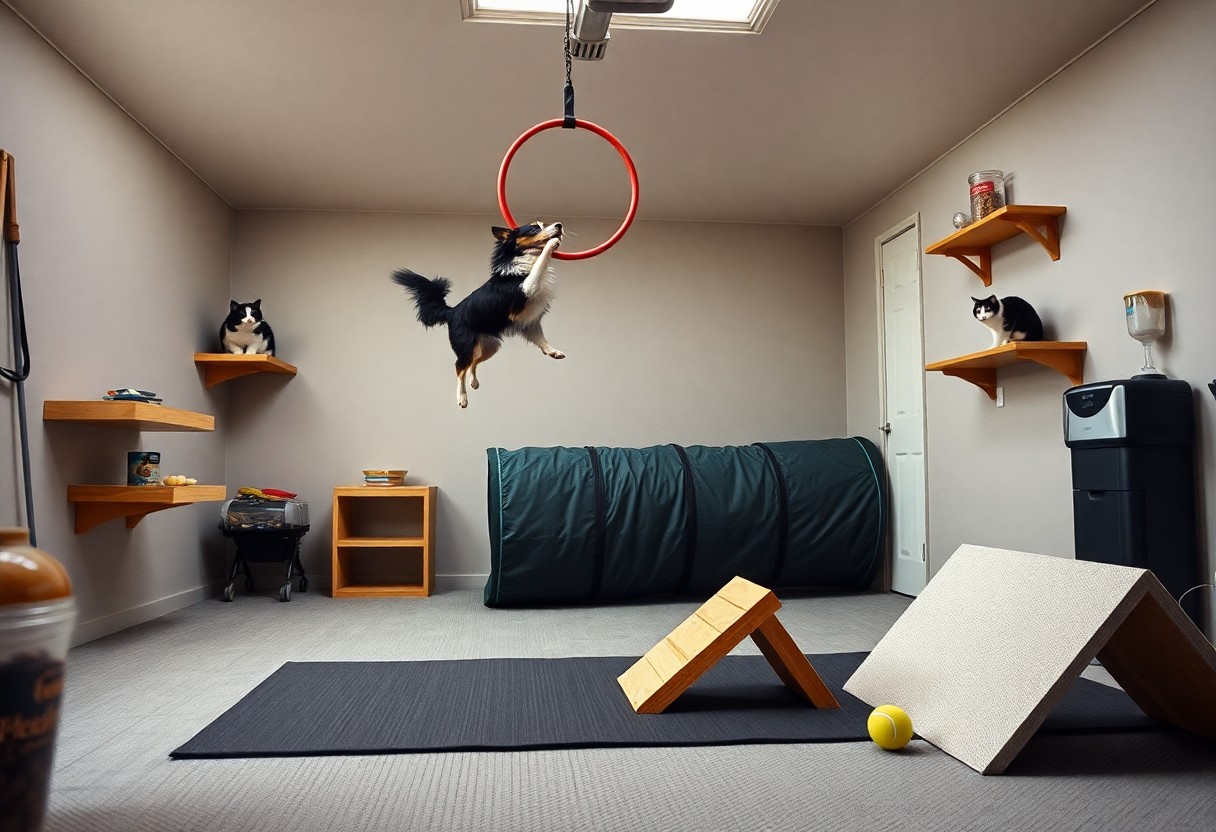
Obstacle Courses for Cats and Dogs
Design courses that match your pet’s size and instincts; for dogs, 5-7 obstacles spaced 1-2 m apart work well, while cats prefer verticals and short sprints between perches. Alternate tunnels, low jumps, weave poles and scent stations to build agility, mental stimulation and burn calories. Keep runs to 2-5 minutes for cats and 10-30 minutes for dogs depending on breed, and always supervise. Remove small parts and secure loose rugs to avoid choking or slipping hazards.
Setting Up an Indoor Course
Start with household items: cardboard tunnels, stacked boxes, a broom across cushions for a low jump, and taped-down towels for traction. Use 10-20 cm hurdles for small dogs and 30-50 cm for medium breeds; space cat perches 0.5-1 m apart to encourage jumps. Anchor tunnels, tape cords, and keep plants and hot appliances away. Test each setup yourself first and use non-slip surfaces to reduce injury risk.
Engaging Your Pet in Training
Use positive reinforcement-clicker or marker word, immediate treat, and praise-to shape runs one step at a time. Begin with 1-2 obstacles, reward every success, then move to partial reinforcement (1-in-3) as skills improve. Keep sessions short: 5-10 minutes twice daily for cats, 15-30 minutes once or twice daily for dogs. Rotate rewards like treats, tug, or play to maintain motivation. Start simple and reward consistently to speed learning.
If progress stalls, break tasks into micro-steps: lure the first motion, add a cue, then increase distance. Track improvement by counting clean runs-aim for 5-10 consecutive successes before raising difficulty. Watch for fatigue signs such as heavy panting, limping or unusual withdrawal; stop and rest if you see them. Use feather wands for cats and scent games for dogs to sustain interest, and never force an animal through an obstacle.
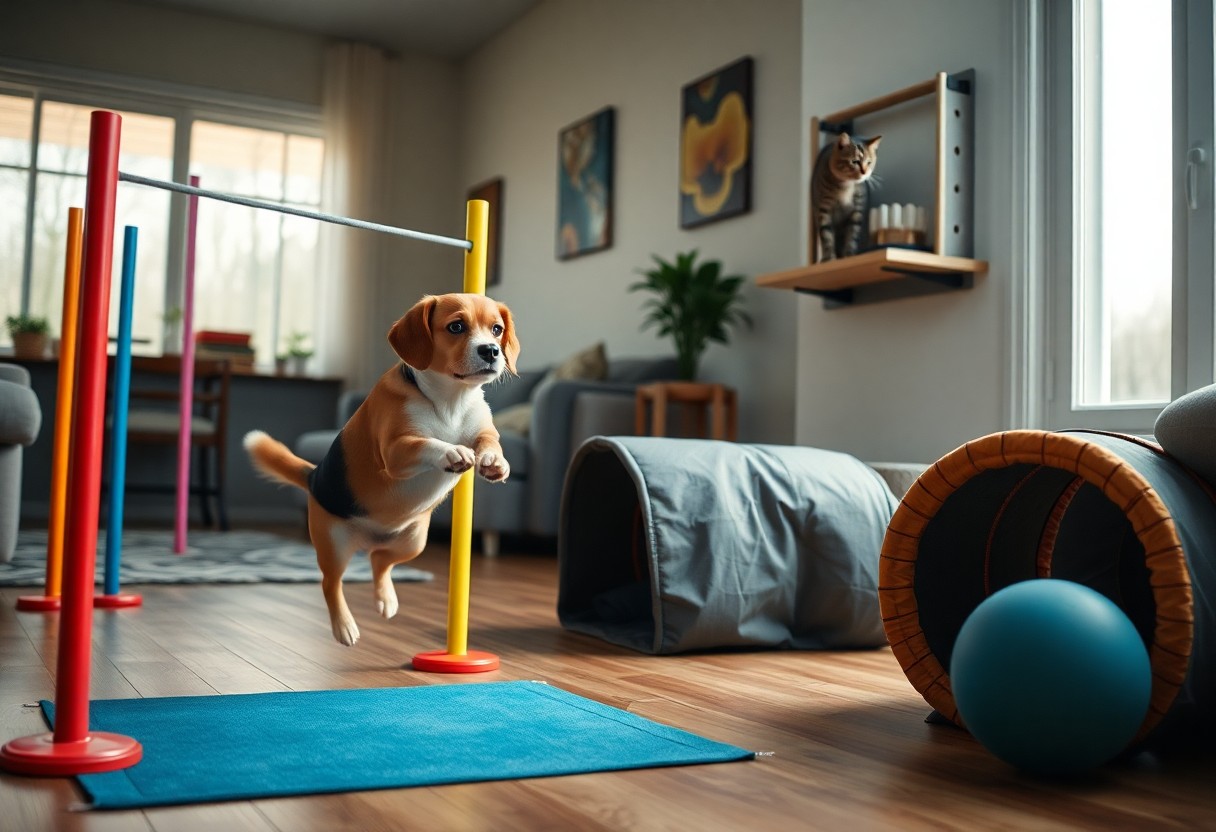
Enrichment Activities
You should rotate enrichment tools to keep novelty-use 3-5 different toys or games each week and combine scent work, problem-solving, and short training bursts for about 20-30 minutes daily. For example, alternate a snuffle mat, a 10-15 minute puzzle feeder, and two 5-minute scent trails across the day; this reduces boredom and lowers destructive behavior. Always supervise new items to prevent choking.
Puzzle Feeders and Treats
Use puzzle feeders like Kongs, Nina Ottosson toys, or snuffle mats to slow meals from under a minute to typically 5-20 minutes, and fill lick mats with wet food for calming 5-10 minute sessions. Start with 1-2 puzzles per meal, rotate every 2-3 days, and adjust difficulty-beginner puzzles for 8-12 week-olds or anxious pets. Watch for wear and discard toys with loose parts.
Hide and Seek Games
Begin by hiding treats or toys in one room and cue “find it,” then progress to 2-3 hiding spots per session; short bursts of 2-5 minutes with 3-5 repetitions work best. Use high-value treats for quick wins, and always avoid spaces where your pet could get trapped-never hide in places without an easy exit.
To increase difficulty, use scent trails and delayed releases: have your pet wait for 10-30 seconds while you hide 3-6 items, then release them to search; over 2-3 weeks you can expand hides from 1 to 8-10 locations and extend search time to 10-15 minutes. For cats, hide toys under boxes or on ledges; for dogs, include family members or different rooms. Monitor stress signals and keep sessions positive; if your pet freezes or stops searching, shorten the session and lower difficulty.
Keeping Pets Safe While Exercising
Indoor Safety Tips
You should clear a 6-10 foot play zone free of sharp or unstable items, secure loose rugs, and keep breakables out of reach; supervise high-energy sessions and limit jumps for small breeds to under 2-3 feet. Use soft, washable toys and keep water nearby to prevent dehydration. The use of non-slip mats, supervision, and regular hydration checks cuts injury risk substantially.
- Non-slip flooring
- Supervision
- Hydration
- Safe toys
Monitoring Physical Activity
Track sessions with a stopwatch or a wearable like FitBark or Whistle, aiming for 30-60 minutes daily for active dogs and 20-40 minutes for most cats broken into 5-15 minute bursts. Watch for heavy panting, pale gums, or limping as immediate stop signs. The baseline resting heart rate ranges: dogs ~60-140 bpm, cats ~140-220 bpm.
You can measure pulse by feeling the femoral artery-count beats for 15 seconds and multiply by four-and compare to the resting heart rate ranges; if your dog’s rate exceeds resting by more than 30% after five minutes of rest, pause activity. For seniors or overweight pets, split play into 5-10 minute sets, monitor weight weekly, and consult your vet if you see a >10% drop in normal activity or persistent limping.
Final Words
Now you have practical options to keep your active pet healthy and stimulated indoors: design short training drills, set up safe obstacle courses, rotate interactive toys and puzzle feeders, and schedule play intervals that match your pet’s energy. With consistency and close supervision you’ll prevent boredom, reduce excess energy, and deepen your bond.
FAQ
Q: What are safe, fun indoor exercise activities for energetic dogs?
A: Short structured sessions work best: play indoor fetch with soft toys down a hallway, tug-of-war with a sturdy rope, and hide-and-seek with treats or toys to stimulate nose work. Set up a mini-agility course using cones, low jumps (broom across boxes), and weave poles made from bottles. Use puzzle feeders and treat-dispensing toys to add mental challenge. Stair climbs (if joints are healthy) and supervised treadmill sessions can burn energy on rainy days. Keep sessions 5-20 minutes each, several times daily, monitor for fatigue, provide fresh water, and use non-slip flooring to prevent injury.
Q: How can I create an engaging indoor play routine for active cats?
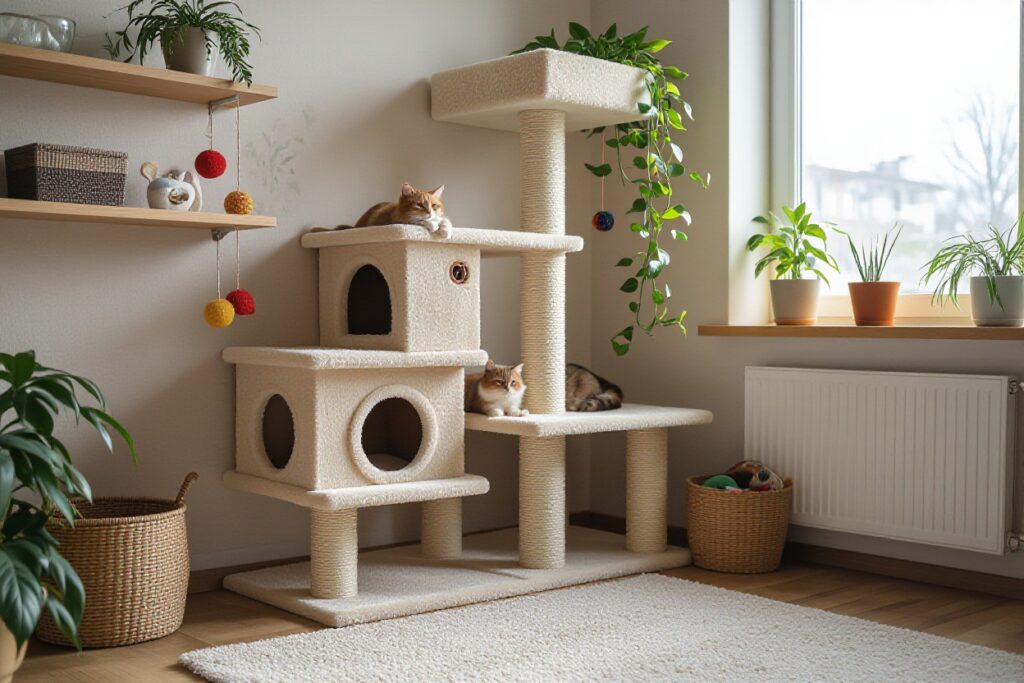
A: Schedule multiple short play bursts (5-10 minutes) throughout the day using wand toys, feather teasers, and laser pointers-finish laser sessions by letting the cat catch a toy or get a treat so the hunt is complete. Provide vertical space with cat trees and wall shelves, and hide treats in puzzle feeders or box mazes to encourage stalking and exploration. Rotate toys weekly and add climbing tunnels, paper bags, and crumpled paper for variety. Supervise string play, secure tall furniture, and trim nails as needed to keep play safe.
Q: What low-cost DIY ideas keep small pets (rabbits, guinea pigs, ferrets) active indoors?
A: Build tunnels and hideouts from cardboard boxes and PVC tubes, create obstacle courses with ramps and low jumps, and scatter hay or treats to encourage foraging. For rabbits and guinea pigs, provide chew-safe things to dig and toss (dig boxes with shredded paper) and allow supervised free-roam in a pet-proofed room. Ferrets enjoy multi-level play with tubes and hanging hammock setups. Use puzzle feeders made from toilet-paper rolls or treat-dispensing bottles to add mental work. Always remove toxic materials, secure electrical cords, and supervise unshelled play to prevent accidents.