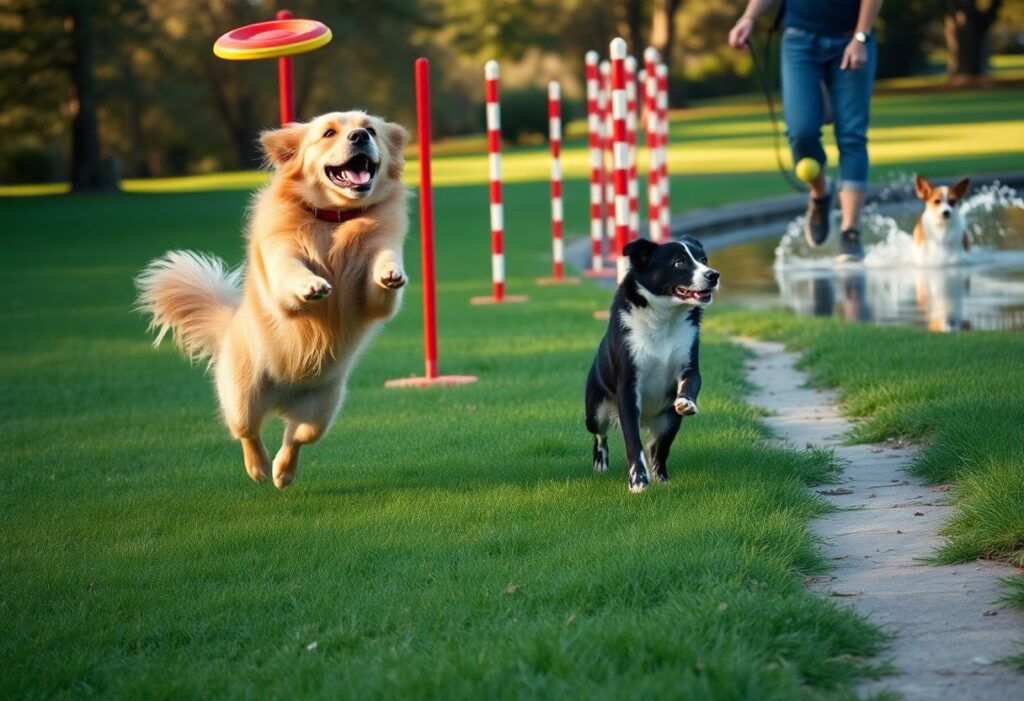
Just get your pet moving with structured outdoor play that boosts your pet’s fitness, mood, and behavior; when you choose activities like fetch, agility courses, and brisk walks you provide clear mental stimulation and physical exercise. Plan around weather to avoid heatstroke and dehydration, keep close supervision, and adapt intensity to your pet’s age and health for safer, lasting energy.
Benefits of Outdoor Activities for Pets
Getting your pet outside regularly improves cardiovascular fitness, weight control and social skills. Aim for 30-60 minutes daily for dogs and several short sessions for cats (10-15 minutes twice daily). Hiking, swimming and scent work build muscle and burn calories while exposing pets to varied stimuli that enhance adaptability. Stay vigilant for hazards like ticks, busy roads and extreme temperatures to prevent injury or heatstroke.
Physical Health Improvements
Outdoor exercise helps you manage weight, maintain joint mobility and boost aerobic capacity. For dogs, runs or play totaling 30-60 minutes per day support lean muscle and reduce obesity-related strain; for cats, multiple 5-15 minute chase sessions preserve agility. Incorporate low-impact options such as swimming for seniors and avoid hot pavement to prevent paw burns and overexertion.
Mental Stimulation
Outdoor enrichment sharpens your pet’s brain through scent work, problem-solving and varied environments. Short sessions-about 15-30 minutes of nose games, tracking or puzzle-based walks-cut boredom and destructive behaviors, and practicing commands in new locations improves focus. Supervise to avoid toxic plants, ingestion hazards and traffic risks.
To deepen mental enrichment, set progressive scent trails: start with visible rewards, then hide treats under leaves or in boxes and increase to 10-20 hides across a 15-30 minute session. Rotate rewards (kibble, toys, praise) and switch games every 2-3 days to prevent habituation. You can also join scentwork or agility classes for structured challenges and social learning; stop if your pet shows excessive panting, avoidance or repeated fixation to prevent overstress.
Popular Outdoor Activities
You can rotate activities to match your dog’s needs: many breeds thrive on 30-60 minutes of vigorous exercise daily, so mix hiking, swimming, agility, and scent games for variety. Pick routes and intensity by age and breed, watch for heat stress above 85°F, and alternate high-intensity sessions with low-impact days to build fitness while preventing overuse injuries.
Hiking with Pets
You should plan hikes of 3-6 miles for active adult dogs and keep routes under 2 miles for seniors or brachycephalic breeds; bring water-about 1 cup per 20-25 lbs per hour-a first-aid kit, and protective booties for rocky terrain. Check paws every mile, use a harness with a handle on steep sections, stay leashed in wildlife areas, and inspect for ticks at the end.
Playing Fetch
Short, intense fetch sessions of 10-15 minutes provide big energy release; choose rubber balls or frisbees and play on grass to protect joints. You should avoid tennis balls because their abrasive surface can wear teeth, watch for heavy panting or limping, and consider a ball launcher to increase distance without straining your arm.
To maximize benefits, structure fetch as interval work-20-30 second sprints followed by 1-2 minute rests-and teach reliable recall by rewarding returns with food or brief play. Modify intensity by age: puppies under 12 months should avoid repetitive high jumps and keep sessions under 10 minutes; dogs with joint issues do better with short tosses or swimming and should be cleared by your vet before increasing load.

Water Activities for Pets
Swimming
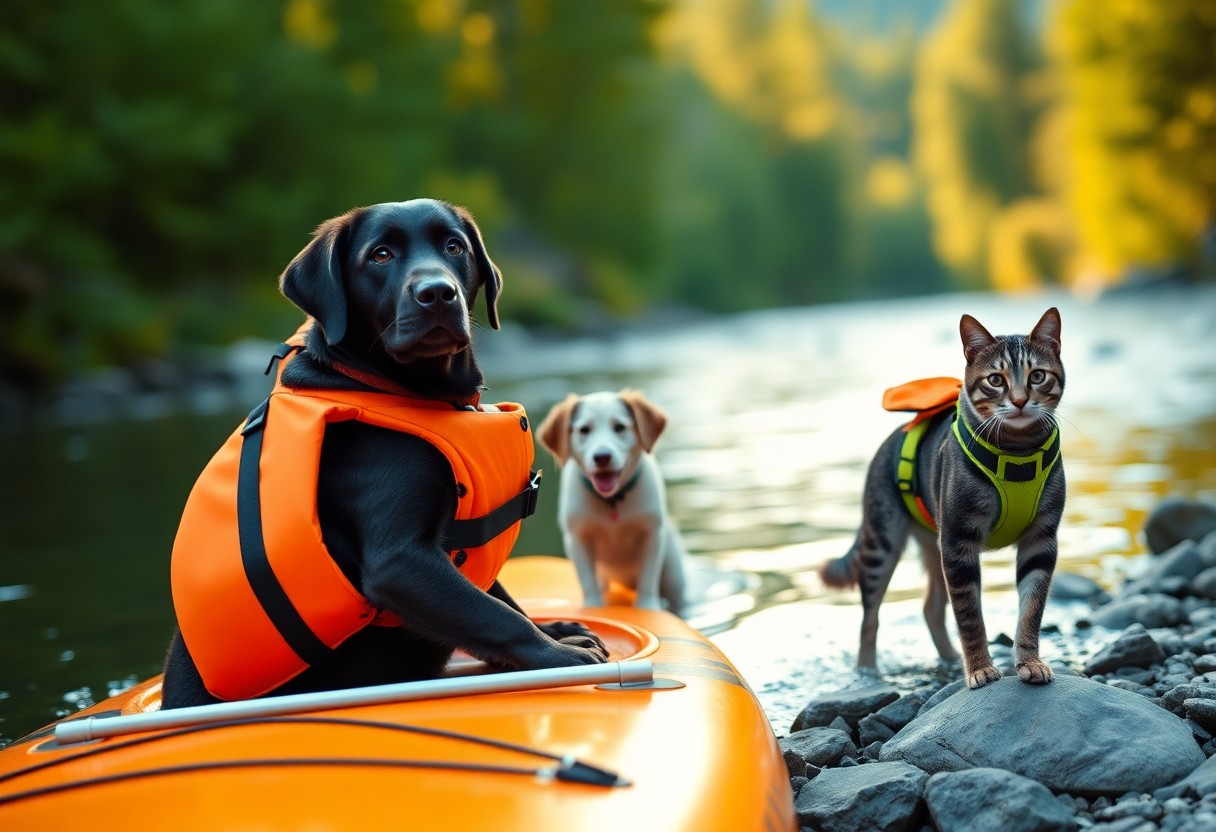
Your dog needs gradual water exposure: start at shallow edges and limit sessions to 10-20 minutes for beginners. Breeds like Labradors and Newfoundlands swim naturally, while brachycephalic breeds (Pugs, Bulldogs) require constant supervision. Use a properly fitted canine life jacket and rinse off after salt or chlorinated swims; avoid water below 50°F (10°C) and strong currents. Check paws for cuts and dry ears to reduce infections.
Paddleboarding
Start on calm water with a wide, stable board (aim for ≥30 inches width and 10-12 ft length) and check the board’s weight capacity to support you plus your pet. Teach your dog to sit near the nose, use a snug life jacket, and keep sessions under 30 minutes. Never tether your dog to the board; instead practice short rides and shore exits so you both learn balance and reboarding safely.
Introduce the board on land, reward calm behavior, then progress to shallow water entries; many dogs become comfortable within 2-4 sessions. Practice assisted re-boarding techniques-use the rear rail and a two-person lift for large breeds-and rehearse emergency dismounts. If you paddle in colder months, pack a dry bag with a towel and spare jacket. These steps build confidence, improve your pet’s core strength, and create a reliable routine for repeat outings.
Exploring Nature Trails
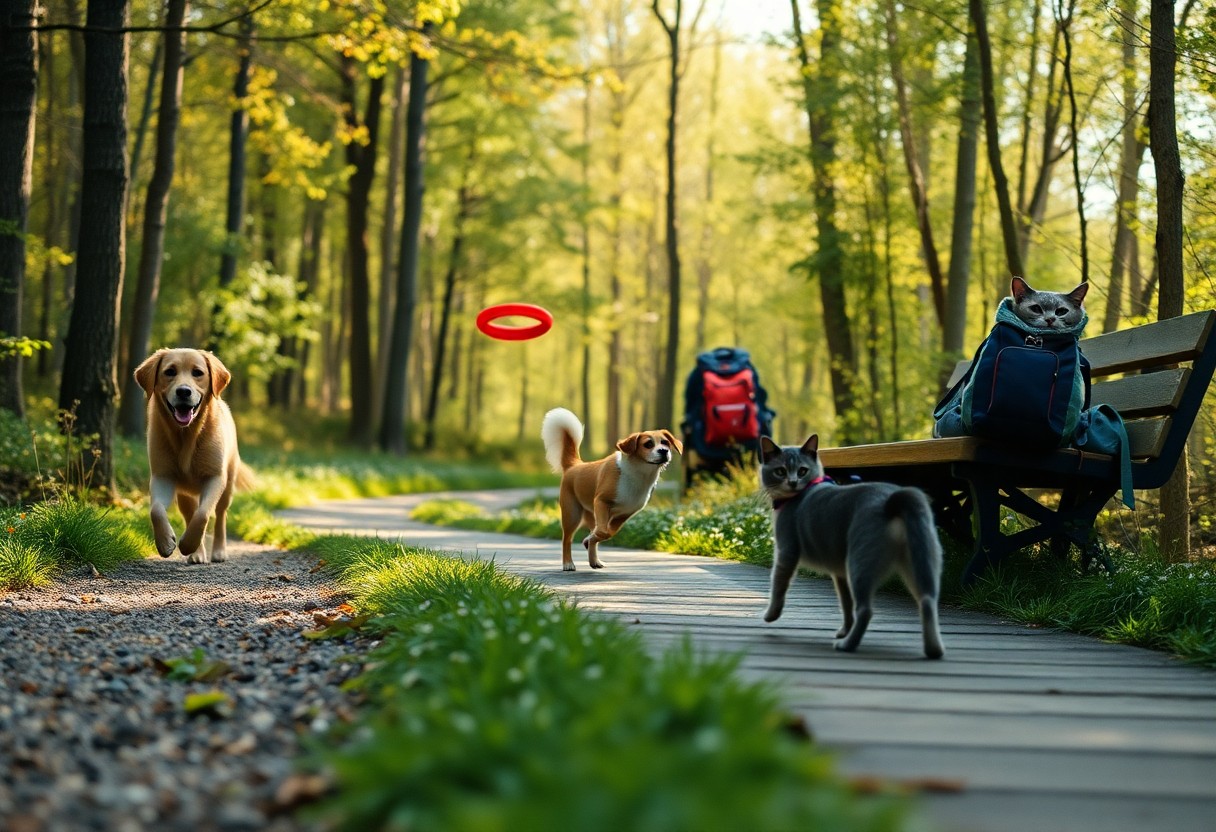
You can pick trails that match your pet’s fitness-opt for flat 1-3 mile loops for steady walks or 3-6+ mile ridge routes for high-energy breeds. Choose surfaces wisely: hot asphalt and sand cause rapid paw wear, while shaded forest trails reduce overheating. Carry a collapsible bowl and at least 1 liter of water per person, pause every 10-15 minutes for sniff breaks, and monitor pace to maintain cardio and mental stimulation.
Safety Tips for Trail Hiking
You should vet trail length, elevation gain, and shade-expect a 500-1,500 ft climb to significantly raise exertion. Watch for ticks, rattlesnakes, and signs of heat stress, and keep a compact first-aid kit handy; check paws hourly on rocky routes. After every outing, inspect paws, remove burrs or ticks, and log any limping or odd behavior.
- Leash – follow park rules; 6-ft is standard
- Hydration – offer water every 20-30 minutes in warm weather
- First-aid – antiseptic, bandages, tweezers for ticks
- Tick prevention – topical/oral treatment before hiking season
- Trail etiquette – yield to others and control barking
Best National Parks for Pets
You can target Acadia for its 45 miles of dog-friendly carriage roads, Shenandoah for over 500 miles of largely pet-accessible trails, and Cuyahoga Valley for the flat 33-mile Towpath. Check specific park rules before you go, since some parks allow pets broadly while others limit them to developed areas and campgrounds.
At Acadia plan 3-10 mile loops that avoid exposed ledges; in Shenandoah choose lower-elevation routes during summer to reduce heat stress. Note that parks like Yellowstone and Yosemite restrict dogs to developed areas and require a 6-ft leash; you should assess water access, altitude effects, and risk of wildlife encounters when mapping your route.
Group Activities and Socialization
Try organized outlets like 6-8 week agility courses, weekly playdates, or flyball teams to channel high energy; these activities sharpen obedience and burn excess energy while teaching communication with other dogs. You should monitor session length-aim for 30-60 minutes of focused activity for most adults-and watch for signs of fatigue or stress. Trainers often report faster recall improvement in dogs that attend group classes versus solo training.
Dog Parks
Choose parks that separate sizes and provide shaded areas, water stations, and posted vaccination requirements; many municipal parks require proof of rabies and core vaccines. You need to supervise your pet at all times, intervene at the first sign of mounting tension, and limit off-leash sessions to 30-90 minutes depending on weather and your dog’s fitness.
Pet-Friendly Events
Attend breed meetups, charity walks, or pet expos to expose your dog to crowds and new stimuli-events like “Bark in the Park” 5Ks often last 1-2 hours and draw hundreds of attendees. You should check event rules for vaccine and leash policies, expect loud noises and tight spaces, and plan short visits to prevent overstimulation; bring water and a familiar blanket to lower stress.
Before you go, verify event capacity and site logistics online, arrive early to acclimate your dog, and identify quiet zones or exit routes ahead of time. Pack vaccination records, a harness, ID microchip info, and treats for positive reinforcement; using short, frequent outings at events helps build confidence without risking heatstroke or confrontation, and lets you leave quickly if your pet shows stress.
Seasonal Outdoor Activities
When seasons shift, you should rotate activities to match temperature, daylight, and hazards: in spring and summer plan swim sessions, early-morning hikes, and tick checks; in fall use longer trail runs as temps cool; in winter favor snow play and short, intense outings. Use local weather forecasts and spot-check dew point or pollen counts. Adjust duration, water, and protective gear so your pet stays safe and energized year-round.
Summer Adventures
Start swims, paddleboard sessions, and canyon hikes early to beat heat; try canine dock diving or kayak retrieval drills for high-intensity fun. Limit hard exercise when temps exceed 85°F, give water breaks every 10-15 minutes, and fit a fitted life vest for open-water outings. You can also use shaded, 0.5-1 mile loop trails for daily runs to prevent overheating while keeping energy high.
Winter Sports
You can switch to snowshoeing, skijoring, and controlled snow fetch to keep intensity up without heat. You should limit sessions to 20-30 minutes when temps drop below 20°F, and steer clear of thin pond ice-dogs can break through under 1 inch of unstable ice. Use booties to block salt and slush, and dry paws promptly after play.
For skijoring, train gradually: begin with 5-10 minute leash runs, then add pulling work in 5-minute increments over weeks, using a non-restrictive harness and a 10-15 ft bungee line. Increase high-energy dogs’ food by about 10-20% on heavy winter activity days, inspect pads for ice buildup every outing, and seek local winter-dog groups for guided routes and safety tips.
FAQ
Q: What outdoor activities best burn energy for high-energy dogs?
A: High-energy dogs benefit from activities that combine aerobic exercise, mental challenge, and structure. Good options include timed fetch sessions with varied toys, frisbee or dock diving for strong jumpers, agility courses for coordination and focus, scent work or nose games to engage cognition, and longer hikes or trail runs for endurance. Mix short high-intensity intervals (sprints, tug, or chase) with longer steady-state efforts (hiking, jogging) and finish with a cool-down walk and water. Always check footing for paw health, carry water, adjust intensity for age and fitness, and use a secure leash or fenced area when needed.
Q: How can I safely introduce my indoor cat to outdoor activity?
A: Start with short, supervised sessions using a properly fitted harness and leash or a secure cat backpack; allow the cat to explore at its own pace and build time outdoors gradually. Offer interactive wand toys and treats to encourage movement, set up a shaded enclosed area or catio to prevent escapes and predators, and provide climbing perches and hiding spots for confidence. Keep outings brief at first, monitor for stress signs (flattened ears, frantic behavior), use flea/tick protection and current vaccinations, and never release an indoor cat unsupervised in open areas.
Q: Which outdoor activities work for small pets (rabbits, guinea pigs, ferrets) and how do I manage safety and weather?
A: Use a secure, predator-proof playpen on flat ground for supervised grazing, obstacle courses, or foraging setups that encourage movement; offer tunnels, ramps, and safe chewables. For ferrets, short harnessed walks and supervised exploration can provide enrichment. Avoid extreme temperatures: provide shade and cool water in heat, limit time outdoors when it’s very hot or cold, and never place small pets directly on hot pavement. Inspect the area for toxic plants, holes, and predators, supervise constantly, and limit sessions to the animal’s comfort level while rotating activities to prevent boredom.