Just addressing litter box problems quickly helps prevent stress and serious health issues; in this guide you’ll learn how to diagnose causes, stop inappropriate elimination, and restore your cat’s trust. You’ll find practical cleaning, placement, and litter choices, plus when to seek veterinary care for infections or urinary blockages. Follow these steps to achieve a cleaner, stress-free home and a healthier cat.
Understanding Cat Litter
You should focus on texture, dust, and absorbency: most cats prefer 2-3 inches of litter depth and react badly to heavy dust, which can trigger respiratory issues in sensitive cats. Clumping litters speed scooping and odor control, while plant-based options reduce landfill impact. Aim to scoop daily and replace full substrate weekly for one-cat households; multi-cat homes may need twice-weekly full changes to keep ammonia under 25 ppm and avoid avoidance behavior.
Types of Cat Litter
You can choose between several categories: clumping clay for fast cleanup, non-clumping clay for low cost, silica for high absorbency, wood/pine for natural scent control, and plant-based (corn, wheat, paper) for biodegradability. Performance varies by brand: some clump within minutes, silica can last 7-10 days, and wood pellets break down quickly. Assume that your cat’s preference and any health issues should guide which type you trial first.
| Clumping clay | Forms firm clumps for easy scooping; higher dust levels can affect airway sensitive cats. |
| Non-clumping clay | Cheap and absorbent but needs full replacement more often; good for multi-cat heavy use. |
| Silica | Very low tracking and strong odor control; one bag can last 7-10 days for a single cat. |
| Wood / Pine | Biodegradable with natural odor control; pellets swell and break down into sawdust when wet. |
| Plant-based / Paper | Low dust and biodegradable; some brands are flushable-check plumbing limits before disposal. |
- Clumping clay: fastest scooping, watch for dust.
- Non-clumping clay: budget-friendly, needs frequent full changes.
- Silica: lasts longer, excellent odor control.
- Pine/wood: natural scent but may track as pellets break.
- Plant-based: eco-friendly, often low-dust and safe for kittens when labeled so.
Factors to Consider When Choosing Litter
You should weigh dust, tracking, absorbency, cost, and environmental impact: dust can aggravate asthma, tracking affects the rest of your home, and absorbency determines how often you change litter. Many households spend $5-20 monthly depending on type and number of cats. Test for acceptance: introduce a new litter gradually and monitor elimination location. After you trial a small bag for 1-2 weeks, evaluate odor, tracking, and your cat’s comfort.
- Dust – impacts breathing and cleanliness.
- Absorbency – affects odor and change frequency.
- Tracking – influences household cleanliness and workload.
- Cost – budget $5-20/month per cat depending on litter type.
- Environmental impact – biodegradable vs. landfill-bound options.
You should consider specific cat factors: kittens under four weeks must avoid clumping litters due to ingestion risk; elderly or arthritic cats may prefer fine-grain, low-effort substrates; cats with urinary issues benefit from litters with strong odor control and high absorbency. For example, in cat shelters switching to silica reduced litter changes from daily to every 5-7 days, cutting labor by 60%. After you observe your cat for response and litter box usage, finalize the choice.
- Kittens: avoid ingestible clumping litters until >4 weeks old.
- Senior cats: use low-effort, fine-grain litters for comfort.
- Health issues: choose low-dust, high-absorbency options for urinary problems.
- Shelter use: silica can reduce change frequency and labor.
- Trial period: monitor 1-2 weeks for acceptance before switching permanently.
Common Litter Box Problems
Many litter box problems trace to three areas: setup, maintenance, and health. You should provide one box per cat plus one, scoop at least once daily (ideally twice), and keep litter depth around 2-3 inches (5-7 cm). When issues persist despite proper cleaning and placement, distinguish between behavioral triggers-like territory or stress-and medical causes so you can intervene appropriately with environmental changes or veterinary care.
Behavioral Issues
If your cat starts avoiding the box, evaluate access, privacy, and competition: multi-cat homes often need separate boxes in separate rooms. Sudden changes in litter type, location, or household routine commonly provoke avoidance. You should test one variable at a time-switch to unscented clumping litter or add a low-sided, larger box-and monitor for improvement over 1-2 weeks; simple fixes frequently resolve elimination outside the box.
Health-Related Issues
When elimination changes are sudden or include straining, small-volume urination, blood, or vocalizing, suspect medical problems such as UTIs, FLUTD, diabetes, or arthritis; male cats are at higher risk of urethral obstruction. Seek veterinary evaluation promptly-urinalysis, bloodwork, and imaging are standard diagnostics-and note that a blocked cat is an emergency that can be fatal within 24-48 hours if untreated.
Case examples highlight urgency: a 6-year-old neutered male presenting with frequent trips to the box but producing little urine required catheterization and 48-hour hospitalization; follow-up involved dietary change, pain control, and environmental enrichment, with no recurrence at six months. You should pursue a multimodal plan-medical stabilization, underlying-disease management, and stress reduction-to lower relapse risk and restore normal litter habits.
Tips for Maintaining a Litter Box
You should adopt a predictable routine: scoop daily, perform a deep clean weekly, and replace litter every 4-6 weeks depending on type. Use unscented clumping litter to control odor and reduce tracking, and provide one box per cat plus one extra to minimize territorial issues. Thou must monitor your cat for signs of avoidance or urinary problems and adjust cleaning frequency accordingly.
- Scoop at least once daily
- Deep clean weekly; replace litter monthly as needed
- Use unscented clumping litter to reduce odors
- Provide one box per cat plus one extra
- Keep boxes away from food and loud appliances
Regular Cleaning Practices
Scoop waste at least once daily and remove clumps within 12-24 hours to limit odor and bacterial growth. You should empty and wash the box with hot water and mild detergent weekly, and fully replace litter every 4-6 weeks or sooner for non-clumping types. For stubborn odors, disinfect monthly with a dilute bleach solution (about 1/2 cup per gallon), rinse thoroughly, and air-dry; avoid scented cleaners that can irritate your cat.
Best Placement for the Litter Box
Place boxes in quiet, low-traffic areas at least 5-10 feet (1.5-3 m) from food and water to respect your cat’s instinctual separation of toileting and eating areas. You should put a box on each floor of a multi-level home and avoid noisy appliances, busy hallways, and rooms with sudden noises that startle your cat; covered boxes can help some cats but deter others, so watch your cat’s preference.
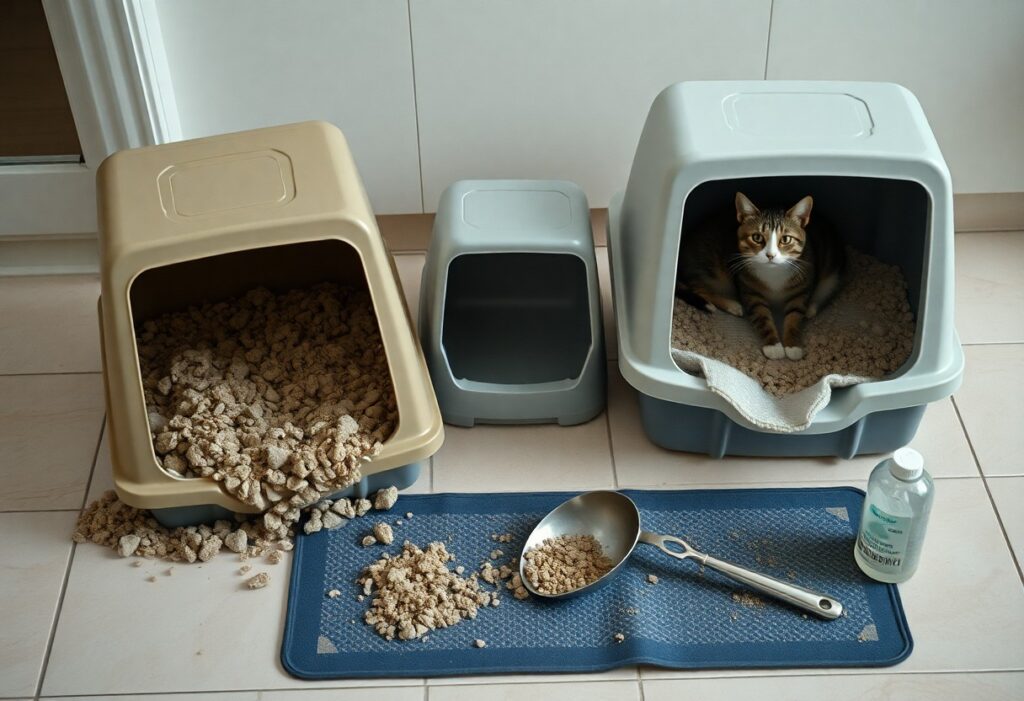
In a two-cat household, set up three boxes in separate rooms-one near common areas, one by bedrooms, and one on the lower level-so cats don’t have to cross paths to access a box. You should avoid cramped closets that trap odor and basements that are damp or cold; instead place boxes on firm, non-slip surfaces with a small mat to catch scatter. If you have a senior or arthritic cat, ensure a low-entry box near their favorite resting spot and keep lighting consistent for easy nighttime access.
Step-by-Step Solutions to Issues
| Issue | Action |
|---|---|
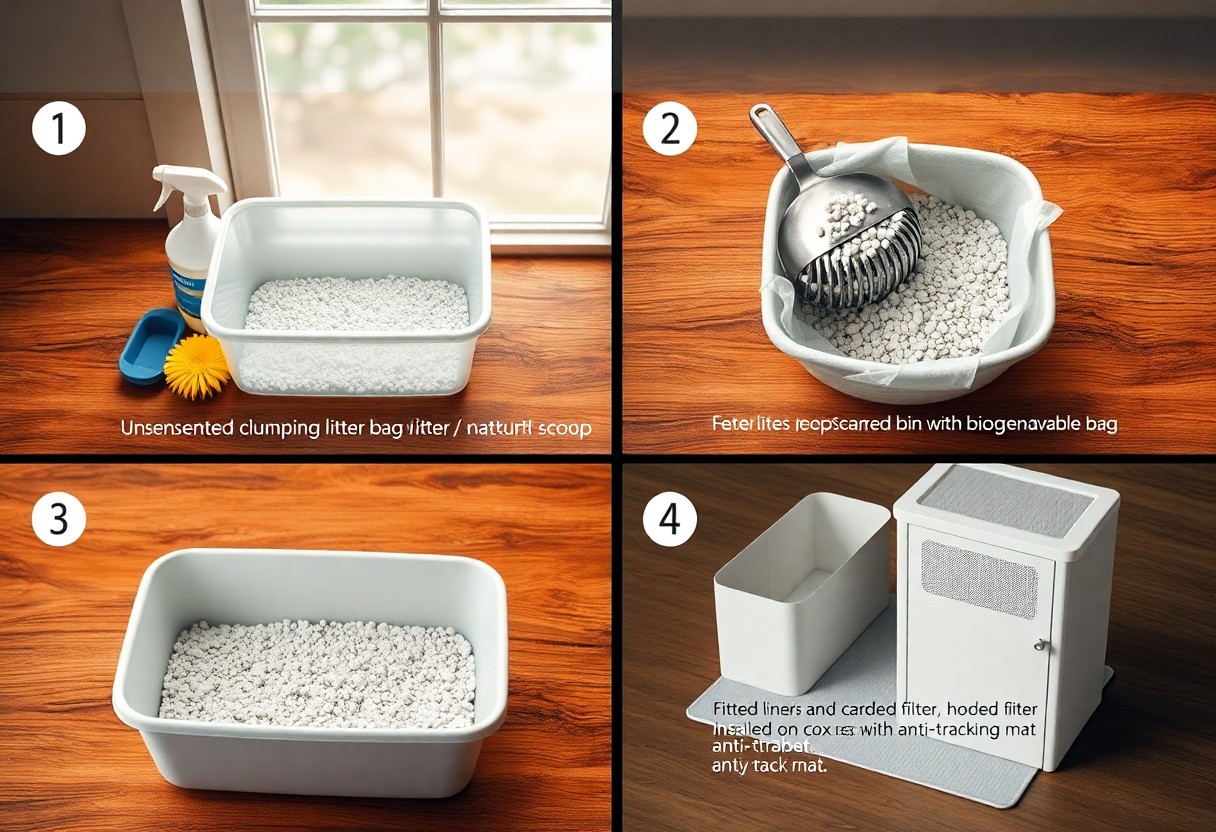
| Inappropriate elimination | Get a vet check for UTIs/crystals within 48-72 hours if sudden; provide one box per cat plus one extra, box ≥1.5× cat length, scoop daily, change clumping litter every 3-4 weeks, use enzyme cleaners on accidents. |
| Odor control | Scoop daily, full change monthly for clumping or weekly for non‑clumping, use unscented clumping litter with activated charcoal, ventilate area, empty trash every 24-48 hours, consider HEPA+carbon purifier. |
| Litter tracking | Use a 60×90 cm trap mat, choose low‑dust pellets or fine clumping granules, try a top‑entry or high‑sided box, groom paws to reduce carryout. |
| Box aversion / stress | Place boxes in quiet spots, offer multiple locations, switch litter gradually over 7-10 days, trial pheromone diffuser (2-4 weeks), avoid scented cleaners. |
| Cleaning & maintenance | Wash boxes weekly with hot water and mild detergent, avoid ammonia cleaners, replace plastic box every 12-24 months to prevent odor buildup. |
Resolving Inappropriate Elimination
If your cat starts eliminating outside the box, have the vet rule out UTIs or urinary crystals within 48-72 hours, since blood or straining needs immediate attention. You should provide one litter box per cat plus one extra, use a box at least 1.5× your cat’s body length, scoop daily, and switch litters gradually over 7-10 days. Clean accidents with an enzyme cleaner and reintroduce the box by placing a bit of soiled litter or bedding inside to restore familiar scent cues.
Addressing Odor Control
To tackle persistent smells, scoop clumping litter daily and perform a full change every 3-4 weeks (non‑clumping weekly), keep boxes in ventilated areas, and empty trash within 24-48 hours. You should use unscented clumping litter with activated charcoal or baking soda additives, avoid strongly scented litters that deter some cats, and add a HEPA+carbon air purifier in multi‑cat homes; if you notice a strong ammonia odor, increase cleaning frequency immediately.
For deeper odor reduction, wash the box weekly with hot water and mild detergent and avoid ammonia‑based cleaners that can mimic urine scent; instead, soak stubborn residues in a 1:1 white vinegar solution for 10 minutes or use a labeled enzymatic cleaner. You should replace the litter box every 12-24 months, store used litter in a sealed container, and in one owner case, switching to unscented clumping litter plus daily scooping and a carbon filter cut odor complaints by about half within two weeks.
Pros and Cons of Different Litter Types
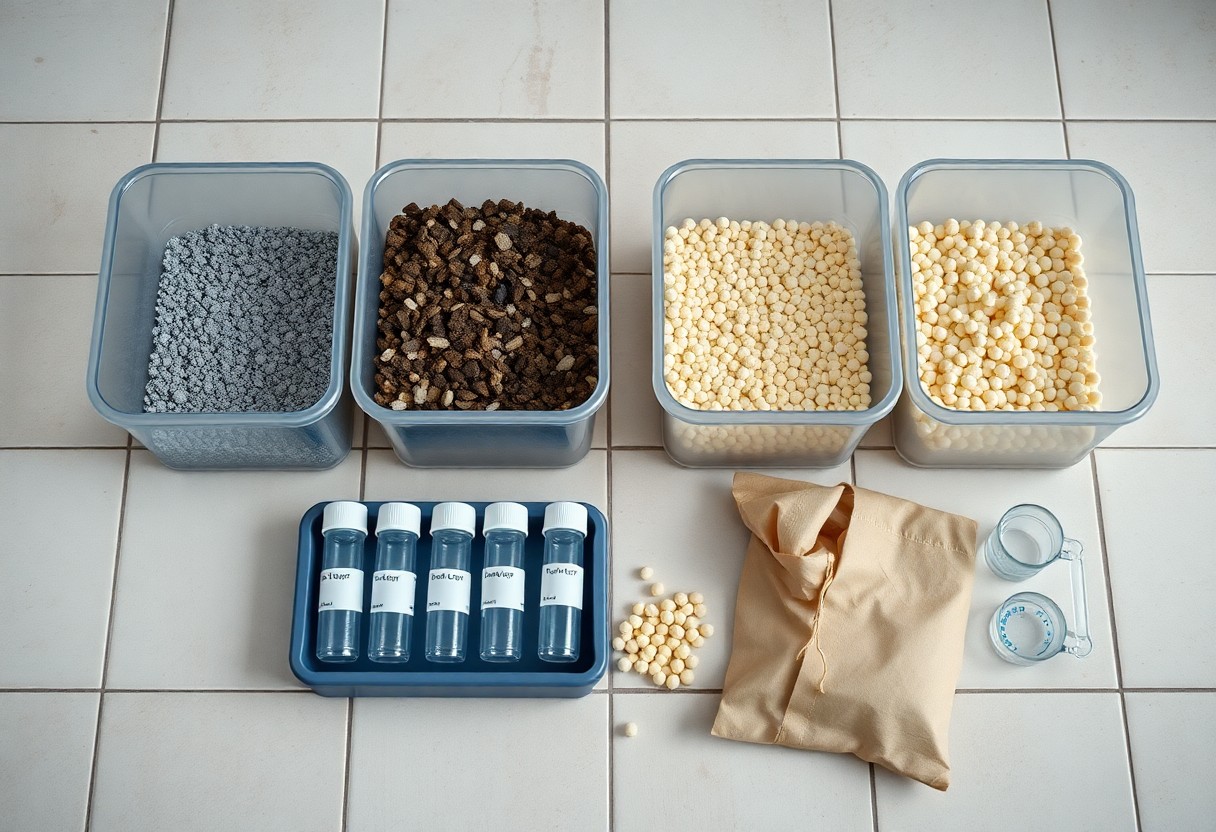
You need to match litter type to your cleaning routine, cat preferences, and budget: clumping clay lets you scoop daily and reduces waste volume, silica gels give extended odor control, and plant-based or paper litters cut environmental impact. Expect trade-offs in dust, tracking, cost, and biodegradability when you choose-for example, silica can control odor for about 7-14 days in a single-cat home while clay is cheaper per bag but non-biodegradable.
Pros and Cons by Litter Type
| Clumping Clay – Pros: Forms firm clumps for easy daily scooping, widely available, generally inexpensive. | Clumping Clay – Cons: Non-biodegradable, heavier to carry, can produce dust and tracking that aggravates respiratory-sensitive cats. |
| Non-Clumping Clay – Pros: Absorbs initial moisture, very low cost, familiar texture for many cats. | Non-Clumping Clay – Cons: Needs frequent full changes (every 3-7 days for many homes), weaker odor control, tends to track. |
| Silica/Gel Crystals – Pros: Strong moisture and odor control, low daily maintenance, lightweight; can last 7-14 days in single-cat use. | Silica/Gel Crystals – Cons: Higher upfront cost, some cats dislike texture, and there’s a ingestion risk for pica or kitten behavior. |
| Plant-based (corn, wheat, walnut) – Pros: Biodegradable, many are flushable or compostable, good odor control in quality formulas. | Plant-based – Cons: Pricier per bag, can attract pests if stored wet, and some formulas cause allergies or clump inconsistently. |
| Recycled Paper / Pine Pellets – Pros: Very low dust, excellent for post-op or respiratory cats, highly absorbent. | Recycled Paper / Pellets – Cons: Poor clumping, can be messy when wet, and pine oils may irritate sensitive cats. |
Clumping vs. Non-Clumping Litters
You’ll notice clumping litters (often sodium bentonite) let you scoop urine and feces daily so the box stays cleaner and you use less total litter; this is why many multi-cat homes prefer them. Non-clumping litters absorb but require full replacement more often-typically every 3-7 days for small households-and can be gentler for cats with dust sensitivities, so choose based on how often you can clean and your cat’s respiratory needs.
Natural vs. Synthetic Options
You can lower environmental impact by choosing natural litters like pine, paper, or corn, which are usually biodegradable and sometimes compostable; synthetic options (clay, silica) often win on cost and long-term odor control. If sustainability matters to you, favor plant-based choices, but if low-maintenance odor suppression is your priority, synthetic formulas typically perform better between full changes.
More specifically, plant-based litters can clump well-corn and wheat formulas often mimic clay clumping-but you should store them sealed to avoid mold or pests and check local waste rules before flushing. Synthetic silica often lasts the longest between changes, but if your cat has pica or is a kitten, avoid crystals due to the ingestion/blockage risk; for allergy-prone cats, choose low-dust natural pellets or recycled paper.
Troubleshooting Guide
Identifying the Problem
Track your cat’s behavior: most cats urinate 2-4 times daily, so changes in frequency, posture, or location are red flags. Check box cleanliness, litter depth, and placement, and watch for signs like straining, blood, or vocalizing-these often indicate a urinary tract issue or blockage and are medical emergencies. Note patterns (time of day, visitors, new pets) to separate health causes from environmental or preference problems.
Finding Effective Solutions
Apply targeted fixes: provide one litter box per cat plus one, scoop at least once daily and fully replace litter weekly, and use 2-3 inches (5-8 cm) of unscented clumping litter. Choose a low-entry box for seniors, prefer open boxes for finicky cats, and move boxes to quiet, accessible spots. Small changes-box count, scent, or location-often resolve issues within 48-72 hours.
When medical causes are ruled out, combine behavioral and environmental tactics: use pheromone diffusers (e.g., Feliway), clean accidents with an enzymatic cleaner, and retrain with confined reintroduction and positive reinforcement. For example, a 5-year-old spayed cat in a busy hallway resumed consistent use after you switch to unscented clumping litter, add a second box in a quiet bathroom, and maintain daily scooping-improvement seen in 48-72 hours; if problems persist, consult your vet or a feline behaviorist.
Conclusion
Now you can address litter box problems with a clear plan: choose the right box and litter for your cat, keep cleaning consistent, check for health or stress-related causes, and apply gradual, positive adjustments; involve a veterinarian or behavior specialist if issues continue to protect your cat’s welfare and your home’s cleanliness.
FAQ
Q: Why is my cat suddenly avoiding the litter box?
A: Sudden avoidance can stem from medical issues (urinary tract infection, crystals, constipation, arthritis) or behavioral and environmental causes. First, consult a veterinarian to rule out illness. If healthy, evaluate the box: is it scooped daily, large enough, and in a quiet location? Cats often reject boxes that smell strongly, are near noisy appliances, or use a scented litter they dislike. Stressors such as new pets, guests, or changes in routine can trigger marking or avoidance. Solutions: get a vet check, scoop at least once daily and deep-clean weekly, provide one more box than the number of cats, try an unscented clumping litter and introduce changes gradually, move boxes to calm, accessible spots, and use feline pheromone diffusers or behavioral enrichment (vertical spaces, play) to reduce stress. For persistent issues, confine the cat to a small, safe area with a clean box while retraining and continue to clean accidents with an enzymatic cleaner to remove odor traces.
Q: How can I control litter box odor and reduce tracking?
A: Scoop solid waste and clumps daily and fully change the litter and wash the box every 1-4 weeks depending on litter type and number of cats. Use unscented clumping litter for easier removal and better odor control; some litters include activated charcoal or baking soda for extra odor absorption. Avoid ammonia-based cleaners that can deter use; instead wash with warm water and a mild, unscented soap, rinse thoroughly, and air dry. To reduce tracking, use a larger box so litter surface area is available, keep litter depth around 2-3 inches, place a textured mat outside the box, and consider low-tracking litter granules. Covered boxes can trap odors and discourage some cats, so test your cat’s preference. Replace liners cautiously-some trap urine against the box surface and create hidden odor. For persistent smells, use carbon-filtered lids, frequent full litter changes, or a second daily scoop for multi-cat households.
Q: What litter box setup works best for multiple cats, seniors, or kittens?
A: For multiple cats, provide one box per cat plus one extra and place them in separate, quiet locations to prevent guarding and territorial stress. Seniors benefit from large, low-sided boxes or boxes with a lowered entry to accommodate reduced mobility or arthritis; non-slip ramps or shallow trays work well. Kittens need low-sided boxes and fine-grained litter to make digging easier. Offer a variety of box types (covered, uncovered, different litter textures) so each cat can choose a preferred option. Increase scooping frequency in multi-cat homes to at least twice daily, and monitor each cat’s elimination to spot problems early. Automatic self-cleaning boxes can help with cleanliness but may frighten some cats-introduce them slowly and provide a standard box as backup. Always keep food and water stations separate from litter areas to align with natural feline preferences.