Automatic pet feeders can simplify your routine and give your pet regular meals when you’re away, but you should weigh the convenience of scheduled feeding against risks like overfeeding, mechanical failure, or power outages that can leave your pet hungry; this guide helps you assess models, consider portion control, monitor nutrition, and decide whether a feeder fits your lifestyle and your pet’s health needs.
Advantages of Automatic Pet Feeders
You gain reliable daily support: many feeders let you program 1-12 meals per day with portion sizes down to 1/8 cup, offer app control and logs, and include battery backup to reduce missed feedings. These features free you from strict schedules, help manage diets, and cut stress for pets, though you must test for jams and power risks before full reliance.
Convenience for Pet Owners
You save time and flexibility: automatic feeders let you leave town for 24-72 hours without a sitter by scheduling meals or dispensing remotely via smartphone. Many owners report reclaiming hours each week previously spent on timed feedings, and smart models sync with calendars so you can modify feeding while traveling or at work.
Consistent Feeding Schedule
You provide meals at precise times, which stabilizes appetite cues and reduces begging and GI upset; smart feeders can dispense within minutes of scheduled times and create a consistent routine for multi-pet households where manual timing is hard to maintain.
You further benefit because consistent timing supports metabolic stability: veterinarians often advise timed feeding for pets with digestive sensitivities or weight concerns, and feeders that log each serving let you track patterns over weeks. If your pet needs medication tied to meals-such as insulin dosing-syncing feedings and consulting your vet is important to avoid blood-sugar swings.
Portion Control and Dietary Management
You control calorie intake precisely: programmable portions prevent free-feeding and unintentional treats, with many units offering increments like 1/8 cup to tailor meals for kittens, small breeds, or weight-loss plans. This helps enforce vet-prescribed regimens and reduces competition at mealtimes.
You can fine-tune weight or therapeutic plans because measured portions and multi-meal schedules let you split a daily ration into 3-6 smaller feedings, lowering hunger-driven scavenging. Note that most gravity or auger feeders are optimized for dry kibble-if your pet requires wet food or a very specific texture, choose a model designed for that or consult your vet to avoid inaccurate dosing.
Disadvantages of Automatic Pet Feeders
Initial Cost and Maintenance
You’ll typically pay between $30-$300 for a feeder: basic mechanical units sit around $30-$100 while smart models often cost $150-$300. Expect ongoing upkeep like weekly cleaning to prevent residue buildup, battery replacement or AC adapter checks, and occasional part swaps (motors or seals). If you travel, factor in potential repair or replacement costs of $20-$100 per incident and the time spent testing units before long trips.
Dependence on Technology
Many smart feeders depend on Wi‑Fi, mobile apps and cloud services, so a dropped connection or app outage can cause missed meals or incorrect portions. Several models only support 2.4 GHz networks, and firmware glitches or expired cloud services have left owners unable to control feeders remotely, creating real reliability risks for pets on strict schedules.
Firmware updates can improve features but sometimes introduce bugs, so you should test updates before relying on a unit for days. Battery backups often provide only 24-72 hours of reserve power depending on model; plug‑in units fail with power outages. Maintain a manual backup plan (spare batteries, timed ceramic feeders, or a neighbor) and keep device firmware and Wi‑Fi credentials current to reduce outage risk.
Potential Health Risks
Automatic feeders can cause overfeeding, underfeeding, or access to stale food; in multi‑pet homes one animal may steal another’s portions unless you use microchip‑activated feeders. For pets with medical needs-especially diabetic animals-missed or incorrect meals can be life‑threatening, so you must verify portion accuracy and monitor your pet closely when switching to automated feeding.
Mechanical jams, hopper moisture leading to mold, and portion variability are common issues: small kibble may fall differently than large kibble, altering grams per dispense. You should match feeder type to food size, clean hoppers weekly, and weigh dispensed portions during a trial period. Consult your veterinarian before using an automatic feeder for animals on strict medical diets or weight‑management plans.
Types of Automatic Pet Feeders
- Gravity Feeders
- Programmable Feeders
- Smart Feeders
- Portion Control
- Pet Safety
| Gravity Feeders | Simple, low-cost, best for dry kibble; risk of overfeeding if left unchecked. |
| Programmable Feeders | Schedule 1-12 meals/day, accurate portions, useful for weight management and medication dosing. |
| Smart Feeders | Wi‑Fi/app control, cameras and logs; higher cost and potential security concerns. |
| Hybrid Models | Combine gravity reserve with timed dispenser to reduce jams and extend autonomy. |
| Power & Backup | AC + battery backups vary (8-24 hours typical); power outages can disrupt dosing. |
Gravity Feeders
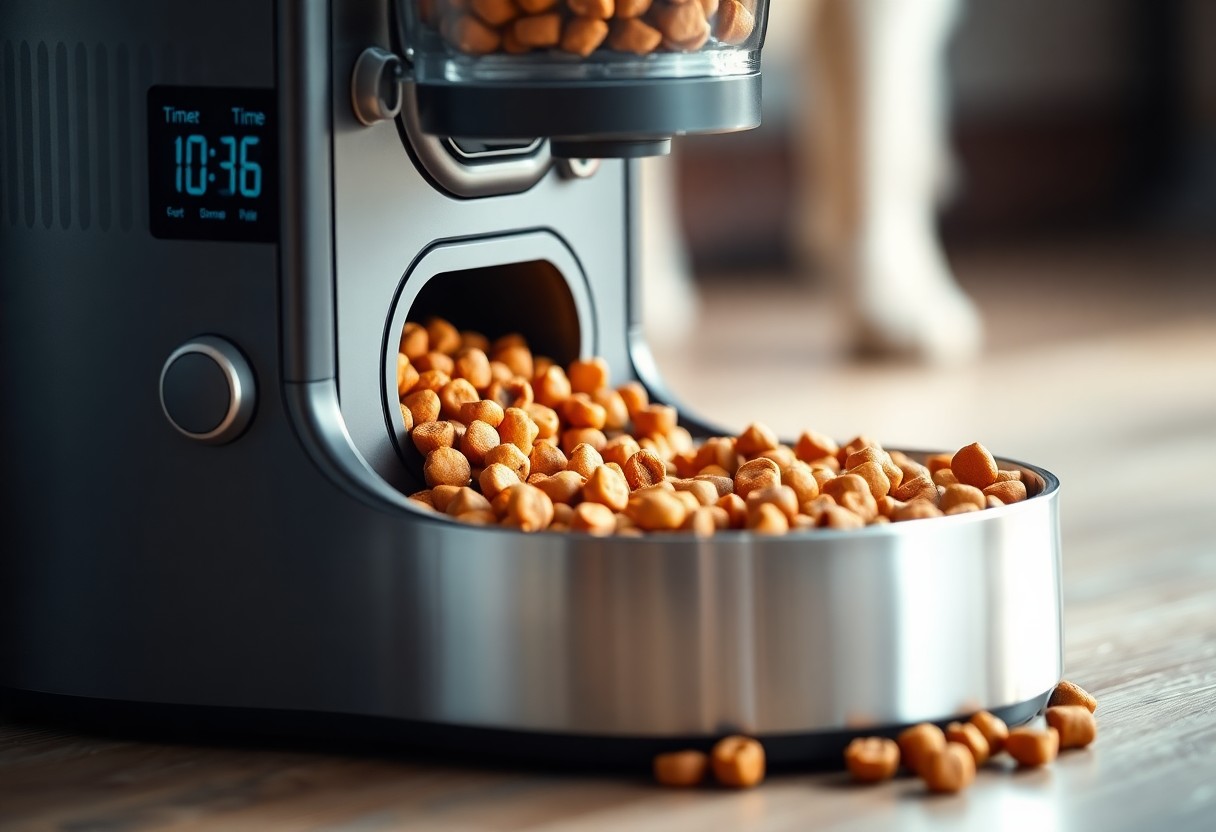
You can rely on gravity feeders for low-effort, continuous access to dry kibble; they often hold 1-5 kg and last several days for average cats. Many models cost under $30 and require no power, but they provide no portion control and can cause overfeeding or food staleness if used long-term. Check hopper openings to avoid clogging and choose sealed lids to limit pests.
Programmable Feeders
You get scheduled meals and consistent portions with programmable feeders, which commonly dispense 1-12 meals per day and allow portion settings from small spoons to cup-sized servings. They help manage weight and medication timing, but require testing to confirm actual dispense amounts and often run on AC with battery backup.
Many programmable units feature adjustable trays or auger systems that reduce jamming; for example, models offering 1/4‑cup increments let you tailor portions for a 4-10 kg pet. You should verify accuracy by measuring dispensed portions over several cycles, and prioritize units with a reliable backup power option to avoid missed doses during outages.
Smart Feeders
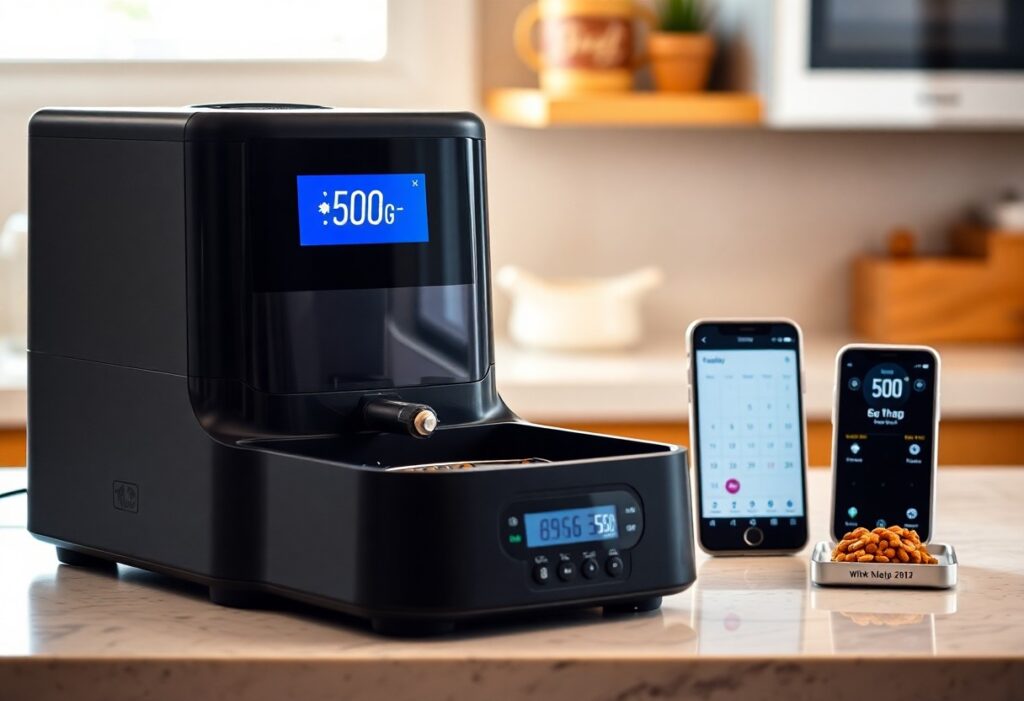
You can control feeding remotely with smart feeders that connect to apps, offer live video, and send meal alerts; prices typically range from about $80-$300. They often integrate with home assistants, track feeding history, and allow on-demand portions, but introduce connectivity and privacy considerations-secure your network and update firmware regularly.
Advanced smart feeders include 1080p cameras, two-way audio, and cloud logs; some models support scheduled and on‑demand feeds plus portion presets. For reliability, choose units with local storage options and at least 8-24 hours of battery backup, test latency for remote commands, and be aware that subscription fees may apply for extended cloud services.
Any feeder you choose should be trialed and observed for several days to confirm portion accuracy, prevent jams, and ensure your pet adapts safely to the routine.
Factors to Consider When Choosing an Automatic Feeder
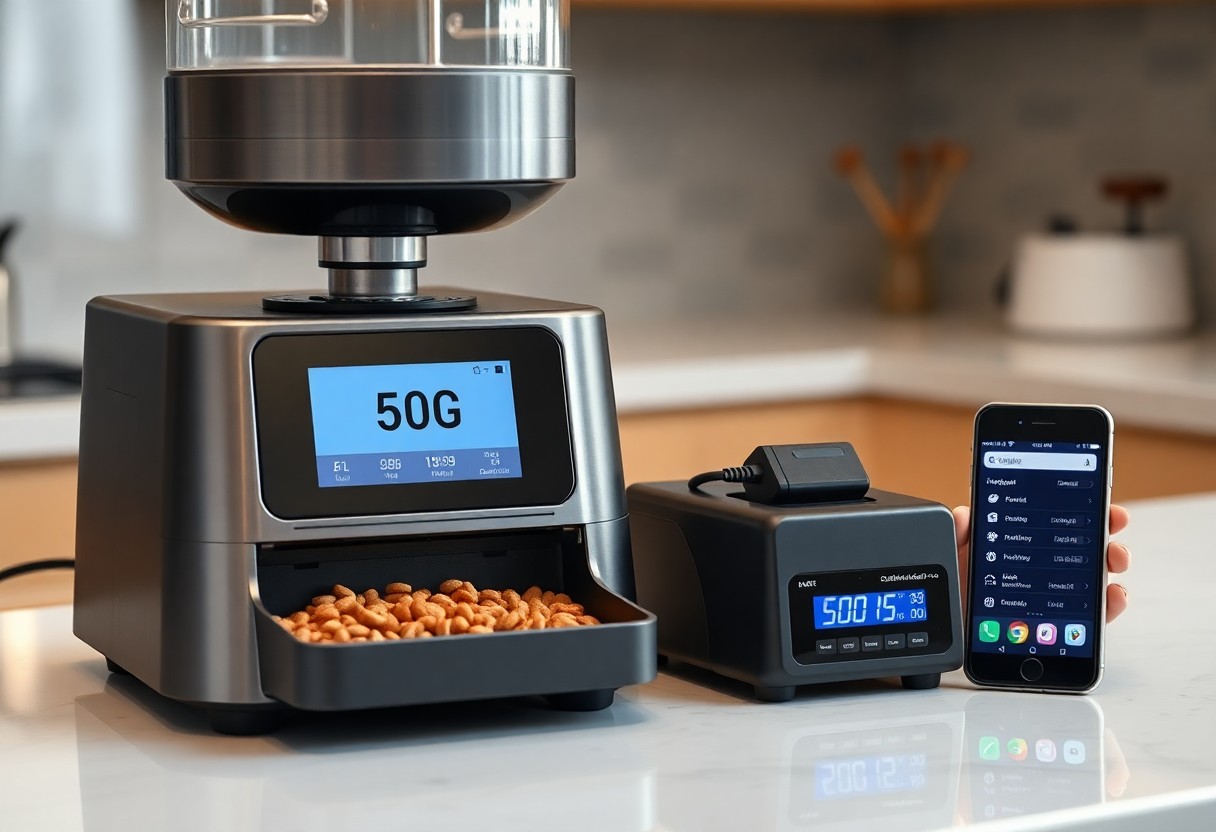
When picking a feeder you should weigh pet size, feeding frequency, and food type against real-world specs like hopper volume and power options; for example, hoppers commonly range 2-6 L and many units program 1-6 meals per day. Consider safety features such as anti-jam sensors and portion accuracy to avoid overfeeding or choking risks. Knowing you’ll prioritize models with reliable dispensers and easy-to-clean parts.
- Pet Size and Dietary Needs
- Feeder Capacity and Functionality
- Budget and Value
- Power Source and Battery Backup
- Material & Cleaning
- Safety & Reliability
Pet Size and Dietary Needs
You’ll match feeder specs to your animal: kittens and toy breeds often eat 10-50 g per serving while medium dogs need 50-200 g and large breeds 200-500 g, so choose a unit that dispenses those portions precisely. If your pet eats wet food you’ll require a refrigerated or tray-based solution, since most hoppers handle only dry kibble. Watch for portion granularity (1-10 g increments) and safeguards against rapid overeating when setting meals.
Feeder Capacity and Functionality
Hopper sizes typically span 2-6 liters (~8-24 cups), which translates to 7-30 days of food for a single cat depending on portions; programmable features often include up to 6 meals/day and portion steps as small as 1-2 teaspoons (~5-10 g). You’ll want units with battery backup and multi-power options to avoid missed feeds during outages. Check for anti-jam designs and portion repeatability when assessing real functionality.
Digging deeper, examine dispensing mechanisms: auger-style dispensers tolerate larger kibble but may jam with irregular shapes, while paddle systems deliver measured scoops but can allow residues that attract pests. Expect routine cleaning every 1-2 weeks; models that disassemble in under five minutes save time. Prioritize sensors that detect blockages and alarms that alert you-these features reduce the risk of missed meals and feeding failures.
Budget and Value
Prices range widely: basic timer-only feeders start around $30-70, mid-range smart feeders with apps and portion control run $80-180, and premium units with cameras, scales, or stainless steel components cost $200-300+. Warranties commonly span 1-2 years, so weigh initial cost against durability and support. Give more weight to units with proven accuracy and good reviews rather than the lowest price to protect your pet’s health.
Assess lifetime cost: factor in batteries ($5-15/year for occasional backup), replacement hoppers or lids ($20-50), and potential shipping/repair fees. A mid-range feeder that reliably prevents underfeeding or overfeeding often delivers better value than repeatedly replacing a cheap unit. Choose features you’ll actually use-extras like cameras add convenience but increase cost without improving feeding accuracy.
Tips for Using Automatic Pet Feeders Effectively
Use Automatic Pet Feeders to control portions and schedules-many models dispense as little as 1 tablespoon and support 1-4 daily meals. Test settings for 7-14 days while you track weight and appetite; if hopper jams or stale kibble appear, clean immediately to avoid health risks. Perceiving how your pet adapts lets you fine-tune portions, timing, or manual interaction for best results.
- Program feeders with staggered times (e.g., 07:00, 12:30, 18:00) so you can align meals with walks or medication you give.
- Set portions precisely: ~1/4-1 cup per meal for many cats, 1/2-2 cups for dogs depending on size and caloric needs.
- Test dispensing with water or a trial run before relying on the unit for multi-day absences.
- Keep the hopper clean weekly, replace batteries every 6-12 months, and update firmware when prompted to avoid malfunctions.
- Use microchip-locked feeders or separate units to prevent food stealing in multi-pet homes.
Regular Monitoring and Maintenance
You need to inspect the hopper weekly for clumps, clean the bowl and removable parts every 1-2 weeks with mild detergent, and run a test dispense after reassembly; moldy or rancid kibble can cause vomiting or worse. Replace batteries every 6-12 months or use mains power with a battery backup, and apply firmware updates as manufacturers release them to fix bugs that can affect portion accuracy.
Integration with Pet Care Routine
You can sync feeders with walks, training, and medication by scheduling meals relative to those activities-for example, feed one small portion 30 minutes before a 30-minute walk. Split daily calories into 2-4 meals (cats often do better on 3-4 small meals); consider microchip-enabled feeders if you have multiple pets to ensure each gets the correct portion and avoid overfeeding.
For more practical application, try a sample plan: a moderately active 10 kg dog often needs ~500 kcal/day, so divide into three 167 kcal meals-if your kibble is ~3.5 kcal/g, that’s about 48 g per meal; program the feeder accordingly and weigh portions weekly to track trends. You can hide medication in a single-meal portion or pair feeder releases with short training games to provide enrichment. Monitor weight and stool weekly and consult your vet if you see >5% weight change within a month; avoid continuous free-feeding since free-feeding commonly leads to obesity.
Conclusion
Considering all points, you can see automatic pet feeders offer reliable scheduling, portion control and convenience when you’re away, but they also introduce risks like mechanical failure, inconsistent dispensing, reduced bonding time and added costs. You should weigh your pet’s eating habits, need for monitoring and backup plans before depending on one as your primary feeding solution.
FAQ
Q: What are the main advantages of automatic pet feeders?
A: Automatic feeders provide consistent meal timing and portion control, which helps with weight management and prevents overfeeding. They offer convenience for busy owners or travel by dispensing scheduled meals without supervision. Many models allow programmable portions and multiple daily feeds, and smart versions add remote control and meal logs for monitoring intake. Sealed hoppers keep dry food fresher and reduce human error in measuring portions.
Q: What are the common disadvantages and risks of using automatic pet feeders?
A: Feeders can malfunction-power outages, dead batteries, motor jams or software bugs may leave a pet without food. Portion dispensing can be inaccurate on low-quality models, and most units are not suitable for wet food. Automatic devices reduce owner supervision, so illness, refusal to eat, or aggressive behavior at the feeder can go unnoticed. Smart feeders introduce security and privacy risks, and some pets learn to break or tip devices if not secured.
Q: How do I choose the right feeder and minimize potential problems?
A: Select a feeder with reliable portion accuracy, a battery backup or dual power options, and an anti-jam dispensing system; check user reviews for real-world reliability. For multi-pet homes, use microchip- or RFID-enabled feeders or separate units to prevent food guarding. Pick a model with easy-to-clean parts and clear sealing for dry food; avoid standard automatic feeders for wet food unless explicitly designed for it. Test the unit for several days before relying on it, keep a manual backup feeding plan, and maintain batteries, firmware and cleanliness to reduce failures.