With horses on your farm, you’re not just adding pretty faces – you’re bringing in serious power, partnership and purpose. You’ll see how these animals can pull, haul, guard, guide and even calm other livestock, all while needing smart daily care from you that keeps them healthy and steady. And if you’ve ever wondered what farm animals horses actually work on from sunup to sundown, you’re about to connect the dots in a way that might change how you plan your whole place.
The Real Deal About Work Horses – Heavy Labor Roles
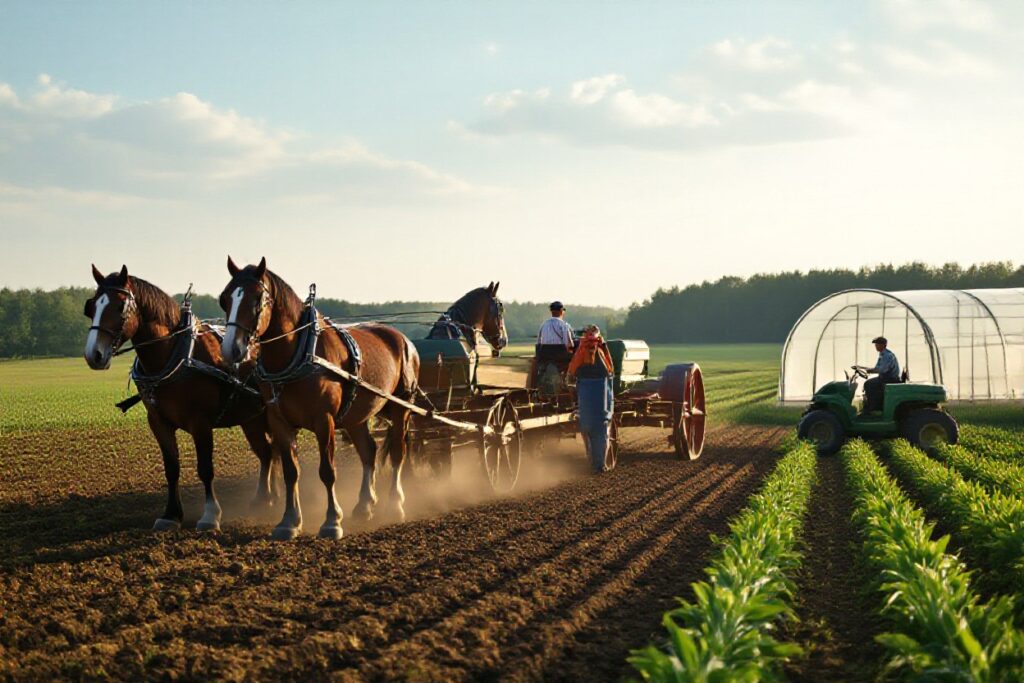
People often think modern farms have tractors for everything, but your work horses still take on seriously heavy labor that machines struggle with. In tight, muddy fields, these farm animals horses pull equipment, move feed, drag harrows and stone boats, and step into spots your tractor just can’t safely reach. Because they’re living, thinking partners, you can ask them to do precise jobs – from cultivating vegetable rows to dragging manure spreaders – and they’ll often do it quicker and safer in awkward spaces than any piece of steel.
Draft Work – What Do They Actually Do?
Draft work sounds old-timey, but your horses are basically the farm’s living engine for pulling and powering heavy gear. They haul plows, discs, harrows, seeders, stone boats, even old-school forecarts that run small implements. When tractors bog down in wet ground, horses can keep going, spreading manure, cultivating rows, or pulling sleds of fencing supplies. It’s slow, sweaty work, but for small mixed farms that want less fuel and more control, draft horses still earn their keep every single day.
Cart and Wagon Hauling – Not Just For Kids!
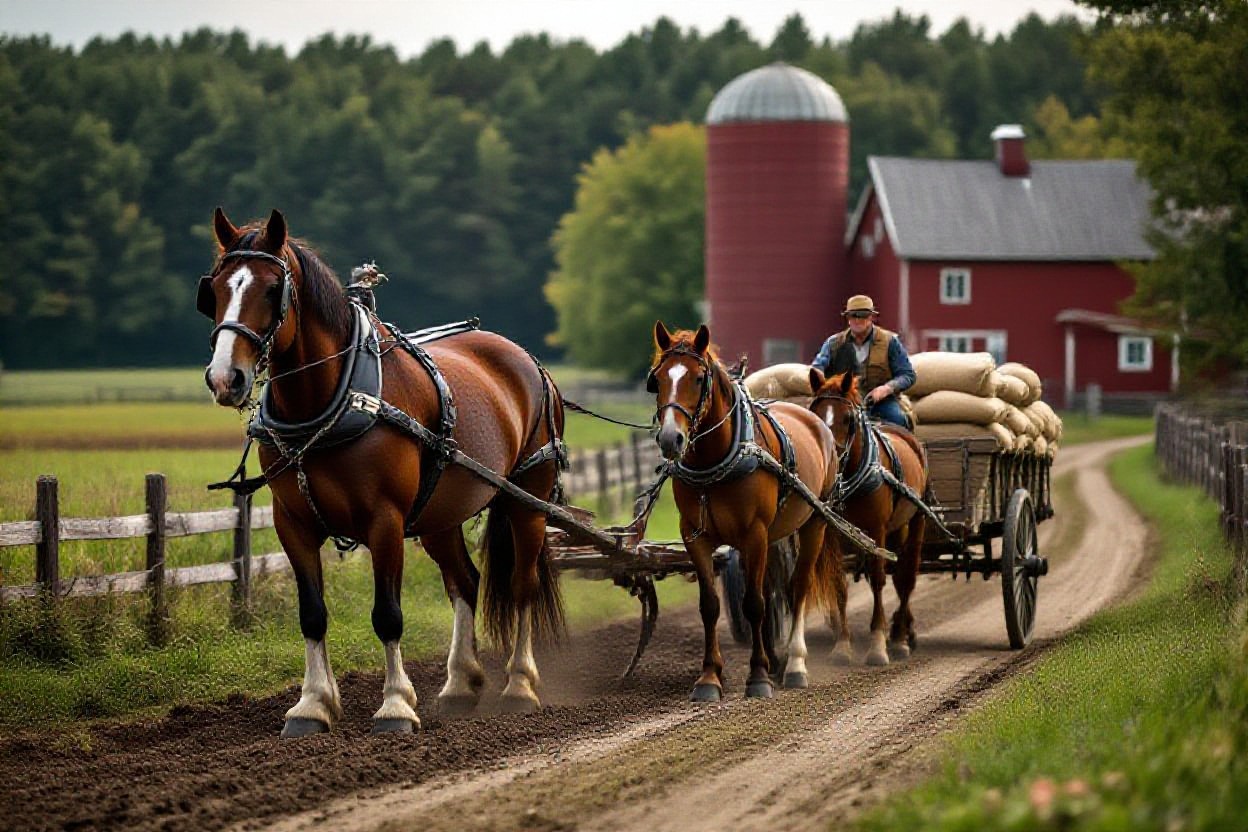
Cart and wagon work isn’t just some cute hayride photo-op, it’s a legit way your horses move real loads around the farm. They haul square bales from field to barn, pull grain or mineral tubs, ferry fencing posts, or move water tanks to distant paddocks. Instead of burning diesel for every short trip, you hitch a horse, load the wagon, and let your four-legged engine handle the hauling while you steer and stack.
On a busy day, you might hitch a steady gelding to a forecart and make 10 or 12 trips from the hayfield, each load stacked with 60 to 80 small bales – that’s well over a ton per trip, and a fit draft horse handles it like a champ on level ground. You can also use a light two-wheel cart for quick runs: hauling buckets, tools, or poultry feed between barns, often faster than starting a tractor. And because horses are quieter and more controlled, cart work around other farm animals (like nervous cattle or sheep) is way less stressful than a loud engine charging through the yard.
Logging and Heavy Lifting – Seriously Tough Jobs!
Logging with farm horses isn’t some romantic movie scene, it’s hard-core, technical work that replaces big equipment in tight timber. Your horses snake logs out of forests where tractors would tear up soil or just can’t fit, pulling 500 to 2,000 pound stems with logging chains and scoots. They can drag sawlogs to a landing, move big posts, and even reposition portable sawmills or heavy gates. In steep or sensitive terrain, a good logging horse team can actually be safer and more efficient than heavy machinery.
When you work horses in the woods, you’re pairing their natural balance and sure-footedness with your judgment, not relying on brute-force hydraulics. A trained draft will step over brush, pivot a 16-foot log with a hip shift, then stand rock solid while you hook chokers – that quiet obedience is literally what keeps you alive in tight, slippery logging sites. You can also use them around the farmyard for serious lifting: dragging stalled vehicles, shifting big round bales with a stone boat, or pulling posts and stuck gates. And unlike a skidder ripping up roots, horses leave lighter tracks, which means less soil compaction and less mess for you to fix later.
What’s the Story with Herding and Livestock Management?
On a lot of mixed farms lately, you’ll see horses quietly running the show behind the cattle and sheep, not just standing in a paddock looking pretty. As herd animals themselves, they slot into livestock routines fast, helping you shift mobs, hold lines at gates and check stock along long fence runs. You get this cool mix of old-school horsemanship with modern grazing plans – rotational paddocks, alleyways, back lanes – so your horse turns into a kind of four-legged farm hand that actually understands how the whole system flows.
Moving Cattle and Sheep – How Do They Know Where to Go?
On real working farms, horses learn the stock routes almost like muscle memory, following the same lanes, gateways and water points day after day. You teach them with pressure and release, so your legs and reins tell them when to push a mob or just quietly shadow it. Because they read cattle and sheep body language so well, they sense when animals are about to bolt or crowd a corner. After a season or two, your horse usually knows the job so well it’s almost like they’re steering you, not the other way around.
Boundary Patrolling – Horses as Your Best Watchdogs
Across bigger properties, a good farm horse basically becomes your daily security system, cruising fence lines and back paddocks where you rarely drive. You spot broken wires, sick stock or a stuck calf way faster from the saddle than from the ute. And because horses notice every odd sound and movement, they’ll lock onto stray dogs, feral pigs or strangers before you even see them. That quiet patrol ride suddenly turns into a serious early-warning circuit for the whole farm.
In practice, you might ride the same 5 to 10 km boundary loop most days, and your horse will start pricking its ears at the exact spots where trouble usually shows up – creek crossings, back gates, loose sections of old fencing. They get used to the normal pattern of your farm, so anything out of place stands out like a sore thumb. A gate swinging that should be shut, fresh tyre marks, a cow bawling in the scrub, they’ll notice and you feel it straight away through their body. Over time that routine patrolling with horses means you lose fewer animals, catch breakouts early and keep pressure off your perimeter, which quietly saves you a lot of money and headaches.
Companionship in Herding – Do They Bond with Livestock?
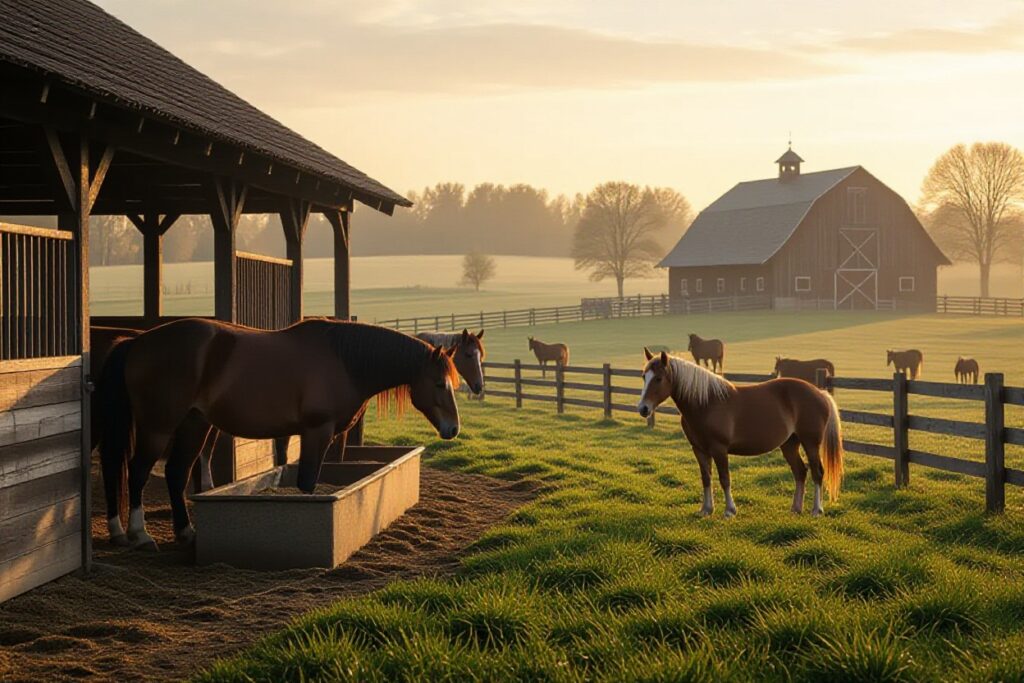
On smaller farms especially, horses often share paddocks with cattle, sheep or goats and start treating them like an extended herd. You’ll see them grazing nearby, walking the same tracks to water and even stepping between squabbling animals. Because they’re natural herd animals, farm horses can calm flighty stock just by being around, which makes yard work and loading days way less chaotic. Over time, the livestock get used to your horse’s scent and movement, so everything stays quieter when you ride in to shift them.
Some farm animals basically adopt a particular horse as their anchor, so you’ll notice weaners trailing behind your gelding or a handful of sheep bedding down right near your mare most nights. That familiarity pays off big on stressful days – like first weaning or drafting – because stock will literally follow the horse into yards they’d normally fight. You end up using that bond as a low-stress handling tool: you ride in, your horse stays relaxed, and the mob figures “if the big quiet horse is fine, we’re fine”. It might not look flashy, but that kind of everyday companionship can cut injuries, fence damage and your own workload in a big way.
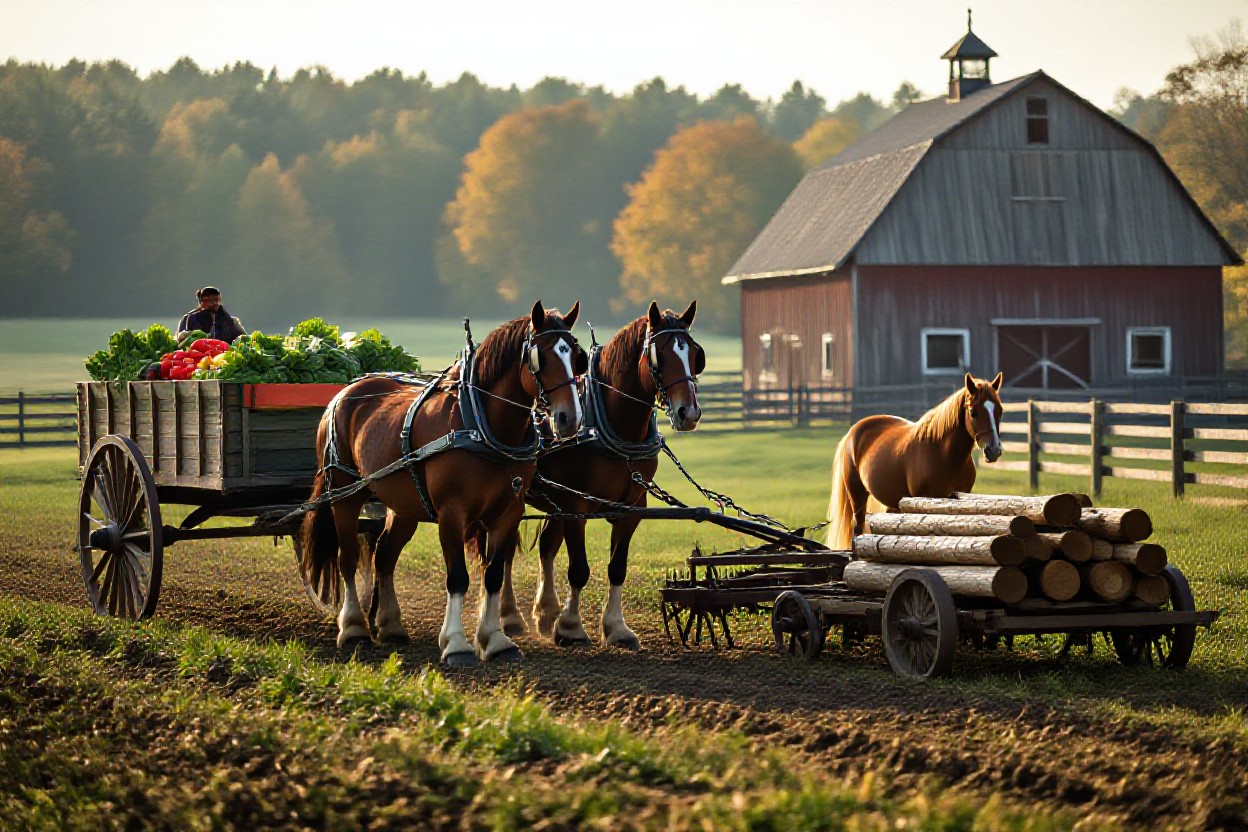
Daily Farm Tasks Horses Handle – What’s On Their To-Do List?
You watch farm animals long enough and you notice horses aren’t just standing around, they’re clocking in like everyone else. Every day your horses might be hauling feed, dragging a small harrow, ponying younger horses, or quietly checking boundaries while you ride fence lines. As working farm animals, horses end up doing a mix of transport, light field work and patrol, which means their daily “job list” can be way longer than you’d expect for a big grass-powered engine.
Feeding Rounds – Can They Really Help with That?
You’ve probably seen older farmers toss hay from a wagon while a steady gelding plods along at a walk, no human on the lines. In some setups, your horse can pull a small sled or cart of hay to distant paddocks, stop on voice command and move on when you’re ready. That turns your horse into a self-propelled feed truck, saving fuel, time and your knees on those endless winter feeding rounds.
Fence Checking – Keeping It All Together
You know that feeling when you spot a single loose wire and think, “If that goes, everyone’s out”? Using your horse for fence checking means you cover 3 or 4 miles of perimeter in the time it’d take to walk one. As you ride, your horse is also scanning – ears pricked at that broken post, head swinging toward a sagging gate. A steady farm horse becomes your four-legged ATV for spotting gaps before they turn into escape stories.
On a lot of working places, you’ll see riders using calm ranch horses to snake along fencelines, stepping over low wires, squeezing through brushy corners and getting where vehicles just bog down. You can lean out of the saddle to twist a loose insulator, check a hotwire with a pocket tester or snap a quick photo of rotted posts to fix later. Because your horse is already tuned into changes in routine – new smells, fresh tracks, odd noises – they often notice trouble before you do, like that section where cattle have started leaning, or the spot where predators are slipping through at night.
Manure Management – The Dirty Work No One Talks About
You might laugh, but your horse is already producing the raw material for half your soil program, so you may as well put it to work. When you hook a steady mare to a manure sled or small spreader, she turns those daily stall cleanings into a simple loop: barn to pile, pile to field. Over a year, one horse can help you move several tons of manure, which means cleaner yards, healthier pastures and way less wheelbarrow hauling for your back.
On small farms, a single draft-cross or chunky ranch horse often hauls a ground-driven spreader, creeping along as you fork manure in or fling it out over a resting field. You get a double win: exercise for your horse and free fertilizer for your soil, since a mature horse can drop 35 to 50 pounds of manure a day. Spread right, that “waste” becomes pasture-building gold, breaking down faster, reducing parasites and cutting how much commercial fertilizer you have to buy every season.
Seasonal and Specialized Jobs – When Are They Most Useful?
On a mixed farm, horses often earn their keep hardest when the seasons flip and work piles up overnight. You really feel their value in those tight windows – when hay needs baling before a storm, when fields must be planted before soil temps drop, or when snow turns every supply run into a slog. That’s when farm animals horses stop being “nice to have” and become the ones that keep the whole place moving, quietly doing the jobs tractors struggle with or simply can’t reach in time.
Hay Harvest – Why They Shine During This Time
During hay season, you might hitch your team at sunrise and not unhook them till dusk. Horses excel at dragging hay sleds, raking windrows, or hauling loaded wagons out of soft, rutted fields where a tractor just digs in and spins. Because they’re lighter on the land, you lose fewer bales to soil compaction and ruts. And when you’re racing a thunderstorm, a fit team can keep moving steadily for hours while you stack, pitch, and reload without waiting on fuel, repairs, or a stuck machine.
Planting Season – Do They Really Speed Things Up?
During planting season, you really notice how horses quietly shave minutes off every pass. A team pulling a drill or small planter slips into narrow headlands and awkward corners that slow a tractor way down, and you don’t waste time turning or backing ten times. On smaller acreages, that flexibility can mean your seed’s in the ground 1-2 days sooner, which adds up in germination rates, root depth, and how well your young plants handle a surprise cold snap or early dry spell.
On a 10- or 20-acre field, you might think, “Eh, the tractor will smoke a horse team.” But by the time you’ve hooked up, checked hydraulics, fueled, and crawled around soft spots, those farm animals horses are already halfway down the first row. They start and stop on a word, so you can fix a clogged seed tube or adjust depth without climbing out of a cab every five minutes.
That kind of stop-and-go control is sneaky-fast over a whole day, especially in uneven or stony ground where you need to ease into rough patches. And because horses feel the drag instantly, they tell you when soil is too wet or a disc is biting too deep, long before a gauge or sensor would. So you end up planting more consistently, wasting less seed, and tearing up fewer wet spots that would haunt you all summer, which is real-world “speed” the numbers on a dashboard never show.
Winter Hauling – How Horses Handle the Cold
On those bitter mornings when tractors refuse to start, your horses are usually puffing steam and ready to work after a good warm-up walk. They’ll haul firewood sleds, feed wagons, and water tanks across frozen ruts and deep snow that would bury a wheeled rig. Because their hooves bite into ice and packed snow, you get steady traction without chewing up your lanes. And while you’re bundled up checking fences or bedding, that steady, rhythmic pull of a team in harness makes winter chores feel a bit less like survival and more like a routine.
Out in a real January cold snap, you’ll notice horses adjust naturally: shorter strides on ice, careful footing on drifts, pausing if a sled loads up in a snowbank. That kind of built-in caution saves a lot of spills that would roll a tractor or snap a drawbar. With decent windbreaks and a proper winter coat, they work comfortably at temperatures that would freeze diesel solid, as long as you manage sweat and cool-down correctly.
So you might be pitching square bales from a sled while your team stands hip-shot in the snow, barely bothered, just shifting weight and watching you. Their body heat, combined with good harness padding, keeps muscles loose and ready to pull again. For many small farms, that dependable winter hauling is exactly why horses are still part of the chore crew, not just pasture ornaments, especially when the power’s out and everything else with an engine is sitting useless in the shed.
Companion and Multi-Purpose Roles – More Than Just Labor!
It throws people off how often your farm animals horses end up as therapists, babysitters and all-purpose sidekicks more than heavy lifters. You lean on them for the odd logging job or wagon pull, sure, but the rest of the week they’re calming nervous cattle, giving you a mental reset on a rough day, or just being the steady heartbeat of the yard. That mix of work partner, stress relief and living yard ornament is exactly why horses stick around even when tractors take over.
Guard Animals – Keeping the Farm Safe and Sound
What really surprises new owners is how fast your horses pick up the role of early-warning system. They spot headlights on the lane, coyotes on the fence line, or a stranger at the gate long before you do, and their body language changes instantly. Ears lock, heads go up, the whole herd orients to the threat, and that gives you those extra minutes to check stock, move gear, or simply walk out confident instead of blind.
Farm Dog Support – Can They Work Together?
On a busy place, your horses and farm dogs can turn into a seriously effective working team. Dogs push from behind, horses block and steer from the front, so you move cattle in half the time and with way less stress. You get a 360-degree view from the saddle while your dog covers all the blind spots you can’t reach quickly. It feels less like chaos, more like a choreographed crew.
When you train them right, you actually build little routines: you cue your horse to sidepass and block, whistle for your dog to swing wide, then let the stock float through the gap you just created. That combo is gold when your yard holds 100 head or more, or you’re sorting pairs at calving and need finesse instead of noise. You also rely on the horse to stay rock solid when the dog darts in close, so you spend real time desensitizing both – dogs learn not to heel-bite, horses learn not to kick. Over a season or two, you get this quiet, almost invisible communication triangle between you, the dog and the horse, and that’s when herding days suddenly get way less exhausting.
Family Transport – Taking the Kids for a Ride
For a lot of families, your farm animals horses double as the unofficial school bus and weekend taxi. You might hook a little forecart to haul kids and groceries across the yard, or pony a beginner kid behind your steady old mare on chores. Those slow rides turn into moving classrooms where they learn baling twine knots, gates, basic traffic rules around machinery – all from the saddle, not the couch.
Once your kids trust that old gelding, you start using him for real trips: checking fence lines a kilometer out, visiting neighbors across the section, even hauling a small sled in winter with two bundled-up kids and a dog on board. You teach mounting and dismounting at gates, how to stay clear of PTO shafts and tractors, and how to read a horse’s ears for danger long before a phone has signal. Those miles in the saddle quietly build independent farm kids who know their way around stock, weather and tools, and that simple “ride to the back field” becomes one of the most valuable training sessions you run on your place.
Choosing the Right Horse for Farm Work – What Should You Look For?
You’re standing at the gate, checking out a few geldings and mares, trying to guess which one will actually pull your loaded wagon, not just pose for pictures. For farm animals, horses have to earn their hay: pulling 1.5 times their body weight, working 4-6 hours a day, staying sane in mud, noise and bad weather. You’re not shopping for a show ring float, you’re picking a partner that can drag a harrow, move cattle, and still be rideable when your quad dies in the back paddock.
Temperament – Is This Horse Gonna Be a Good Fit?
On a busy farm, you want a horse that can walk past a flapping tarp, a slamming gate and a bellowing bull without losing its mind. Calm, curious, people-friendly horses stay safer around kids, machinery and dogs. You’re looking for one that pauses and thinks instead of bolting, learns new jobs fast, and doesn’t pick fights with your other farm animals, because drama in the herd costs you time and vet bills.
Size Matters – What’s the Perfect Build for Farm Tasks?
You’ve probably noticed the big chunky draft in one field and the lighter ranch-type horse in another, and yeah, there’s a reason for that. For most mixed farms, 14.3-16 hands with a solid, medium-heavy build hits the sweet spot. That size lets you pull logs, drag arenas, pony calves or sheep, and still have something easy to mount from the ground when you hop on to check fences.
When you dial in size and build, you’re really matching horsepower to your actual chores, not just picking what looks pretty in photos. Draft crosses with broad chests, big feet and strong shoulders are great if you’re dragging harrows, feeding big hay sleds or skidding 200-300 kg logs through wet ground. Ranch-bred quarter horses or similar types with shorter backs and strong hindquarters shine when you’re starting colts, sorting cattle fast or riding 20-30 km a day. Too tall and narrow, and you get a horse that tires quicker under heavy pulls and is harder to mount when you’ve got your arms full of tools; too heavy and slow, and you’ll hate life trying to open and shut 15 gates at a trot. Balance is what saves your knees, your fences, and your schedule.
Stamina Requirements – How Much Can They Handle?
On a real working day you might be trotting fence lines in the morning, then pulling a sled of feed in the evening, so your horse can’t gas out after an hour. A fit farm horse should comfortably work 3-5 hours with breaks, covering 15-25 km without going sore or cranky. You’re hunting for clean legs, a big heartgirth, efficient walk, and a horse that finishes sweaty but still willing to go back out tomorrow.
When you test stamina, you’re not just checking how far they can walk once, you’re asking how they cope with repeat workloads, week after week. A good working horse will recover its breathing within 5-10 minutes after a steady trot set, drink and eat normally after work, and come out the next morning without filling in the legs or a stiff, choppy stride. Breed plays a part, but conditioning and mindset matter more: a moderate-draft cross or stock horse with regular hill work can outperform a bigger, flashier horse that only ever lopes circles in an arena. If a horse quits mentally when it’s a bit tired, or sulks when asked to go back out in rough weather, you’ll feel that gap every peak season when there’s still half a field to check and the sun’s already gone down.
Can One Horse Do Multiple Farm Jobs? – Let’s Break It Down
Plenty of farm horses are basically your four-legged multi-tools, switching from draft work in the morning to herding cattle at dusk. You might use the same horse to drag logs, check fences, pony a youngster, then give a riding lesson to your kid in the evening. The trick is matching your horse’s build, stamina and brain to the mix of jobs your farm actually needs, so you’re not asking a delicate riding type to pull like a logging brute every single day.
The Versatile Horse – What Skills Can They Have?
A truly versatile farm horse might know basic harness work, neck reining for cattle, calm road riding, and even steady mounting for gates or fencing. You can teach one horse to drag a chain harrow, pony a green colt, open wire gates, and stand rock solid for vet or farrier. Some of the handiest ones you’ll meet also learn to push stubborn cattle, cross water confidently and navigate mud without panicking, which really adds to their value on mixed farms.
Pros and Cons – Is It Worth the Mix?
When you lean on one horse for a mix of jobs, you’re balancing convenience and cost-saving with wear-and-tear, workload and training time. On a small acreage, that combo horse can replace a quad for checking stock, drag a small arena, help with kids’ riding, even haul light hay sleds in winter. The flip side is you’ll juggle rest days more carefully, watch legs and feet like a hawk, and invest serious time so your horse actually stays safe and sane while switching roles.
Pros and Cons of One Horse Doing Multiple Farm Jobs
| Pros | Cons |
|---|---|
| Saves money on feed, vet and tack compared to keeping 2-3 horses | Higher risk of overuse injuries if you stack hard work days |
| One well-trained horse learns your routines and property inside out | Horse may burn out mentally if every day is a heavy workload |
| More saddle and harness time sharpens obedience and responsiveness | If that horse goes lame, your work suddenly piles up |
| Great for small farms that only need moderate draft and riding power | Jack-of-all-trades might not excel at high-level specialized tasks |
| Training one horse deeply is easier than partly training several | Constant role-switching can confuse an inexperienced horse |
| Lets you build a tight partnership for herding and problem stock | Requires more careful saddle fit, hoof care and conditioning cycles |
| Reduces need for extra machines for light hauling or checking stock | More wear on joints, back and hooves over a working season |
| Useful for teaching kids, then doing “grown-up” jobs the same day | Difficult to schedule rest if family also wants regular riding time |
| Flexible: can pivot from field work to livestock checks as weather shifts | Can become sour if jobs are repetitive or poorly fitted to temperament |
| Ideal if you’re short on barn space or pasture | Harder to retire or semi-retire without losing key farm help |
On a practical level, you make this setup work by treating your horse like a limited resource, not an endless engine. You cycle work types across the week: heavy pulling one day, lighter riding or cattle checks the next, maybe groundwork or pure turnout after a big push. You’ll track body condition, legs and attitude, adjust feed when workloads spike like hay season, and stay honest about when it’s time to add a second horse or scale back the job list a notch.
Practical Examples – Real Stories From the Farm
On a 40-acre hobby farm, you might have one stout Quarter Horse gelding that drags a 6-foot harrow, moves 40 head of beef cattle, then packs camping gear up a logging road once a month. Another reader runs a pair of dairy cows and 20 sheep, using a Haflinger mare for winter feed sleds, summer trail rides, plus kid lessons twice a week. These real setups work because you log hours, not just days, and build in soft weeks after intense seasons.
When you talk to folks actually using horses as farm animals, you hear the same pattern repeat: the best multi-job horses started small, maybe just herding and riding, then picked up harness work later. You might spend one full season just getting your horse confident opening gates from the saddle, crossing creeks and ignoring flappy tarps, then slowly add dragging poles or a stone boat. That low-drama, step-by-step approach is why some 15-year-old farm horses still happily juggle 3-4 jobs without going sour or stiff.
How Many Hours Can Farm Horses Work Daily? – Don’t Overdo It!
On most working farms, a fit horse might put in 3 to 5 hours of actual work in a day, broken into chunks, with long rests, water and hay in between. You’re not running a factory shift here – even old-timers who used horses for plowing usually aimed for mornings or cool evenings, then called it. Once you push past 5 steady hours of pulling, hauling or riding on hard ground, you start flirting with strain, dehydration and injuries that can sideline your best worker for weeks.
Understanding Their Limits – What’s Too Much?
You know that one gelding who’ll keep pulling the wagon even when he’s dripping sweat and blowing hard? That’s exactly why you have to set the limit for him. Most adult farm horses handle light work daily and moderate work 3 to 4 days a week, but heavy plowing or logging should be capped to shorter, cooler sessions. The moment effort turns from steady to labored – you’re already close to too much for that day.
Routine vs. Special Occasions – How They Handle Different Loads
On a normal Tuesday, your horses might just do a couple of hours of harrowing, some wagon work, then loaf in the paddock.
Then harvest hits, or you host a farm tour, and suddenly that same horse is pulling a loaded hay wagon for 20 trips. A horse that’s conditioned with consistent daily work can usually take a short spike in workload, but only if you scale up smartly, offer long breaks, and drop the workload back down the next day or two. Piling heavy days back-to-back is where you start breaking bodies, not just building fitness.
When you know you’ve got a big day coming – say firewood hauling or moving cattle all afternoon – you prep your horse like an athlete, not a machine. That means you keep regular days at a steady, predictable level: 30 to 90 minutes of focused work, maybe split between dragging a harrow, checking fence, then light cart work. On the big day, you warm up 10 to 15 minutes at the walk, keep heavy pulls under 20 to 30 minutes at a time, then untack, sponge sweat, and offer water in small sips. The following day, you dial it back to easy walking jobs or straight turnout so muscles can recover. That little rhythm – build load, then back off – is what keeps farm animals horses sound enough to work year after year.
Signs of Tiredness – How to Know When to Call It Quits
Halfway through stacking hay, you might spot your usually eager mare starting to trail behind the wagon, head a bit low, breaths quicker and noisier.
Those small changes are your early alarm. Flared nostrils that don’t settle after a few minutes, stumbling, dull eyes, or a sweaty patch that suddenly dries up all scream “enough”. Once you see uneven steps, a horse refusing to move out, or a back that tenses when you touch it, you’re past the point of a simple break and into stop-for-the-day territory.
If you pay attention during work, your horses will practically tell you when they’re done. At first it’s subtle: they stop marching into the collar, their ears lose that forward, interested look, or they start lagging just a stride behind the other farm animals. Next comes sloppy foot placement, tripping on ruts they’d normally float over, or breathing that stays rapid longer than 10 minutes after you pause. When heart rate and breathing don’t come down with a quiet walk, or you feel hot, tight muscles under the saddle or harness, you quit, cool them slowly, offer small drinks, and get them into shade. Pushing through those warning signs is how you end up with tying-up, heat stress, or a horse that decides work is something to fear, not just a job.
The Nutrition Factor – What’s on the Menu for Working Horses?
With more farms tracking feed on simple apps now, you can dial in a working horse’s menu almost like an athlete’s meal plan. Your farm animals horses live on a base of good grass hay, quality pasture, and a measured bit of grain when the workload ramps up. You add in salt, minerals, and maybe a joint supplement if they’re pulling or riding hard. Because on a busy farm, underfeeding energy or minerals shows up fast in weak, sore, grumpy horses.
Fueling for Labor – What Do They Need to Stay Strong?
When your horses are hauling logs, doing field work, or ponying cattle, they burn calories like crazy, so their diet has to match the job. You usually aim for 1.5-2.5% of body weight in forage per day, then bump energy with oats, barley, or commercial performance feeds if they’re in steady work. Protein around 10-12% is plenty for most adult farm animals horses. And as workload goes up, you feed more hay and fat, not just more starch, so you keep them powered up without turning them into fizz bombs.
Hydration Essentials – Keeping Them Quenched
On real working days, hydration makes or breaks your horses long before feed does, especially in hot or humid weather. You want clean, unfrozen water in front of them 24/7, because a 1,000-pound horse can easily drink 25-30 liters on a busy day. Free-choice salt helps them regulate thirst, and light electrolyte mixes are handy after heavy sweating. Any drop in water intake can snowball into colic, poor performance, and scary vet bills, so you treat water like part of their paycheck.
In practice that means you don’t just toss a bucket and hope for the best, you actually watch how often your working horses drink, check troughs for slime or algae, and break ice in winter before chores even start. Some farm owners keep a note when a horse doesn’t touch their usual amount of water for a day, because that tiny change can be your early warning before colic or heat stress hits. If your horses travel for events or cattle work, you might even train them to drink slightly flavored water, so they’ll still drink away from home. And when they’re sweating hard pulling equipment or trail riding hills, you never restrict water after work – you offer small amounts, let them settle, then offer more until they’re really satisfied.
Special Diets – Do They Need Anything Extra?
Working farm horses sometimes end up with “special orders” on the menu, especially older workers or hard keepers that melt weight off during the busy season. You might add soaked beet pulp, rice bran, or oil to boost calories without cranking up sugar. Some horses doing all-day cattle work go better on higher fat feeds and targeted joint or hoof supplements. And for heavy sweat jobs or sandy soil areas, extra electrolytes or a psyllium cleanse once a month can literally keep them out of the clinic.
What usually happens is you notice one horse looks ribby while doing the same job as the others, so you quietly tweak just their diet instead of overfeeding the whole herd. Maybe you split them into a separate pen for an extra hay net at night, or you use a slow feeder so they have forage in front of them longer. If you’re running horses farm animals on limited pasture, a ration balancer can cover vitamins and minerals without dumping extra calories into easy keepers. And when you step up work, especially plowing or hauling, you adjust their ration over 7-10 days, not overnight, so their gut and energy levels ramp up smoothly.
Health and Maintenance – Keeping Your Working Steed Fit!
Just like a tractor with a full service history works better, your farm horse stays sharper and safer when you stay on top of health checks, grooming, and tack fit. You’re asking a lot from these farm animals, so you need them sound in mind and body, from hooves to withers. A horse that’s fit, clean, and comfy in its gear will drag logs straighter, handle cattle faster, and walk back to the barn without that stiff, sore shuffle you spot after a hard week.
Regular Check-Ups – Don’t Skip the Vet!
Rather than waiting for a limp or colic emergency, you keep your working horses on a simple routine: a vet check at least once a year, vaccinations on schedule, and teeth floating roughly every 12 months if they’re on tough hay. Farm animals horses that haul wagons or work fields burn through joints and hooves quietly, so you let your vet watch them walk and trot, check heart and lungs, and tweak any meds long before those miles of work turn into a long layoff.
Grooming Tips – Why It Matters for Their Job
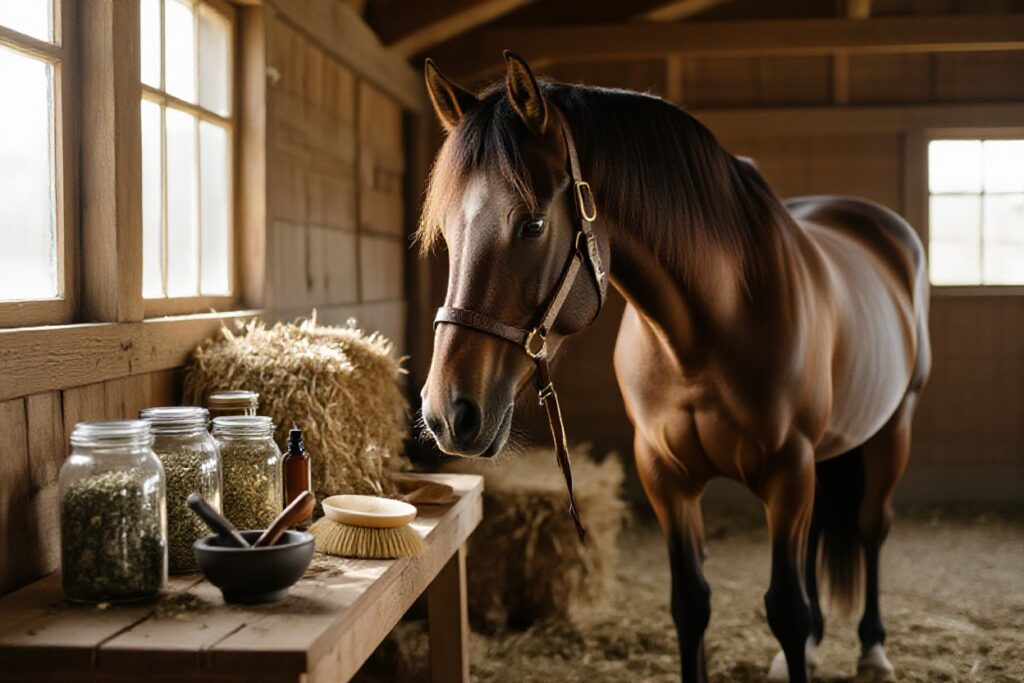
More than looking pretty in the barn aisle, smart grooming actually keeps your working horse on the job longer with fewer problems. You’re brushing off sweat, dirt, and loose hair that can rub raw spots under harness or saddle, and you’re spotting tiny cuts or ticks before they sideline your best field partner. Quick daily checks of hooves mean you catch a stone or loose shoe before a long day logging or dragging harrows turns into an expensive injury.
- Grooming routine – daily curry comb, body brush, mane and tail check before you tack up.
- Hoof care – pick out hooves before and after work to avoid bruises and thrush.
- Sweat management – scrape and towel after heavy work so skin doesn’t get irritated under dirt and salt.
- Health check – use grooming time to scan for heat, swelling, or tenderness, especially on legs and back.
Any working horse that’s groomed like this will stay sounder, happier, and way more willing to go back out with you tomorrow.
Compared to a hobby horse that just hacks on weekends, your farm workhorse needs grooming that’s a bit more tactical and a lot more consistent. You don’t have to turn them into a show pony, but a 5 to 10 minute brush before work clears mud where the collar, breastplate, or saddle sits, and that alone can stop nasty girth galls and shoulder rubs. After a hard shift hauling logs or feeding cattle, you run your hands along the big muscle groups – shoulders, back, hindquarters – feeling for heat or knots while you brush, and clean legs so you can actually see if there’s a nick from wire or a kick.
Because farm animals horses spend hours in dirt, manure, and sometimes standing in wet spots, you stay on top of mud fever by gently drying heels and pasterns when conditions get sloppy, and you keep feathers and fetlocks trimmed enough that you can see what’s going on. On hot days, you sponge sweat from under the tack lines so salt doesn’t burn the skin, and on cold windy days, you towel them off fast and maybe toss on a light sheet if they’re clipped and still steaming. A cheap rubber curry, stiff body brush, and hoof pick will do most of the heavy lifting, and if you add in a fly spray and a mane detangler, your job gets easier and theirs gets a lot more comfortable.
- Mud control – clean and dry lower legs to reduce mud fever and hidden skin infections.
- Muscle checks – use grooming to feel for tight spots after pulling, plowing, or long trail work.
- Seasonal tweaks – lighter grooming tools in summer, more focus on drying and coat care in winter.
- Basic kit – curry comb, hard and soft brushes, hoof pick, sweat scraper, and a simple detangler for manes and tails.
Any grooming habit that doubles as a full-body inspection will pay you back in fewer vet bills and more reliable days with your horse in the field.
Tack and Gear – What Should You Invest In?
Instead of buying every shiny gadget in the catalog, you focus on welfare and fit for the kind of jobs your horse actually does on the farm. Draft horses pulling sleds or forecarts need a correctly fitted collar and hames, well-padded harness, and wide breast straps that spread the load, while lighter saddle horses doing cattle work need a ranch saddle with a tree that matches their back and a girth that doesn’t pinch. Good work boots or shoes prevent slipping on wet grass or packed dirt, which can mean the difference between a safe day feeding bales and a torn tendon.
Rather than chasing brands, you watch how your horse moves and sweats in its tack, because that tells you more than a label ever will. Any time you see dry patches under a wet saddle pad, white hairs forming at the withers, or rub marks on the shoulders or girth line, you treat that as a red flag and adjust padding, check tree width, or get a saddle fitter out. With harness, you keep leather supple with regular cleaning and oiling so nothing cracks under load halfway through logging or manure spreading, and you check every buckle and stitch before hitching. If your horses farm animals are pulling most days, investing in a good collar that actually matches their neck shape will save you hours of downtime from sore shoulders, and pairing it with a properly balanced forecart or wagon makes their job smoother, lighter, and a lot safer.
Training Horses for Farm Work – Can You Teach an Old Horse New Tricks?
Picture your older mare watching the younger gelding drag logs and you can almost see her thinking, “I could do that”. With farm animals, horses included, age isn’t a hard stop, it’s more about attitude, joints and how you pace things. You can restart a 15 year old ex-trail horse into light draft work if you build fitness slowly and keep sessions under 30 minutes. Plenty of Amish farms rely on horses working well into their late teens, because training is calm, consistent and never rushed.
Basic Commands – What Every Working Horse Should Know
On a busy yard, your life gets easier when your working horse knows a handful of rock solid cues. You want them to walk on, whoa, back up and turn left or right off voice alone, because your hands may be full of lines, tools or a gate rope. Most farm horses learn 5-7 basic words plus a cluck and kiss sound. If your horse stops when you say “whoa” every single time, you prevent a lot of wrecks.
Specialized Training – How to Prepare Them for Specific Jobs
Once those basics stick, you start tuning your horse to the actual work your farm needs. A logging horse learns to stand stock-still while chains rattle and logs drag, while a carriage horse has to handle traffic, barking dogs and flappy hi-vis jackets. Draft teams pulling a plow might walk 10-15 miles in a day at 2-3 mph, so you condition slowly over 6-8 weeks. The tighter the job, the more predictable your cue system has to be.
With specialized jobs, you train for the weird stuff first, not last. If your horse is going to pull a manure spreader, you expose them to the rumble of the PTO, the sudden clatter when the chain engages, maybe even record the sound and play it low during grooming. For horses farm animals used in vineyard work, you practice threading between poles only a meter apart, turning from seat and voice so your reins barely move. And if you want a safe harrowing horse, you start with a tire, then a pallet, then finally the real implement, always quitting while they’re still relaxed and curious.
The Role of Patience – It’s Not Always Easy
Some days your horse nails every turn around the pasture, other days they spook at the same blue bucket they’ve seen 100 times, and that’s just part of it. Training farm horses is basically stacking small, boring wins, not chasing Instagram-perfect moments. Short 10-15 minute sessions, twice a day, beat one long, stressful slog. When you stay patient when things go sideways, your horse learns that work with you is safe, even when the world feels loud and confusing.
When patience slips, training usually unravels in a hurry. If you push a tired gelding to load logs after he’s already shown you he’s mentally done, that’s where bolting and pulling back start, and now you’ve created a whole new problem to fix. Instead, you back up to the last thing he did calmly – maybe just standing near the log pile – reward, quit, and try again tomorrow. Over a few weeks, that quiet, steady approach can turn a fussy, anxious horse into the kind that will walk into mud, traffic or noise just because you asked.

The Bond Between Horse and Farmer – What’s That All About?
On a working farm, the quiet bond between you and your horse often does more than any fancy equipment, because a horse that trusts you will pull harder, stay calmer in chaos, and stick with you through long, muddy seasons. That bond shows up in small rituals – the way your horse walks to the gate when it sees you, waits while you fix a strap, or gently bumps your arm after a long day. It turns a basic farm animal into a reliable partner you can actually lean on.
Building Trust – Why It’s Key to Success
Trust starts in the daily grind – feeding on time, grooming after field work, giving your horse a moment to breathe between jobs – and those little habits add up fast. When farm animals horses know you won’t overwork them or ignore pain, they’ll load into trailers easier, stand steady for harnessing, and stay solid when tractors, barking dogs, or flapping tarps spook everything else. A trusted horse will follow you into situations where a scared horse would bolt, and on a busy farm, that can be the difference between smooth work and an accident.
Communication – Can You Actually Talk to Them?
It’s wild how much your farm horse can read you just from your shoulders, breathing, and the way you step toward or away from them. You might say a few words out loud, but your real “language” is timing, body position, and how consistently you respond when they do the right or wrong thing. Over time, horses farm animals end up knowing your routines so well they start a task almost before you ask, like moving toward the gate at the same time every morning or shifting weight when they feel you reach for a rein.
In practice, you’re talking to your horse all day, just not the way you chat with people. A slight tighten of the lead rope, a tap on the shoulder, stepping into their space, or even relaxing your hips in the saddle tells them if it’s time to stop, turn, or push into the collar and pull. Because horses are prey animals, they notice everything – your frustration, your calm, your hesitation – so if your signals clash with your mood, they get confused fast and work falls apart. Train consistently for even 10-15 minutes a day and you’ll see patterns form: your horse lowers its head when you exhale, waits at the gate when you whistle, or moves off a light touch. That kind of “conversation” turns a basic farm job like dragging a pasture or moving feed into a smooth, almost automatic dance, and it saves you time and energy every single week.
Mutual Respect – Why They Deserve It
For all the hard work you ask from them – hauling logs, pulling harrows, checking fence lines for miles – farm animals horses still meet you at the gate the next morning, ready to go again, and that alone earns some serious respect. When you treat your horse like disposable equipment, you usually get pushback: sour attitudes, refusal to load, or dangerous kicks, but when you respect their limits, pain signals, and need for rest, you usually get years more safe work out of them. Respect shows up in real stuff like good farrier care, vet checks, proper fitting harness, and not using a tired horse as your “backup tractor” just because it’s there.
On many older farms, the horses that worked the hardest were also the ones that got the softest beds, the best hay, and retirement out in the good pasture, and that wasn’t just sentimentality, it was payback. You’re asking a prey animal to walk into loud barns, drag heavy equipment, and step over slippery ground on command, so meeting them halfway with patience and fair training is the least you can do. When you back off before they’re exhausted, reward small tries, and avoid punishing confusion, you’re not “spoiling” them, you’re building a worker that shows up day after day without turning dangerous. A respected horse is safer to be around, easier to teach new farm jobs, and way more likely to give you everything it has when the weather turns bad and the work still has to get done.
Fun Facts About Horses on Farms – Did You Know?
Out in the yard, your farm horses are doing all sorts of things you might not notice at first glance, like measuring status with subtle ear flicks or syncing their stride with a buddy they trust. A relaxed herd will often rest in shifts so at least one horse stays half-awake as a lookout, acting like your built-in early warning system. And when a horse whickers softly as you walk up with a feed bucket, you’re hearing a vocal “hey, that’s my human” that’s been shaped by thousands of years of work with people.
Horses’ Unique Behaviors – What Makes Them Special
On a busy farm, your horses are constantly reading the room – they watch how you walk, how fast the quad moves, even how the barn door sounds when it shuts. A calm leader horse will often step between a nervous youngster and a flapping tarp, quietly teaching what’s safe and what’s not. Scientists have shown horses can recognize your face in photos and respond differently to happy vs angry voices, so those few seconds of calm talk before you halter really do matter.
Their History on Farms – A Journey Through Time
Long before tractors, your everyday farm jobs – plowing, hauling timber, pulling wagons – were powered by horses, not diesel. Heavy farm breeds like Shires and Percherons were developed to drag loads close to their own bodyweight for hours, while lighter types handled herding, cattle work and riding between fields. Even today, some Amish and small-scale farmers rely on teams for logging, cultivation and transport, proving that horses as farm animals are still a practical, working part of modern agriculture.
Back in the 1800s, a single strong farm horse could plow roughly an acre a day, and a team might cover 6 or more if conditions were kind, so your whole cropping schedule literally revolved around their stamina. As machinery rolled in, lots of horses shifted roles instead of disappearing – they became riding horses for checking fence lines, moving sheep, or ponying colts that would one day replace them in harness. Even now, when you use a horse to skid logs out of a wet woodland where tractors bog, you’re tapping straight into that long, gritty history of real, day-to-day farm work that shaped both our landscapes and our livestock.
Quirky Habits and Traits – What’s Their Personality Like?
Around the barn, your horses farm animals each carry their own weird little quirks that quietly affect how you use them. One gelding might tap the gate exactly three times before you turn him out, another always grabs the same mouthful of hay then checks where you walked off to. Some workhorses lower their head and lick and chew when they’ve solved a new task, almost like they’re saying “ok, got it now”, and those tiny patterns tell you a ton about how they handle pressure, routine and long farm days.
Some farm horses are total workaholics that drag the harrow then stand at the gate like “what’s next?”, while others clock off mentally the second you loosen the girth and head straight for their favorite roll spot. You’ll meet mares that pretend to ignore you until you grab a brush, then sidestep perfectly so you can hit that itchy patch under the saddle area. And there are those old souls that babysit every new foal or nervous youngster, quietly teaching barn manners so you don’t have to micromanage every interaction – that kind of personality is worth its weight in gold on a busy place.
Summing up
The next time you walk past a paddock and see horses just hanging out, you’ll know there’s a lot more going on than meets the eye. On a farm, your horses can haul, herd, guard, teach, transport, and also quietly keep the whole place feeling alive and steady. When you understand their roles, you start planning your chores, training, and routines in a smarter way that works for both you and them.
FAQ
Q: What daily jobs do horses actually do on a farm?
A: In a lot of mixed farms, horses can spend 6 to 8 hours a day doing some kind of work, from light riding to hauling small loads. On traditional or hobby farms, horses still help move things around, whether it’s dragging a harrow over a field, pulling a cart of firewood, or skidding logs out of spots a tractor can’t reach. They aren’t just standing in a field looking pretty.
On smaller farms, especially where the land is rough or tight, horses are like the all-purpose tool in the shed. They’ll help check fence lines, move between pastures, and sometimes haul feed or water where vehicles would just get stuck. A good farm horse is basically your 4×4 with a heartbeat.
Farmers also use horses for daily “people moving.” That might be ponying kids around to learn basic riding, getting to the back fields quickly, or even pulling a small wagon during harvest to shuttle workers or gear. When you add it all up, their daily routine is a mix of light draft work, transport, and just being a very willing set of legs.
Q: How do horses help manage other farm animals and the land?
A: A pair of calm ranch-type horses can move dozens of cattle in a single morning without much fuss. Horses are incredibly useful for herding because they let you cover ground fast, turn on a dime, and quietly push animals without engines roaring or gates constantly slamming. That quiet pressure really matters when you don’t want stressed livestock.
Out in the pasture, horses help with more than just herding. They can be ridden along fence lines to spot broken wires, loose posts, or predators hanging around the edges. You can literally feel through the horse when something’s off – they’ll perk their ears, hesitate, or side-eye a spot where maybe a coyote or stray dog has been lurking.
Grazing is another weirdly helpful job. Horses graze differently than cows and sheep, so smart farmers rotate them through fields to help control certain weeds and keep grass from getting too rank. It’s not perfect pasture management on its own, but when you use farm animals like horses as part of a rotation, the land usually ends up healthier and more productive over time.
Q: Besides work, what other roles do horses play on a modern farm?
A: In a lot of family farms now, horses spend maybe 50 to 70 percent of their “job time” on riding, training, or just being around people rather than heavy labor. They become the farm’s unofficial therapists, babysitters, and recreation directors all rolled into one. Kids grow up learning balance, confidence, and responsibility just by being around them.
Plenty of farms also lean on horses for income that isn’t directly about plowing or hauling. Trail rides, pony camps, riding lessons, small farm weddings with a horse-drawn wagon, seasonal events like fall hayrides – all of that starts with having calm, dependable horses. So yeah, they’re working, just in a more modern service kind of way.
There’s also the simple fact that horses change the whole feel of a farm. Neighbors stop by more, visitors stick around longer, and social media posts with horses pull way more attention than, say, a tractor photo. They’re still very much farm animals, but they’re also the farm’s mascots, icebreakers, and sometimes its main attraction.