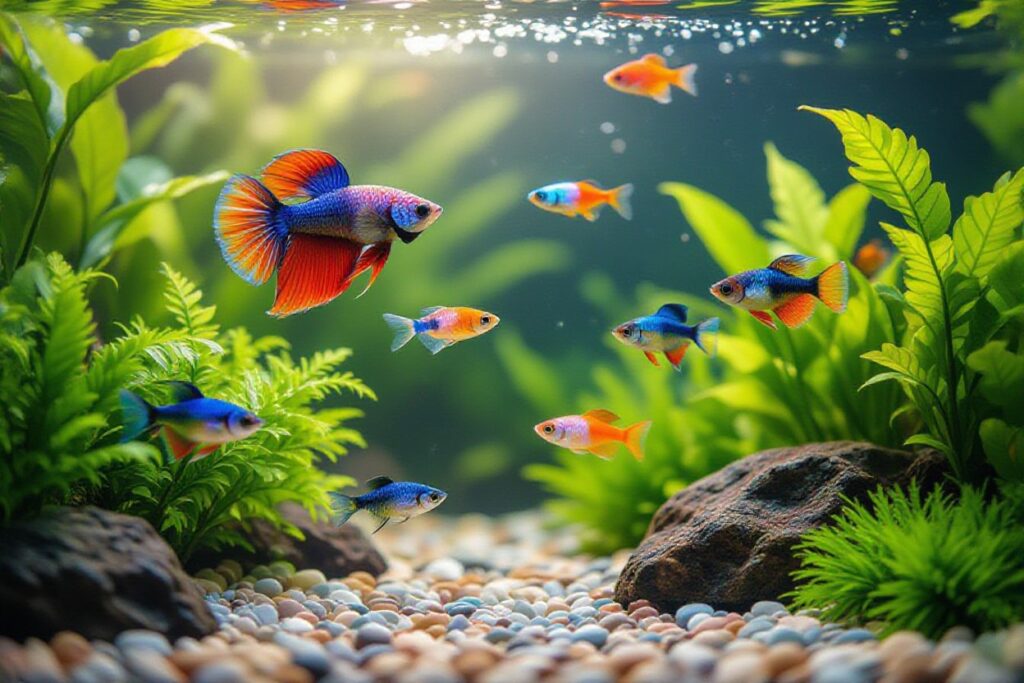
You are starting your first aquarium and need clear guidance on the best fish for beginners; this concise guide profiles 10 hardy, easy-care species (Betta, Guppy, Platy, Molly, Tetras, Corydoras, and others) with tank size, compatibility, feeding, lifespan, cost, and common health issues so you can make informed choices. Prioritize hardy, low-maintenance fish and avoid aggressive or oversized species that can injure tankmates.
Key Takeaways:
- Best fish for beginners: choose hardy, forgiving species — Betta, Guppy, Platy, Molly, common Tetras, Corydoras, Zebra Danio, Swordtail, White Cloud, and Kuhli Loach — all offer straightforward care, low startup cost, and clear feeding/lifespan expectations.
- Match tank size and social needs: Bettas do best in 5+ gal (often solitary), livebearers and tetras need groups and 10–20+ gal, bottom-dwellers like Corydoras require soft substrate and oxygenated water; check compatibility before mixing species.
- Prevent common problems: cycle the tank before stocking, avoid overcrowding and overfeeding, quarantine new fish, perform regular water changes, and monitor for ich, fin rot, and swim bladder issues so you can treat early.
Understanding the Aquarium Environment
Types of Aquariums
Pick the tank style to match the fish you want: community tanks, single-species Betta setups, planted aquascapes, brackish systems, or nano tanks each demand different space, flow, and maintenance. You should base choices on tank size (10–20+ gallons for small schools), filtration strength, and whether you plan live plants. This helps you pick the right setup for the best fish for beginners.
- Freshwater community — mixed peaceful species, schooling required
- Betta/species tank — isolated males or small groups, low flow
- Planted — supports microfauna, needs suitable lighting
- Brackish — limited species, requires salinity control
- Nano — small footprint, strict stocking limits
| Freshwater community | 10–30+ gal, gentle to moderate flow, pH ~6.5–7.5, good for tetras and guppies |
| Betta / species tank | 5–10+ gal, low flow, single male per tank or sorority for females, heater recommended |
| Planted tank | 10+ gal, medium lighting, CO2 optional for advanced plants, benefits corydoras and rasboras |
| Brackish | 20+ gal, salinity ~1.005–1.015 SG, suited to some mollies and monos, specific care |
| Nano tank | 5–10 gal, strict stocking (e.g., shrimp, small tetras), frequent water checks |
Equipment and Setup Essentials
You’ll need a reliable filter (rated for your tank), a stable heater with thermostat, an aquarium-grade test kit, and a water conditioner to remove chlorine. Choose a substrate and lighting suited to your chosen species and keep a spare heater and basic tools on hand for routine maintenance.
Match filter type to your tank: hang-on-back (HOB) filters work well for 10–40 gal tanks, canisters suit planted or crowded setups, and sponge filters are ideal for fry and Betta tanks because they provide gentle flow and biofiltration. Set heaters to species-appropriate ranges (typically 74–80°F for tropicals), aim for biological filtration turnover of ~4–8× the tank volume per hour, and position decor to provide hiding spots and stable water movement.
Water Quality and Chemistry
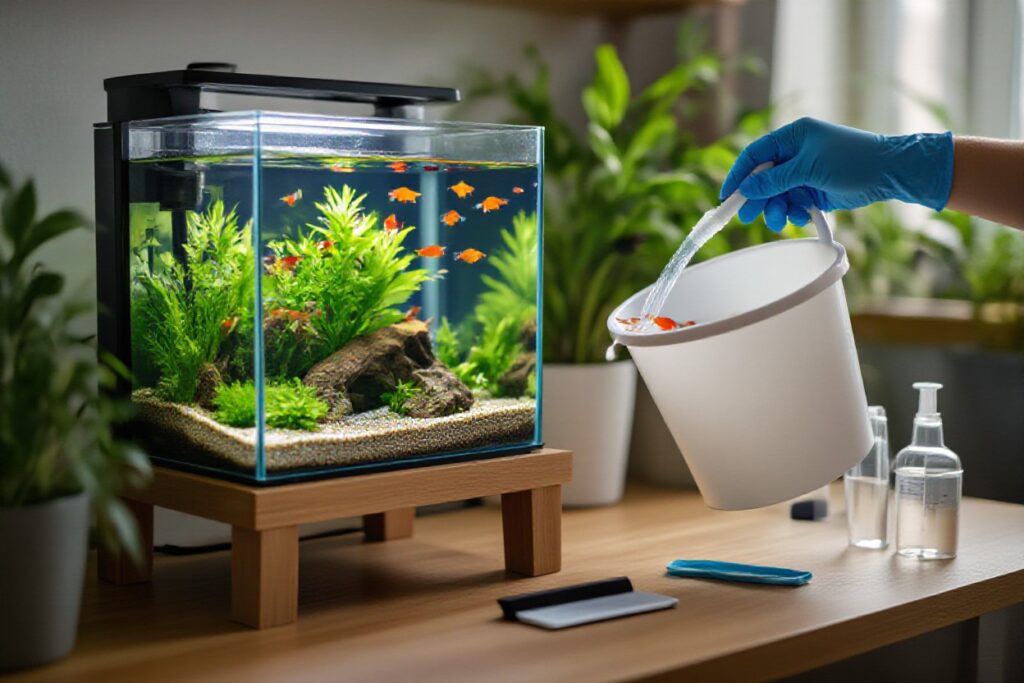
Track ammonia and nitrite at 0 ppm and keep nitrate below 20–40 ppm. Maintain temperature (most tropicals 74–80°F) and pH suited to your species (commonly 6.5–7.5). Test weekly, perform 20–30% water changes when needed, and condition tap water before adding it to the tank.
The nitrogen cycle is the backbone: ammonia from waste converts to nitrite, then to nitrate via beneficial bacteria—cycling typically takes 4–6 weeks in a new tank. Test frequently during stocking increases and after feeding changes; spikes in ammonia or nitrite can kill fish quickly, so intervene with partial water changes and reduced feeding. Buffer KH to stabilize pH for sensitive species, and adjust parameters gradually to avoid stressing your fish.
What Makes a Good Beginner Fish?
Hardiness and Adaptability
You should pick species that tolerate a range of temperatures and water chemistry; good picks handle 22–28°C (72–82°F) and pH ~6.5–7.5. Species like guppies, platies, mollies, tetras and corydoras are notably hardy, surviving brief ammonia/nitrite spikes better than delicate fish. Still, high ammonia or nitrite levels are dangerous—aim for 0 mg/L—and hardiness doesn’t replace proper cycling and basic maintenance.
Care Requirements
Look for fish with simple diets, modest space needs, and low filtration demands; many beginner species eat flakes or pellets once or twice daily and thrive with 25% weekly water changes in a properly cycled tank. As you choose the best fish for beginners, match species to tank size: smaller groups of tetras need 20+ gallons, bettas do well in 5+ gallons, and corydoras prefer 10–20 gallons with soft substrate.
Delve into specifics: bettas (2–5 years) need warm, stable water and minimal flow; guppies (1–3 years) breed readily and do best in mixed-sex ratios of 1:2–3 female:male to reduce harassment; platies and mollies tolerate harder water—mollies may benefit from slightly brackish conditions. Cycle your tank fully before adding fish, aim for nitrate under 20 mg/L, and avoid overcrowding (rough guideline: 1 inch of fish per gallon as a starting point, but account for adult size and activity).
Social Behavior
You should understand schooling versus territorial tendencies: neon and cardinal tetras need groups of at least 6–10 to show natural behavior, while many corydoras prefer groups of 4–6. Male bettas are aggressive toward other males and often toward similar-looking fish, so house them singly or in peaceful community setups only with careful selection.
Plan stocking with behavior in mind: place schooling species in larger groups to reduce stress and display natural shoaling; provide dense planting and hiding spots to diffuse aggression and give shy fish escape routes. For livebearers, use one male per 2–3 females to limit constant chasing, and avoid mixing fin-nippers (some barbs) with long-finned species. Quarantine new arrivals for 2 weeks to reduce disease transfers that can trigger social stress and mortality.
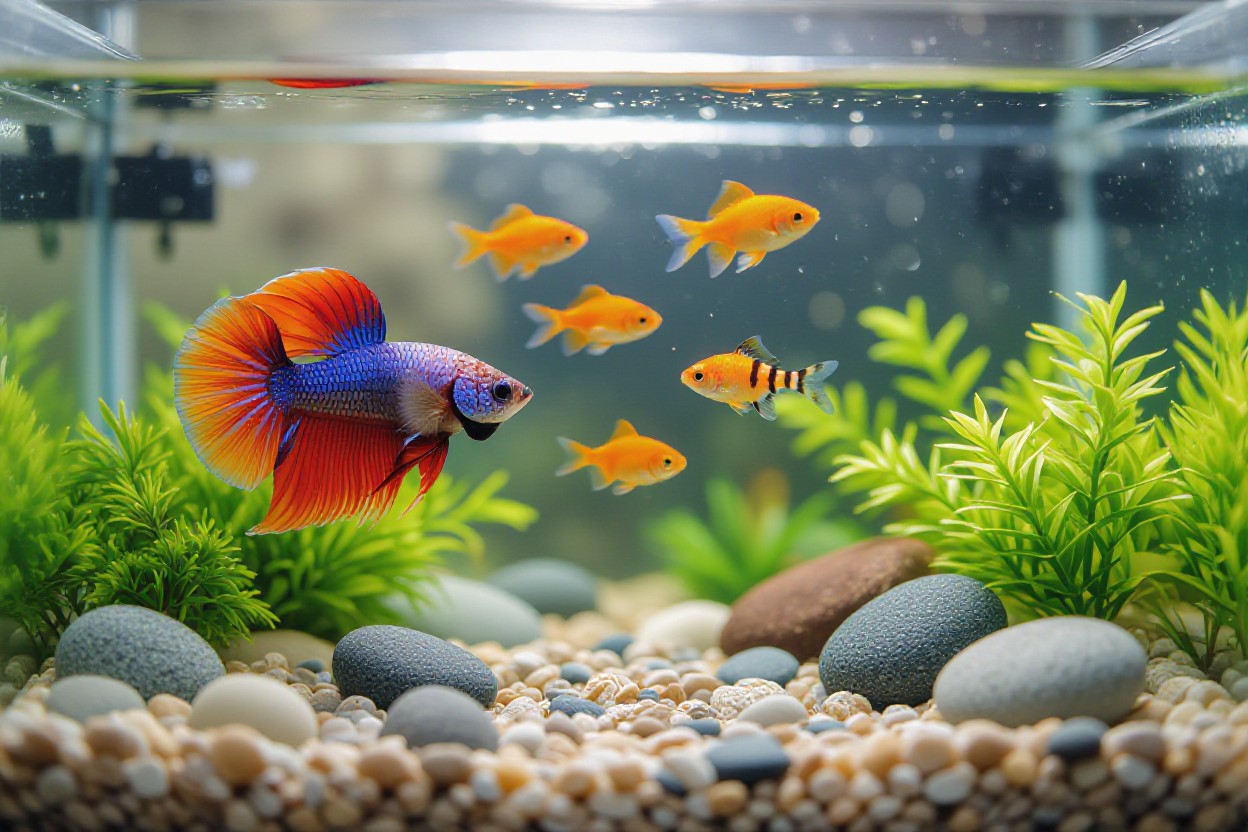
Top 10 Beginner Fish
Betta Fish
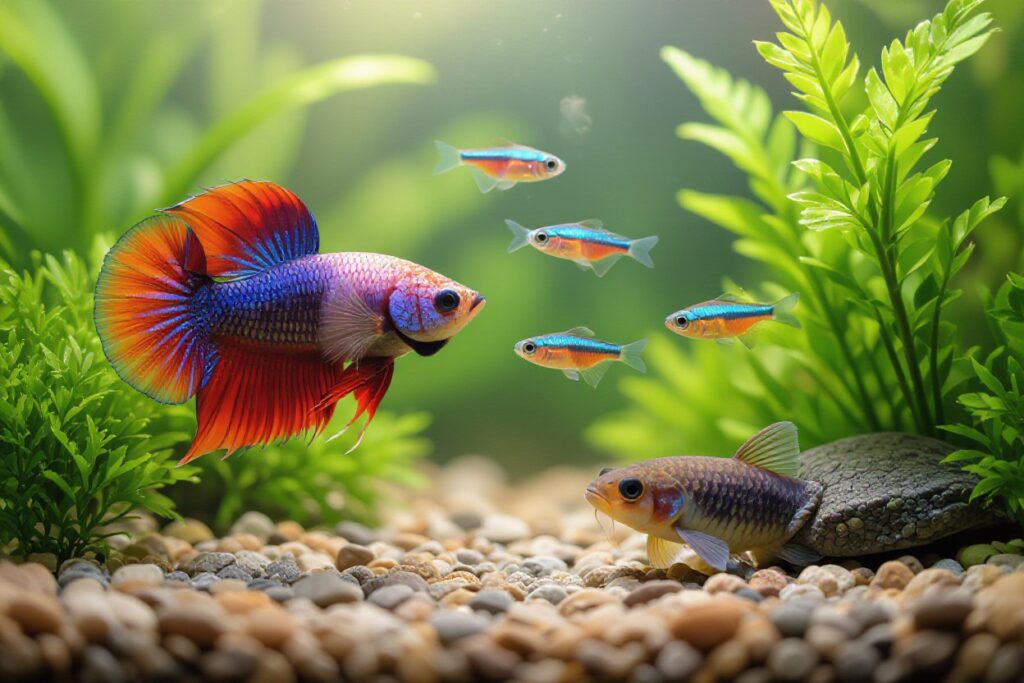
You can keep a single Betta in a 5-gallon minimum heated tank (76–82°F), feeding high-quality pellets plus occasional frozen brine shrimp; expect ~3–5 years lifespan and low cost ($5–$30). Males are territorial—do not house males together, and Bettas are sensitive to poor water quality, so regular 25–50% weekly water changes and stable temperature are crucial to avoid fin rot and ich.
Guppies
Guppies thrive in a 10-gallon or larger community tank, eating flakes and live foods; they live ~2–3 years and cost $2–$10 each. You’ll enjoy bright colors and active behavior, but note they are prolific breeders, so control population by keeping single-sex groups or upranking females:males at least 1:2–3 to reduce stress and harassment.
You should plan for breeding if you keep mixed guppies: females give birth every 4–6 weeks, producing 20–100 fry, so maintain hiding places and a separate rearing tank to avoid overstocking. Aim for pH 7.0–8.2 and 72–82°F; use live baby brine shrimp to raise fry. Their hardy nature masks quick population growth, which impacts filtration and water quality.
Platies
Platies are peaceful livebearers suitable for a 10-gallon community tank, eating flakes and vegetable matter; lifespan typically 2–3 years and cost $3–$10. They tolerate a wide pH (7.0–8.0) and 70–78°F, making them forgiving for new hobbyists, though they breed easily—expect occasional fry unless you keep single-sex groups.
When you add Platies, balance males and females (1:2) to reduce chasing; offer blanched zucchini or spinach for fiber. Their calm temperament pairs well with Tetras and Corydoras. In hard water they color up more vividly; maintain regular water changes to prevent fin issues and keep nitrate below 40 ppm for healthy growth and breeding control.
Mollies
Mollies need a 10–20 gallon tank depending on species, preferring harder, slightly alkaline water and sometimes light brackish conditions; they eat flakes, algae, and vegetable matter and live ~3–5 years. You’ll find them hardy and active, but they can be larger bioload producers and will breed readily in mixed-sex setups.
If you keep Mollies, consider adding a pinch of aquarium salt or a small amount of marine mix for better health and coloration—many strains do well with 1–5 ppt salinity. Maintain 75–82°F and provide ample plants for fry cover. Watch for osmotic stress in very soft water and frequent water changes to manage their higher waste production.
Neon Tetras
Neon Tetras are schooling fish that need groups of 8–12+ in a planted 10–20 gallon tank, preferring soft, slightly acidic water (pH 6.0–7.0) and 72–78°F; expect ~5 years with good care. You’ll appreciate their striking color, but they’re sensitive to poor water changes and susceptible to Neon Tetra Disease, so quarantine new fish and avoid sudden parameter swings.
For stable Neon Tetra care, acclimate slowly to avoid stress, feed small flakes and frozen daphnia, and monitor for uneven swimming or visible cysts—signs of Neon Tetra Disease that require removal. Dense planting and subdued lighting reduce stress and encourage schooling behavior; maintain low nitrate (<20 ppm) and regular small water changes for longevity.
Corydoras Catfish
Corydoras are peaceful bottom-dwellers that need a group of 4–6 or more in a 10–20 gallon tank with fine sand or smooth gravel; they eat sinking pellets and leftover food and live ~5+ years. You should provide hiding spots and gentle flow—Corys can suffer damaged barbels on sharp substrates and are sensitive to copper-based medications.
When stocking Corydoras, select compatible tankmates and keep the substrate clean to prevent barbel infections—siphon detritus regularly. Maintain 72–78°F and stable pH around 6.5–7.5; offer frozen bloodworms occasionally for conditioning. They’re excellent algae and detritus cleaners but won’t replace routine maintenance.
Goldfish (with caveats)
Goldfish require much larger tanks than beginners expect: 20+ gallons per fancy fish and 40–75+ gallons for commons, and they create a heavy bioload. You’ll need robust filtration, weekly water changes, and cool water 60–74°F; lifespans reach 10–20+ years. Avoid small bowls—overcrowding leads to chronic ammonia spikes and swim bladder problems.
If you want Goldfish, plan for long-term commitment and filtration rated well above tank volume (5–10× turnover). Feed a varied diet (pellets, blanched veggies) and monitor for ich and swim bladder disease. Consider outdoor ponds for commons or large tanks with ample surface area to handle their oxygen and waste needs.
Zebra Danios
Zebra Danios are hardy, active schoolers that suit new setups and slightly cooler tanks (64–75°F); keep groups of 6+ in a 10+ gallon tank. They tolerate a wide pH (6.5–8.0), are inexpensive ($2–$6), and withstand parameter swings, making them ideal for cycling tanks—but note their high activity level and occasional fin-nipping in cramped conditions.
Use Zebra Danios to stabilize new aquariums because they tolerate variable water quality and eat flakes and live foods. Provide open swimming space and floating plants to soften lighting. Keep them in sizable schools to minimize aggression, and avoid pairing with very slow-moving or long-finned species that they may stress.
White Cloud Mountain Minnows
You’ll find White Cloud Mountain Minnows are among the most forgiving schooling fish: they reach about 1–1.5 inches (2.5–4 cm), prefer cooler water (16–22°C / 60–72°F), and tolerate a wide pH (6.0–8.0). Because they shoal, you should keep groups of 8–12 in at least a 10‑gallon tank (20 gallons is better for larger schools). Feed them flakes, micro pellets and frozen daphnia; they commonly live 3–5 years and breed easily in planted tanks. Watch water quality closely—White Clouds are hardy but vulnerable to ammonia/nitrite spikes and high temperatures—and pair them with other peaceful, small schooling species like tetras and corydoras.
Cherry Barbs
You’ll appreciate Cherry Barbs for their bright males and peaceful nature when kept in groups of 6+; they reach ~1.5–2 inches, prefer 23–26°C (74–79°F) and a pH around 6.0–7.5, and do best in a 20‑gallon community tank. Feed flakes, frozen bloodworms, and expect 3–5 year lifespans; avoid overly aggressive or large tankmates that nip fins.
Fish Care Basics
Feeding and Nutrition
You should feed small amounts once or twice daily — roughly 2–3 pellets or a pinch of flakes per fish — or about 1–2% of a fish’s body weight per day. Vary diet with frozen or live options like brine shrimp, daphnia, or bloodworms for color and health; bettas need more protein, tetras and guppies eat flake mixes. Avoid overfeeding: uneaten food boosts ammonia and causes disease.
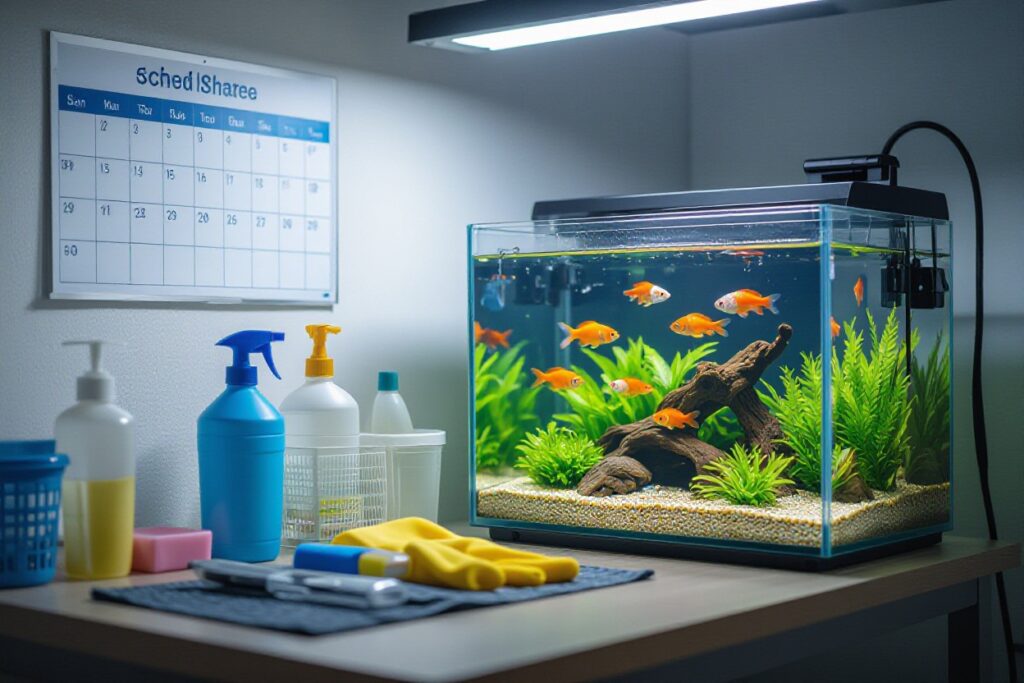
Tank Maintenance
Do regular partial water changes of 25–30% weekly, keep ammonia and nitrite at 0 ppm, and nitrate under 20–40 ppm. Run filtration sized at roughly 3–5× tank volume per hour, rinse filter media in tank water, and stabilize temperature within the species’ range (typically 74–80°F for many beginner tropicals).
Cycling matters: allow beneficial bacteria to establish for 4–6 weeks, or seed with media from an established tank. Use an API or equivalent test kit to track the nitrogen cycle (ammonia → nitrite → nitrate). For example, a 10‑gallon with 2–3 small fish needs a 20–30% weekly change and substrate vacuuming during water changes; clean filter foam monthly but avoid replacing all bio-media at once to preserve bacteria.
Recognizing Health Issues
Watch for loss of appetite, clamped fins, white spots (ich), rapid gill movement, or erratic swimming. At first sign, test water immediately and isolate affected fish in a 10‑gallon quarantine tank to stop spread; many problems stem from poor water quality rather than the fish itself.
Common cases: ich shows as tiny white dots and often responds to raised temp (~80–82°F) plus medicated treatment; fin rot appears as ragged fins and improves with cleaner water and antibacterial care; swim bladder issues often follow overfeeding—fasting and a pea can help. Keep a basic med kit and medicate only after confirming diagnosis, using quarantine to protect your main display.
Setting Up Your First Aquarium
Choosing the Right Size Tank
Aim for at least a 10‑gallon tank — it gives you far more water stability and room for a small community (for example, 6 neon tetras plus 4 Corydoras) compared with a 5‑gallon. If you keep a single Betta you may get away with 5 gallons, but 10–20 gallons lets you add plants, better filtration, and compatible species with less risk from ammonia or temperature swings; 20–30+ gallons further reduces day‑to‑day maintenance.
Substrate Selection
You should choose between sand and gravel based on fish and plants: sand favors bottom‑dwellers like Corydoras and gives them soft substrate to sift, while gravel anchors plants and is easier to vacuum; use 2–4 inches of nutrient substrate or top with root tabs for planted tanks. Avoid sharp crushed rock if you plan to keep species with delicate barbels — it can cause injury or infection.
You can build a planted substrate by layering: start with 1–2 cm of enriched substrate (examples: ADA Aqua Soil, Fluval Stratum) then cover with 2–3 cm of fine sand or gravel to limit clouding; a total depth of about 3–6 cm (1–2 inches) suits most stem and rosette plants. For budget builds plain play sand plus periodic root tabs supports Cryptocoryne and Anubias; choose coarse sand or crushed coral for African cichlids to help buffer pH. Always rinse new substrate thoroughly and allow the tank to cycle several weeks before full stocking.
Adding Live Plants
You should start with hardy, low‑light species such as Java fern, Anubias, and Cryptocoryne; they thrive on low‑tech setups without CO2 and provide cover for shy fish. Aim for plant coverage of 20–40% of the tank to aid nitrate uptake and reduce algae, use root tabs for heavy root feeders, and attach epiphytes to wood or rock for easy placement.
You should match lighting to plant choice: low‑to‑medium LED fixtures are fine for Java fern, Anubias, Vallisneria, and Amazon sword and require minimal dosing of trace elements; if you want carpets like Dwarf Hairgrass or Monte Carlo, upgrade to stronger lighting and consider CO2 injection for healthy spread. Keep routine maintenance—trimming, removing decaying leaves, and dosing potassium/iron as needed—and add floating plants like hornwort to absorb excess nitrates during early cycles for clearer water and fewer algae outbreaks.
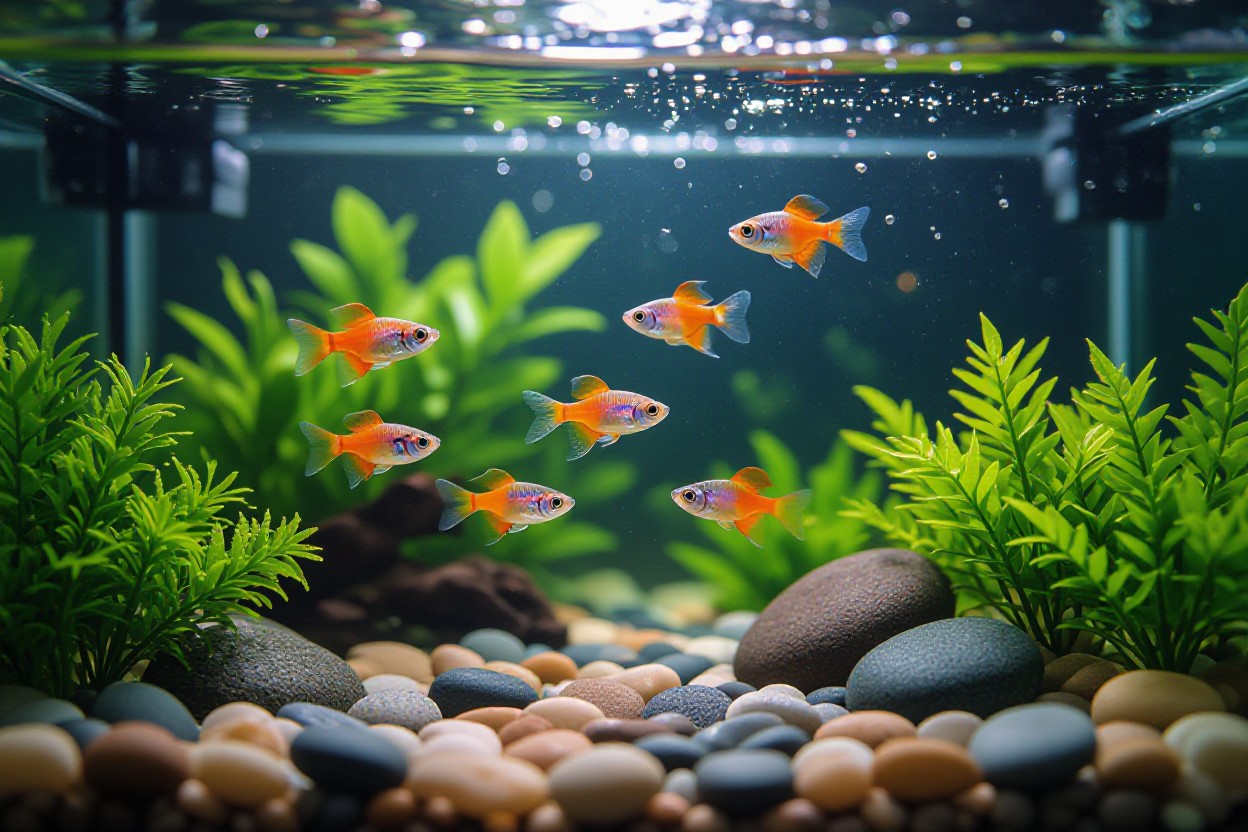
Aquascaping for Beginners
Layout and Design Principles
Use the rule of thirds: place your focal hardscape 1/3 from either side, and layer foreground, midground, background plants to create depth. Aim for roughly 30% hardscape (rocks/wood) and leave at least 60% open swimming area for active species like tetras or guppies. Position tall plants at the back, low carpets at the front, and keep sightlines clear for feeding and maintenance.
Suitable Plants for Beginner Tanks
Pick low‑light, low‑maintenance species such as Java fern, Anubias, Cryptocoryne, Java moss, Vallisneria, and Hornwort; they thrive with standard LED fixtures and no CO2. Choose Anubias and Java fern to tie to wood/rock, and avoid high‑CO2/carpet plants (dwarf hairgrass, HC) until you gain experience. Beginner‑friendly plants help stabilize water parameters and reduce nitrate build‑up.
Propagate stem plants by cutting and replanting; use root tabs for heavy feeders like Amazon sword every 2–3 months. Fast growers (Hornwort, Elodea) can lower nitrates quickly, while slow growers (Anubias) need occasional pruning; trim about 10–30% monthly to prevent shading. For substrate, use nutrient gravel or a 2–3 cm layer of aquarium soil under rooted species to boost growth.
Decor and Hiding Spots
Provide caves, driftwood, ceramic ornaments, and PVC tubes to create territories and reduce stress—plan for at least one hide per shy fish. Use smooth, aquarium‑safe decor and avoid metal‑based or painted objects. Place hides near plant groups and along tank edges to give schooling or nocturnal species safe retreat points during daylight.
Anchor rock stacks with aquarium silicone and test stability to prevent collapses; soak driftwood 7–14 days to leach tannins and sink it safely. Position hides to break sightlines—this lowers aggression in community tanks—and keep open central swimming lanes for active species. Do not use household items or untreated wood, and disinfect new decor by boiling or a 1:10 bleach soak followed by thorough rinsing.
Compatibility Considerations
Understanding Fish Behavior
You need to match temperament as much as water parameters: schooling tetras (Neon, Cardinal) do best in groups of 6–10+, while bettas are solitary and will flare at males. Some species are nocturnal (plecos) and feed at night, and bottom-dwellers like corydoras stay peaceful and social. Use these behavior patterns to plan stocking: pair active mid‑water swimmers with similar activity levels and avoid mixing fast nippers with long‑finned, slow species.
Identifying Aggressive Species
Spot potential trouble by species: African cichlids and oscars become highly territorial, tiger barbs are frequent nippers, and male bettas often fight other males. Aggressors can grow large—oscars reach 10–12 inches—so avoid combining them with small, delicate fish that can be injured or stressed.
Aggression shows as persistent chasing, fin damage, and hiding; you can quantify risk by fish size and natural behavior. For example, African cichlids need rocky territories and high stocking densities in large tanks (typically 55+ gallons) to disperse aggression, while tiger barbs do better in groups of 6+ to reduce single‑target nipping. If you see repeated harassment, be ready to rehouse the aggressor, add hiding spots, or split the tank.
Mismatched Water Requirements
Don’t pair goldfish (65–75°F, neutral pH) with tropicals like tetras or guppies that prefer 74–80°F and slightly different pH/hardness. Mollies often favor harder, slightly alkaline water and sometimes brackish conditions, while discus want warm (around 82°F) and soft, acidic water. Mixing such species causes chronic stress and disease susceptibility.
Check specific ranges: neon tetras ~pH 6.0–7.0 and 72–78°F, guppies/platies ~pH 7.0–8.2 and 72–82°F, corydoras ~pH 6.5–7.5 and 72–78°F. If ranges don’t overlap, either choose alternate species with matching parameters or keep separate tanks. Use drip acclimation when introducing new fish to prevent thermal and pH shock, and test water regularly to ensure consistency.
Fish to Avoid as Beginner
High Maintenance Species
You should avoid species like Discus, large marine tangs, and demanding reef fish because they need stable water chemistry, precise diets, and frequent maintenance; these fish often require >80‑gallon systems and CO2 or protein skimming. You’ll face frequent parameter swings and expensive equipment if you try to keep them.
- Discus — temperature and soft, acidic water required
- Marine tangs — large tanks and specialized filtration
- Mandarinfish — live‑food specialists
- Thou should avoid predatory/large species until you gain experience
Invasive Fish TypesYou must not keep or release species prone to escape or release into local waters, such as goldfish (in some climates), snakeheads, or tilapia; legal restrictions and ecological harm follow if they establish in the wild. You’ll face fines or eradication efforts in many regions.
- Goldfish — survive cold waters and outcompete natives
- Snakehead — top predator, rapid population growth
- Tilapia — hardy, alters habitats and food webs
- Thou must never release aquarium fish into the wild; use humane disposal or local rescue
You should be aware that invasive releases have measurable impacts: for example, Asian carp have altered food webs and fisheries in major U.S. rivers, prompting multi‑million‑dollar control programs; local regulations often list prohibited species, and you’ll need permits for some imports. Always check regional laws and never release fish — use shelters, trade groups, or humane euthanasia if necessary.
- Check local regulations before buying unusual species
- Use secure lids to prevent accidental escapes
- Report illegal sales to authorities
- Thou must prioritize ecosystem safety over convenience
Sensitive SpeciesYou’ll struggle with species like cardinal tetras, seahorses, and some marine gobies because they need rock‑steady parameters (pH within 0.2 units, low nitrates) and delicate diets; small swings cause mass die‑offs, so these are poor choices when you’re learning basic cycling and maintenance.
- Cardinal tetras — require very stable soft, acidic water
- Seahorses — need specialized feeding (frozen/live mysis) and strong husbandry
- Mandarinfish — sensitive to tank maturity and live food availability
- Thou should gain experience with hardy species before attempting sensitive species
You should test and log parameters daily when keeping these species: pH drift of 0.3, a nitrate rise above 20 ppm, or sudden temperature swings of 2–3°F often precipitate illness. If you want a challenge later, plan for mature, cycled tanks, quarantine protocols, and reliable food sources before introducing any sensitive species.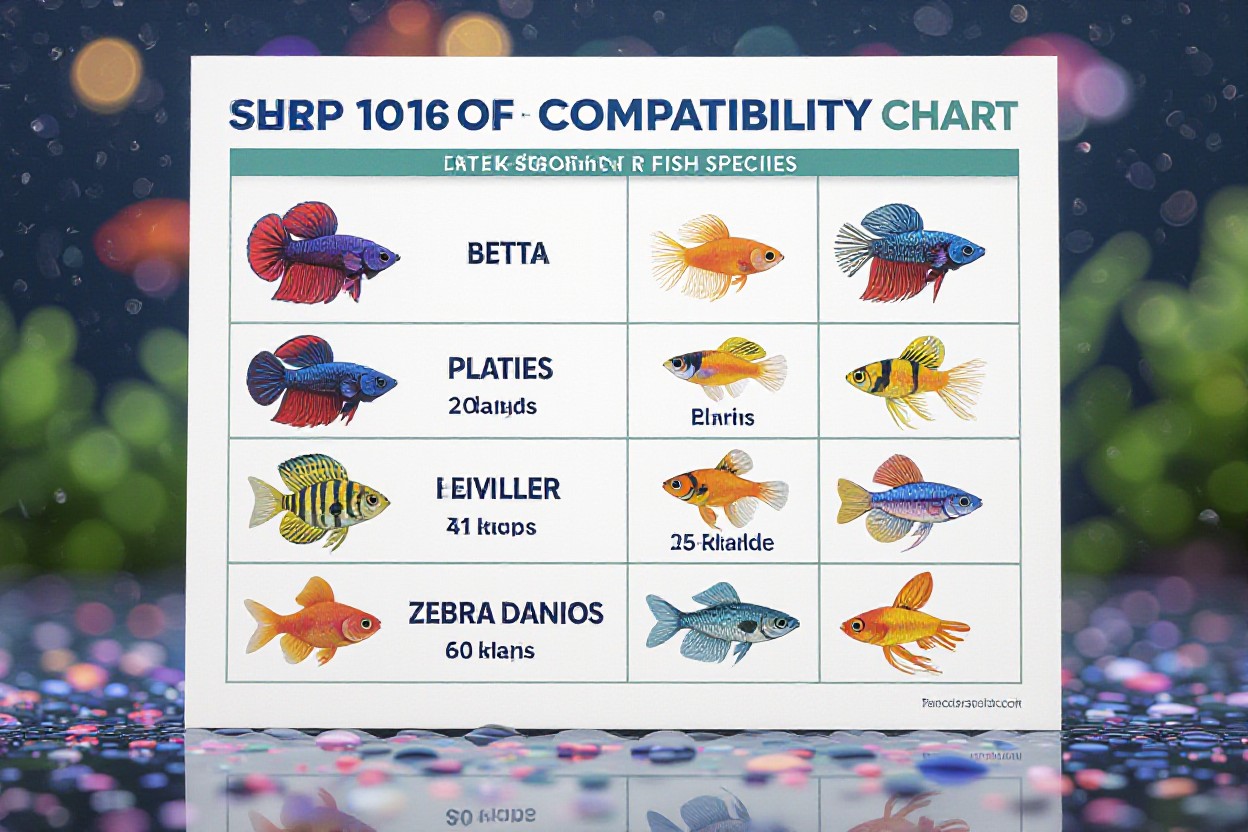 Compatibility ChartVisual Representation of Suitable PairingsMatch peaceful mid‑water schooling fish like tetras and guppies with bottom dwellers such as corydoras; avoid housing male bettas with flashy, fin‑nipping species. For example, in a 20‑gallon tank you can keep 6 neon tetras, 4 guppies, and 4 corydoras comfortably, while keeping mollies limited to groups to reduce aggression. TheCommon Conflicts in Fish TypesSome predictable problems are territorial aggression from lone males, fin‑nipping by barbs or some tetras, and size predation when much larger fish are mixed with fry or small species; you should plan by tank size and stocking numbers to prevent stress and injury. The
- Territorial aggression
- Fin‑nipping
- Predation
- Water‑parameter mismatch
- The Betta vs. Tetra pairing often sparks conflict
Digging deeper, you’ll see patterns: schooling fish like neon tetras need groups of 6–8 to reduce stress and aggression, while solitary species such as male bettas require single occupancy or carefully chosen, non‑flaring tankmates. If you pair fast, nippy species (e.g., some barbs) with long‑finned fish (e.g., guppies, bettas), expect fin damage and secondary infections; keep stocking conservative — e.g., 6 neons in 10–20 gallons, 4 corydoras in 10+ gallons — and use décor to create territories. The
- Schooling requirements
- Habitat overlap
- Feeding competition
- Reproductive behavior
- The size and temperament gap drives most conflicts
Dos and Don’tsDo match fish by temperament and water needs: keep 6+ schooling tetras, house corydoras in groups of 4, and keep male bettas solitary or with careful tankmates. Don’t mix small fry with large omnivores or place fin‑nippers with long‑finned species; avoid overstocking beyond one inch of fish per gallon as a rough starter rule. TheWhen deciding, prioritize tank size: a 10‑gallon is fine for a single betta or a small guppy family, while community setups with tetras and corys start at 20 gallons. Feed appropriately—flake or pellet for top/mid feeders and sinking wafers for bottom dwellers—monitor water (weekly 20–30% changes for new tanks), and quarantine new arrivals for 2 weeks to reduce disease transfer. Use plants and décor to break lines of sight and reduce fights; if aggression persists, rehome the offender rather than risk injuries. The
- Match water parameters
- Quarantine new fish
- Provide hiding places
- Avoid overstocking
- The first step is planning species by temperament
Choosing Tank Mates for Your FishCommunity Tank StrategiesMatch temperament, water needs and adult size when you select tank mates. In a 10‑gallon community stick to small, peaceful species like guppies, neon tetras and corydoras, and avoid fast breeders if you don’t want fry. Treat the “one inch per gallon” rule as a rough guide—factor activity and bio‑load instead. Steer clear of pairing male bettas with other males or aggressive fin‑nippers (e.g., tiger barbs), and size your filter for at least a 4× turnover to handle mixed waste.Ideal School SizesMany small species need groups to flourish: target 8–12 neon/cardinal tetras, 6–10 rasboras, and 6+ corydoras. In a 10‑gallon you’re better off with one modest school (6–8 tetras) plus a small bottom group (4–6 corys) rather than several large shoals, which raise bioload and stress levels.Schooling reduces stress, lowers chasing and aggression, and reveals natural behaviors; larger groups also make fish feel secure during feeding. Plan tank size around the school: for example a 20‑gallon long comfortably holds ~12 neon tetras, 6 corydoras and a small trio of guppies, while doubling school size roughly doubles bio‑load—so upgrade filters and water‑change frequency accordingly. Avoid overcrowding because it drives disease and rapid nitrate accumulation.Environmental NeedsMatch temperature and water chemistry across species: most beginner communities thrive at 74–78°F with pH around 6.8–7.6. Keep ammonia and nitrite at 0 ppm and nitrates under 20 ppm, use a reliable heater and thermometer, and choose a filter with ~4–6× turnover for small tanks.Account for species differences: bettas prefer 78–82°F, mollies favor harder, slightly alkaline water (10–20 dGH), while many tetras do better in softer, slightly acidic water (2–12 dGH). Avoid sudden changes—temperature swings >2°F or rapid pH shifts stress fish and invite illness. Provide hiding spots and plants to reduce aggression, perform 20–30% weekly water changes based on stocking, and maintain filter media to prevent ammonia spikes.Common Myths About Keeping FishMyth vs. RealityYou’ll hear that fish can live in bowls or that a heater isn’t needed for tropical species; in reality, a 10‑gallon minimum gives far better stability and tropical fish like bettas and tetras need ~76–80°F. Ammonia above 0.25 mg/L stresses fish, so testing is non‑negotiable. For the “best fish for beginners,” choose hardy species (guppies, platies, corydoras) and stable conditions instead of assuming small enclosures or minimal upkeep will work.Debunking MisconceptionsSome believe goldfish do fine in tiny bowls and community mixes always work; actually common goldfish need 20+ gallons each and many community pairings fail due to temperament or water‑parameter mismatch. You should plan tank size, water chemistry, and compatibility—crowding leads to rapid nitrate spikes and disease.For example, a single comet goldfish in a 5‑gallon bowl can drive nitrates past safe levels (>40 ppm) within days under typical feeding; by contrast, a 20‑gallon setup with proper filtration and weekly 30% water changes keeps nitrates <20 ppm. You can avoid most early losses by cycling the tank first (fishless cycle or seeded media), adding fish slowly (1–2 small fish per week), and using a sponge filter for fry or small community tanks to protect delicate species like corydoras.Evidence-Based PracticesUse testing and measured routines: keep ammonia and nitrite at 0 ppm, aim for nitrate <20–40 ppm, and perform 25–50% water changes depending on stocking. You should feed measured portions (about 2–3 pellets per small fish once or twice daily) and maintain heater setpoints within ±1–2°F for tropicals.Practically, a fishless cycle using pure ammonia often takes 2–6 weeks; during that time, add ammonia to 2 ppm and watch nitrite then nitrate appear and stabilize. You can accelerate cycling by using matured filter media or commercial bacterial starters, but always verify with test kits (API Freshwater Master Test Kit is a reliable option). When stocking, follow a conservative rule—roughly 1 inch of fish per 2 gallons for community setups—and scale maintenance (filter capacity, water changes) to match that load for long‑term success.Frequently Asked QuestionsGeneral Care InquiriesYou should aim for ammonia and nitrite at 0 ppm and nitrates below 20–40 ppm; test kits weekly make this simple. Keep tropical species at 74–80°F (23–27°C), use a filter rated for your tank volume, and do a 20–30% water change weekly on 10–20+ gallon setups. Feed only what your fish eat in ~2 minutes, once or twice daily. These basics cover most needs when choosing the best fish for beginners.Troubleshooting Common IssuesWhen you see cloudy water, gasping, clamped fins or white spots, first test water; a single high reading often explains the symptom. If ammonia >0 ppm, perform an immediate 25–50% water change, reduce feeding and check filter flow; for visible disease, isolate the affected fish in a hospital tank to avoid spreading pathogens.Diagnose by combining symptoms with numbers: ich shows distinct white spots and often responds to raising temperature to 78–80°F and using anti-parasitic treatment per product instructions, while fin rot usually follows poor water quality and improves after repeated 25% water changes and adding broad‑spectrum antibacterial meds in a quarantine tank. Test every 2–3 days during an outbreak, avoid copper if you keep shrimp, and reuse the hospital tank for 7–14 days to confirm recovery.Best Practices for LongevityYou’ll extend lifespans by keeping stable parameters, providing a varied diet (high‑quality flakes/pellets plus frozen foods 2–3× weekly), and avoiding overstocking: bettas 5+ gallons, small tetra shoals in 10+ gallons, and corydoras in groups of 4–6 on soft substrate. Do routine maintenance and visual checks to catch problems early.Plan for species lifespans—bettas ~3–5 years, guppies 2–3, tetras 3–8, corydoras 5–10—and budget accordingly. Keep pH shifts under ±0.2, perform consistent weekly tests, rotate foods to prevent nutritional gaps, and provide hiding places to reduce stress. Regularly clean but avoid disrupting the entire filter media; keeping biological filtration stable is one of the most effective steps you can take to keep your beginner fish healthy long term.Resources for New AquaristsBooks and GuidesLook for practical titles that cover the nitrogen cycle, stocking calculations, water chemistry and species profiles—these are the sections you’ll reference most when choosing the best fish for beginners. Choose guides of roughly 200–300 pages that include care charts, tank‑size recommendations and disease photos; many cost between $10–30. Good guides have step‑by‑step setup and maintenance schedules you can follow for the first 30–90 days of a new tank.Online Forums and CommunitiesTap into active hubs like Reddit (r/Aquariums, r/BettaFish), FishLore and specialized Facebook groups where people post photos, water test strips and tank specs for fast diagnosis; you can get practical fixes for ammonia, nitrite, nitrate spikes and stocking questions within hours. Use forum search to find species‑specific threads—many include care sheets, feeding plans, and lifespan reports from hobbyists keeping the same fish for 2–5+ years.When you post, include tank size, temperature, pH, and current test results so experienced members can give accurate advice; avoid acting on a single reply and cross‑check with at least two sources. Prioritize advice from long‑time contributors or users with photo histories, and watch for repeated recommendations (consensus) before changing treatments—this helps you avoid harmful quick fixes and confirms safe, proven methods.Local Fish StoresVisit 2–3 LFSs and assess tank cleanliness, stocking levels and staff knowledge; ask for captively bred specimens for beginners and whether they quarantine new arrivals. Expect staff to provide tank size guidance, feeding schedules and a basic return or health guarantee—stores that refuse simple water parameter checks or won’t advise on quarantine are less reliable.Evaluate an LFS by looking for clear water, proper filtration, lively fish with intact fins and no visible white spots or gasping; ask where fish were sourced and if they offer acclimation supplies (nets, conditioners, test kits). Developing a relationship with a trustworthy store gives you on‑the‑spot help for purchases, medications and live plants, which often reduces first‑year losses.To wrap upTo wrap up, when choosing the best fish for beginners, pick hardy, low‑maintenance species such as bettas, guppies, platies, mollies, tetras, corydoras, danios, swordtails, rasboras, and kuhli loaches; match tank size, compatibility, feeding, and water care to each, monitor your fish’s health, and avoid overcrowding so your first aquarium thrives.FAQQ: Which are the best fish for beginners and what are their basic care needs?A: Best fish for beginners include a short list of hardy, low-maintenance species suitable for small to medium community tanks. Below are 10 top picks with concise care notes (tank size = minimum recommended):
- Betta (Siamese fighting fish) — Tank: 5–10 gal; Temp: 76–82°F; pH: 6.5–7.5; Diet: pellets + occasional frozen/live; Lifespan: 2–4 years; Cost: low–moderate; Compatibility: solitary male or peaceful tankmates (no fin-nippers); Common issues: fin rot, ammonia sensitivity.
- Guppy — Tank: 5–10 gal; Temp: 72–82°F; pH: 7.0–8.0; Diet: flake + micro pellets; Lifespan: 2–3 years; Cost: very low; Compatibility: peaceful community; Common issues: overbreeding, swim bladder, poor water quality effects.
- Platy — Tank: 10+ gal; Temp: 70–78°F; pH: 7.0–8.2; Diet: omnivorous flakes + veggies; Lifespan: 2–3 years; Cost: low; Compatibility: peaceful community; Common issues: ich, poor water quality.
- Molly — Tank: 20+ gal recommended (they appreciate harder water); Temp: 72–78°F; pH: 7.5–8.5; Diet: omnivore (vegetables appreciated); Lifespan: 3–5 years; Cost: low; Compatibility: peaceful but can be livebearer-aggressive; Common issues: parasites, fin rot.
- Tetras (neon, ember, cardinal) — Tank: 10–20+ gal (keep in schools of 6+); Temp: 72–80°F depending on species; pH: 6.0–7.5 generally; Diet: flake + micro frozen; Lifespan: 2–5 years; Cost: low; Compatibility: peaceful schools; Common issues: sensitivity to poor water/temperature swings.
- Corydoras catfish — Tank: 10–20+ gal; Temp: 72–78°F; pH: 6.5–7.8; Diet: sinking pellets, wafers, occasional live; Lifespan: 4–8 years; Cost: low–moderate; Compatibility: peaceful bottom dwellers, keep in groups of 4–6; Common issues: barbel erosion from poor substrate.
- Zebra Danio — Tank: 10+ gal; Temp: 64–75°F (tolerant); pH: 6.5–7.5; Diet: flake + small live/frozen; Lifespan: 2–5 years; Cost: very low; Compatibility: active peaceful schooling fish; Common issues: overactive schooling stress if tank too small.
- Swordtail — Tank: 20+ gal; Temp: 72–79°F; pH: 7.0–8.0; Diet: omnivore; Lifespan: 3–5 years; Cost: low; Compatibility: generally peaceful but males can display; Common issues: overbreeding, fin damage.
- Bristlenose Pleco — Tank: 20+ gal; Temp: 72–78°F; pH: 6.5–7.5; Diet: algae wafers + vegetables; Lifespan: 5–10 years; Cost: low–moderate; Compatibility: peaceful algae eater for community tanks; Common issues: inadequate diet, territoriality with other plecos.
- Otocinclus catfish — Tank: 20+ gal (stable mature tanks); Temp: 72–79°F; pH: 6.8–7.5; Diet: algae + blanched veggies; Lifespan: 3–5 years; Cost: moderate; Compatibility: peaceful, keep in groups of 4–6; Common issues: sensitivity to water changes and low algae availability.
Each species needs a fully cycled aquarium, regular water changes (20–30% weekly for many small tanks), appropriate filtration, and feeding 1–2 times daily in small amounts. Match water parameters, group sizes, and tank size to species to reduce stress and disease.Q: What setup and stocking practices should new hobbyists follow to avoid common beginner mistakes?A: Set up a beginner-friendly tank with these practical steps:
- Start with an appropriate tank size: 10–20+ gallons for most community setups. Bigger tanks are more forgiving of mistakes.
- Cycle the tank before adding fish (establish beneficial bacteria). Use hobby test kits to monitor ammonia, nitrite, and nitrate.
- Use a filter rated for your tank and perform regular maintenance (clean sponges, replace media per manufacturer). Avoid overcleaning beneficial bacteria.
- Maintain stable temperature with an aquarium heater and a thermometer; most tropical beginner species prefer 72–80°F.
- Choose substrate and decor that match species needs (smooth substrate for Corydoras, hiding places for shy species). Plants add oxygen and hiding spots.
- Stock slowly: add a few fish, wait 2–4 weeks and test water before adding more. Overstocking is the single most common cause of problems.
- Quarantine new fish for 2 weeks when possible to prevent introducing disease.
- Feed a varied diet but avoid overfeeding — feed only what fish consume in 1–2 minutes, once or twice daily.
- Avoid these beginner pitfalls: keeping bettas in tiny bowls, mixing species with different water needs (coldwater goldfish with tropicals), adding many fish at once, relying solely on tank decorations as filtration, and buying sick or tiny fry without experience.
- Compatibility tip: research temperament and adult size. Livebearers (guppies, platies, mollies, swordtails) mix well together; tetras and danios do best in schools; bottom dwellers need peaceful mid/top swimmers.
Following these setup and stocking practices will make care for the best fish for beginners manageable and reduce stress, illness, and unexpected costs.Q: How do I spot and handle common health problems in beginner fish, and what preventive steps work best?A: Common issues and practical responses:
- Signs to watch for: white spots (ich), torn or ragged fins (fin rot), clamped fins/lethargy, gasping at surface (low oxygen or ammonia), loss of appetite, flashing or rubbing (parasites), abnormal swim (swim bladder).
- Immediate checks: test water for ammonia, nitrite, nitrate, pH and temperature; poor water quality is the most frequent cause of illness.
- Basic treatments: For ich — raise temp slightly (species dependent) and use a copper or formalin/malachite green treatment per product instructions; for fin rot — improve water quality, consider antibacterial medications if persistent; for internal parasites — use antiparasitic meds; for fungal infections — antifungal treatments and remove affected materials.
- Medication cautions: Remove activated carbon from filters during treatment, follow dosage carefully, and be cautious using copper in tanks with invertebrates or sensitive species like otocinclus.
- Quarantine and isolation: Use a separate hospital tank for sick fish when possible to avoid medicating the whole display, and observe response to treatment for several days.
- Prevention: maintain stable, clean water; avoid overfeeding; quarantine new fish; feed a balanced diet; avoid overcrowding; and keep compatible species together to reduce stress.
- When to seek help: if multiple fish are ill, if symptoms worsen after treatment, or if you’re unsure of diagnosis — contact a local aquatic vet, experienced retailer, or trusted hobbyist forum with clear photos and water test results.
- Costs and expectations: Routine prevention (test kits, water conditioners, good filter, heater) is inexpensive compared to treating outbreaks. Many common problems are manageable at home if caught early; persistent or systemic illnesses may require specialist advice and higher costs.
Early detection, good water quality, and appropriate quarantine are the most effective ways to keep the top 10 easy-care species healthy for new aquarium hobbyists.
| Discus | Needs 82–86°F, soft acidic water, frequent water changes |
| Mandarinfish | Often fails on prepared foods; requires live copepods |
| Marine Tangs | Very active, needs >75 gallons and strong filtration |
| Arowana | Huge adult size, aggressive, requires pond‑scale volumes |
| Saltwater Coralfish | Depend on reef setups and stable salinity |
| Goldfish | Can survive winters, become invasive in ponds and lakes |
| Snakehead | Predatory, legal bans in many U.S. states |
| Tilapia | Rapid breeding, damages aquatic vegetation |
| Plecostomus (large species) | Can survive in rivers and disrupt substrates |
| Common Carp | Rooting behavior increases turbidity and harms habitats |
| Species | Why invasive risk |
| Goldfish | Cold‑tolerant, prolific breeders |
| Snakehead | Apex predator, rapid spread |
| Tilapia | Alters vegetation and outcompetes natives |
| Pleco (large) | Survives poor conditions, damages substrate |
| Cardinal Tetra | Prefers 72–79°F, pH 5.5–7.0, very low nitrates |
| Seahorse | Require live/frozen mysis, vertical tanks, low flow |
| Mandarinfish | Needs mature microfauna population for feeding |
| Glass Catfish | Stress‑prone, needs dim lighting and stable water |
| Marine Gobies (some) | Symbioses and substrate needs make them delicate |
| Conflict | Example & Mitigation |
| Territorial aggression | Male betta vs. male betta — keep one male per tank or provide heavy cover |
| Fin‑nipping | Serpae barbs nip long fins — choose shorter‑finned tankmates or schools of 6+ |
| Size predation | Large cichlids can eat small guppies — avoid mixing >4″ predators with <1.5″ fish |
| Water mismatch | Mollies prefer harder water, tetras prefer softer — match species to similar GH/pH |
| Breeding aggression | Platies and mollies can harass mates — provide plants and hiding spots |
| Issue | Practical Fix |
| Small schooling fish stressed | Increase group size to 6–10 and add plants for cover |
| Fin damage | Remove nippers or choose short‑finned varieties |
| Bullying by larger fish | Rehome aggressive species or upgrade tank size |
| Parameter drift | Select species with overlapping temp/pH ranges; test weekly |
| Breeding harassment | Add dense plants and hiding spots to protect fry |
| Do | Don’t |
| Quarantine newcomers 10–14 days | Introduce multiple new fish at once into a cycled tank |
| Match species by temp and pH | Mix freshwater and brackish/marine species |
| Keep schooling fish in groups | Keep single schooling fish alone |
| Use decor to create territories | Leave a completely open tank with no cover |
| Monitor behavior and act early | Ignore persistent bullying |